Health genetic & genomic stories reported at the International Congress of Genetics in Melbourne.
· Inequity in genomic health for Indigenous Australians
· New guidelines released for achondroplasia, the most common form of disproportionate short stature
· Repatriation of remains and land management: Who owns ancient DNA and its story of deep history?
· The genomics of a liver or heart
· A genetic test to choose the right antidepressant
· "Māu Tēnā Kīwai o te Kete, Māku Tēnei:" Early detection of bowel cancer for Māori population
Read on for more information about each story. Contact Niall Byrne, [email protected], 0417-131-977
Inequity in genomic health for Indigenous Australians
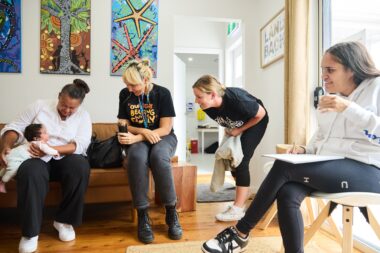
Prabhathi Basnayake, University of Melbourne, reported on significant inequity in access to genetic services by Indigenous people in the NT, QLD and WA.
She is working in the Achieving Equity in Genomic Health (AEGH) for Indigenous Australians project to increase equity of access to genetic services by co-designing with genetic services, end user groups (all comprised entirely of Indigenous people) and the project reference group in the three jurisdictions.
New guidelines released for achondroplasia, the most common form of disproportionate short stature
On 1 May 2023, the Australian Government listed Voxzogo® (vosoritide) on the Pharmaceutical Benefits Scheme (PBS) – offering children and adolescents living with achondroplasia, the most common form of disproportionate short stature, the option of a medical treatment for the first time.
This has seen the local clinical community being faced with exploring how to access Government-subsidised treatment for a new patient population.
To support clinicians as they navigate this ‘new frontier’, a panel of the country’s leading experts have developed the first ‘Clinical management guidelines for the use of vosoritide in achondroplasia’, providing their recommendations to deliver optimum care for patients in this new setting.
Interviews available on request, with Professor Ravi Savarirayan, Co-Author of the local treatment guidelines, as part of the Australian Vosoritide Working Group. For interviews contact Tania Jayesuria, +61 404 094 744, [email protected].
Repatriation of remains and land management: Who owns ancient DNA and its story of deep history?
We can recover DNA from long dead plants, animals and humans, and use that DNA to extrapolate deep history, revealing the impact of human activity, pathogens and other factors on ancient ecosystem. Should we?
This type of research may be perceived as extractive neocolonialism and disrespectful by Indigenous communities.
A non-Indigenous researcher, Bastien Llamas is working towards developing respectful and sustainable paleogenomic research in Australia and Indonesia (a field of science based on the reconstruction and analysis of genomic information in extinct species).
“In Australia, ongoing paleogenomic research co-designed with Traditional owners shows that it can be used to help communities address some of their concerns (repatriation of remains) or answer some of their questions (pre-colonial biodiversity to guide land management),” says Bastien.
Bastien will receive the Genetics Society of Australia Ross Crozier Mid-Career award.
He is a researcher with the Australian Centre For Ancient DNA at the University of Adelaide, the National Centre for Indigenous Genomics at ANU and the Indigenous Genomics program at Telethon Kids.
The genomics of a liver or heart
Quin Wills is keeping donated human livers alive in ‘organ ICUs’ to study their genomics and develop AI models.
In the 20 years since the Human Genome Project, we have not seen an explosion of medicines born out of Big Data. Quin says that one explanation is that not all data is created equal.
He outlined how spatial and single-cell genomics are being combined with imaging AI, genetics and genetic screens to discover new drug targets using donor human organs maintained on machines in ’Organ ICUs’ to directly map human disease pathophysiology to genomic data.
His approach, at OchreBio bypasses animal models for better translatability.
A genetic test to choose the right antidepressant
Finding the right antidepressant can be a trial and error process, often prolonging treatment journey says Kathy Wu from St Vincent's Clinical Genomics.
She reported on the ALIGNED study which is investigating how a simple genetic test done through a cheek swab and other biomarkers can shorten this process, reduce side effects of antidepressants, and maximise chance of recovery through tailored prescription. www.alignedstudy.org.au
"Māu Tēnā Kīwai o te Kete, Māku Tēnei:"
Early detection of bowel cancer for Māori population
Biomedical scientists and rural Indigenous communities in Aotearoa New Zealand are being united through a novel blood-based test for early detection of bowel cancer that can be delivered by communities, for communities to result in better health outcomes says Jordan Lima from the University of Otago.
The test looks for circulating tumour DNA.
https://www.otago.ac.nz/biochemistry/news/otago747094.html
Contact details:
- Media welcome
- For accreditation and interviews contact Niall Byrne, [email protected], 0417-131-977, or Sarah Brooker, [email protected], 0413-332-489.
- Full Congress program at https://www.icg2023.com.au
- Public program details at https://www.icg2023.com.au/public-program
- Media releases at https://www.scienceinpublic.com.au/genetics