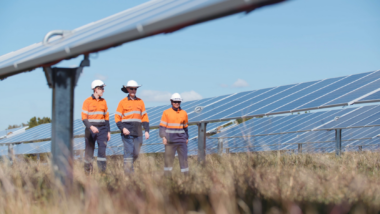
The following talent are available for comment on AEMO’s latest Quarterly Energy Dynamics report, which showed less volatile market conditions, improved generation availability and higher renewable output put downward pressure on wholesale electricity prices. Solar output in particular helped drive prices down, wholesale electricity prices fell 59% in Q2 2023 compared to the same time last year while solar output surged 30%.
Heidi Lee Douglas, National Director at Solar Citizens said:
“The AEMO report re-confirms that Aussies love solar. Harnessing our great Aussie sunshine to power our homes greatly reduces energy bills. Australia has the highest per capita uptake of solar in the world, but now we need to unlock the benefits of solar for those who are missing out - people in rentals, apartments, strata, and social housing. This should be a priority for state and federal governments looking for ways to continue to lower energy bills, especially as the end date for coal and gas price caps draws closer.
“Solar Citizens is also calling on the federal government to extend the scheme that has so successfully enabled affordable uptake of solar, to enable Australians to access affordable home batteries, so we can use cheap, clean sunshine for our energy needs day and night”.
“The sooner we can all run our homes and cars on sunshine day and night, the sooner we will all see a massive reduction in energy and fuel bills. Every Australian can save hundreds and thousands of dollars buy running our homes and cars on sunshine, which we urgently need right now to combat rising energy, fuel, and mortgage prices.”
Phone 0401 092 570 for further comment.
Stephanie Bashir Founder and CEO of Nexa Advisory said:
"Increased renewables of wind and solar has helped push down wholesale electricity prices as the report highlights.
This confirms our recent analysis and findings that if we take action to accelerate the current build rate of renewable generation, storage, and transmission we will get the job of the clean energy transition done on time, while consumers save money now and in the long term.
Solar rooftop PV continues to grow year on year and is playing a significant role in the system. While distributed energy resources can play a complementary role through residential rooftop solar, commercial and industrial solar and battery (systems >100kW) can play a significant role immediately."
Phone 0402 060 120 for further comment.
Tim Buckley, director of independent public interest think tank Climate Energy Finance, said:
‘’AEMO reports the June quarter wholesale electricity prices are down 59% year-on-year. That is a major relief after 18 months of unprecedented fossil fuel hyperinflation.
Application approvals of new zero-emissions replacement capacity in financial year 2023 trebled to 7 gigawatts (GW) vs the previous two years, but we are still not seeing grid transmission and planning access bottlenecks removed.
There is a record 30GW of new renewable energy capacity now in the connection pipeline, but just 3GW was completed in financial year 2023. We need to see the rate of completions double to replace end-of-life coal power station capacity inevitably and predictably coming offline.
The solution is not to extend the life of polluting, unreliable coal clunkers. The answer to high power prices is hastening the transition to low-cost renewables. Governments need to invest in and expedite the buildout of solar, wind, storage and grid transmission. This will put permanent downward pressure on prices, relieving cost of living pressures smashing Australians.’’
Tim is available for interview Thurs 27 July (except between 10am-12md and 1-2pm) on 0408 102 127 [email protected] or via Annemarie on 0428 278 880.
Greg Bourne, Councillor at the Climate Council and energy expert, said:
“Governments need to take urgent action on AEMO’s warning of the need to urgently roll out new renewable energy generation systems to ease the transition away from ageing, unreliable and emissions intensive coal and gas.
“Renewables are continuing to nudge fossil fuels out of our energy grid. However now is the time to focus on dramatically accelerating and helping facilitate the clean energy and transmission projects that are ready to go.
“The quickest and cheapest way to increase Australia’s supply of clean, secure, affordable energy into our electricity systems is to replace coal and gas with renewables, backed by storage.
“We must seize this opportunity for clean, affordable energy and minimise costly disruptions to homes and businesses. We must urgently transition our energy system to clean energy.”
Phone 0438 972 260 for further comment.
Dr Tim Nelson, Councillor at the Climate Council and environmental economist, said:
“The rise in renewables in our energy system, and the decline of ageing coal-fired power stations, presents Australia with a once-in-a-generation opportunity to become a global energy superpower.
“The closure of Liddell earlier this year showed us that a smooth transition to less coal and more clean energy sources is possible with good planning. We have world-class solar and wind resources to harness as we increase the scale of renewables in our energy grid.
“Construction of renewable generation must dramatically scale up to ensure energy reliability and meet emissions reduction targets.
“As we continue tackling the energy and climate crises, we need to see more renewable generation and storage to reduce energy prices and help avoid the worst effects of climate change."
Phone 0438 972 260 for further comment.