Geo-disasters are likely to become more common as climate change increases the frequency of extreme weather events, heavy rainfall, droughts and forest fires; despite advances in detection and early warning systems, including satellite-based monitoring.
Civil engineers at Monash University have developed a software called GeoXPM that can not only predict where a disaster like a landslide, avalanche or a mine tailings dam failure could potentially occur; but also their impacts on geo-structures and environment. The software can also suggest design changes that could avert loss of life.
This is the world’s first, fully functional continuum particle-based software to model and predict both the onset and post-failure responses of geomaterials and geo-structures across several scales - including rock, soil, water and complex mixtures of these - should natural features such as slopes and hillsides destabilise or artificial structures fail.
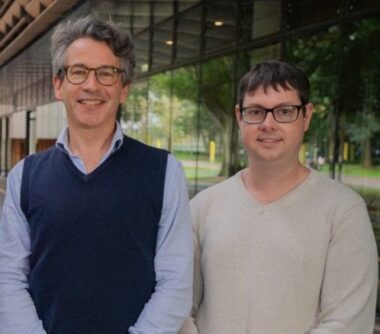
Led by Associate Professor Ha Bui of the Department of Civil Engineering, the Monash team has collaborated with national and international experts to develop computing solutions to predict catastrophic geotechnical problems.
“Modelling worst-case scenarios and understanding them in detail allows us to design counter-measures that can minimise loss of life and damage,” explains Associate Professor Bui, an ARC Future Fellow and founder of the Monash Computational Geomechanics (MCG) laboratory.
The modelling software can inform the design of countermeasures such as buffers and secondary dams that can divert moving geomaterials in the event of failure, channelling them away from populated areas and vital infrastructure.
“GeoXPM can predict behaviour and failure under complex geo-environmental conditions, including the flow of granular materials with complex behaviour of soil-fluid mixtures, soil-structure interactions and even fracture and fragmentations of rock and concrete.” added Associate Professor Bui.
Mudslides, landslides and other debris flows are responsible for hundreds of deaths each year, often following storms, floods, drought or deforestation caused by wildfires, logging or human habitation.
Failures of tailings dams associated with mining in many parts of the world have also caused thousands of deaths and left resources companies liable for billions of dollars in compensation.
About GeoXPM:
GeoXPM – Realistic geotech solution
Examples of geo-disasters:
- In March 2018, a section of the tailings dam wall at Newcrest Mining’s Cadia gold mine near Orange in New South Wales failed. During 2023, dust events from the dried tailings have become common for people living in the Cadia and Errowanbang valleys.
- In 2014, a landslide triggered by heavy rainfall claimed the lives of 43 people and destroyed 49 homes near Oso, in the US state of Washington. Debris also dammed a river, flooding homes and creating a new lake more than four kilometres long.
- At least 267 people were killed when a tailings dam failed at an iron ore mine in Brumadinho, Brazil, in 2019.
- In the central Philippines, an entire village of 1500 people was buried by a mudslide following heavy rains in 2017. Some local authorities blamed the disaster on deforestation of nearby mountainsides.
- In 1999, debris flows following torrential rains killed tens of thousands of people and buried homes under 3 metres of mud in Vargas, Venezuela. Entire towns are said to have completely disappeared.
- In the Alps of Eastern Italy in 1985, two tailings dams from a fluorite mine collapsed, triggering a vast mudflow down a populated valley, resulting in 268 fatalities.
For media enquiries please contact:
Loretta Wylde
Monash University
Media and Communications
T: +61 (0) 432 123 106
For more Monash media stories, visit our news and events site
For general media enquiries please contact:
Monash Media
T: +61 (0) 3 9903 4840