

March 6, 2024
No Uber, No Problem! Sustainable e-buses rescue small towns in Australian-first trial
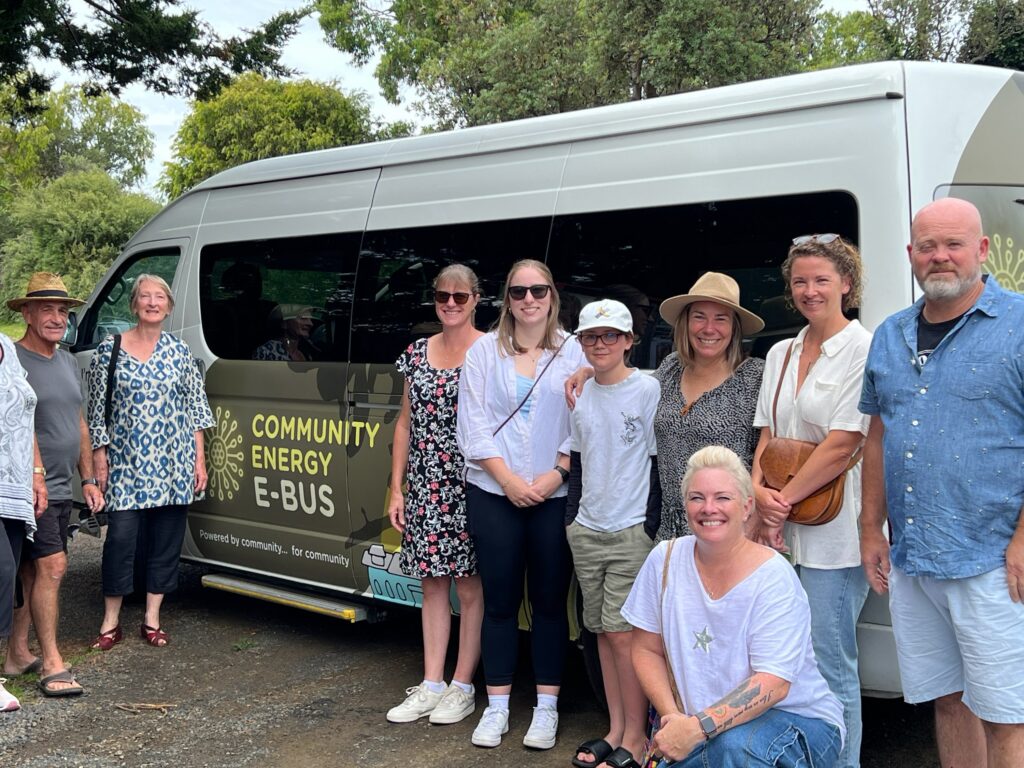
The quintessential Australian small town dilemma – how do I get anywhere without a car, no Uber, and limited or no public transport? - could very quickly become a thing of the past with this week’s launch of a community e-bus service in Gippsland, Victoria.
The pint-sized communities of Sandy Point and Venus Bay will undertake the first community-run e-bus trials in the country, and if successful the model could pave the way for other small towns across Australia.
The project, funded and supported by the iMOVE Cooperative Research Centre, the Victorian Government and La Trobe University, aims to address the critical transport gap faced by residents in these small communities who are often reliant on private vehicles or limited existing services.
The initial three-month trial will help the communities to refine their services which will run for the remainder of the two-year project. The idea is that both communities are then able to continue providing the services an ongoing basis.
It’s a promising solution for areas where state government public transport doesn’t reach and private services like Uber are absent.
The two Gippsland trial e-buses – named Sandy and Sunny – will be officially launched at the Community Energy Congress Regional Hub in Leongatha this Wednesday (March 6, 2024).
The vehicles are fully electric buses with wheelchair lifting and carrying capabilities. The buses were funded through the Victorian Government Department of Transport and Planning Flexible Local Transport Solutions Program (FLTSP) which provides funding to local government and community organisations for small-scale transport projects,
The (initially free) services will be run by the Venus Bay Community Centre and Sandy Point Bus management Committee and staffed entirely by volunteers. La Trobe University is working closely with the community teams to capture data and lessons for the iMOVE CRC project, with a view to adopting what works to other regional towns in Australia.
iMOVE CRC Managing Director Ian Christensen said:
“Every small regional town deserves access to modern, clean, and reliable transport. The Gippsland trial is our first mile to bridging the rural-urban divide, offering a scalable blueprint that promises to energise small towns with self-reliant, green transport solutions."
“By adopting this service nationally, we can empower small towns, reduce carbon footprints, and pave the way for future generations to thrive in a cleaner Australia.”
Media Opportunity
- Exclusive media and photo opportunities with the e-Buses
- Interviews with project leaders and community representatives
- Insights into the future of community-based sustainable transport
What: Official Launch of Gippsland Community eBuses - Sunny and Sandy
When: Wednesday, March 6, 11.30am - 12pm
Where: Community Energy Congress Regional Hub, Council Chambers, 2 Michael Place, Leongatha, VIC 3953
Who: Council members, community energy stakeholders, community groups, media representatives, potential users of the service, and individuals interested in volunteering.
Media Contacts
- Jacqueline King jking@imoveaustralia.com 0404045293
Key Facts:
The quintessential Australian small town dilemma – how do I get anywhere without a car, no Uber, and limited or no public transport? - could very quickly become a thing of the past with this week’s launch of a community e-bus service in Gippsland, Victoria.
The pint-sized communities of Sandy Point and Venus Bay will undertake the first community-run e-bus trials in the country, and if successful the model could pave the way for other small towns across Australia.
The project, funded and supported by the iMOVE Cooperative Research Centre, the Victorian Government and La Trobe University, aims to address the critical transport gap faced by residents in these small communities who are often reliant on private vehicles or limited existing services.
About us:
About iMOVE CRC
iMOVE is the national centre for collaborative R&D in transport and mobility. It facilitates, supports and co-funds research projects that improve the way people and goods move in Australia. It has 44 industry, government and academic partners and has over 50 projects completed or currently underway in a broad range of transport areas. Find out more about our work: www.imovecrc.com
Contact details:
Jacqueline King - 0404 045 293 - jking@imoveaustralia.com

