
Morinaga Milk Industry Co., Ltd. (TOKYO:2264), a leading Japanese dairy product company, has announced a groundbreaking discovery in the fundamental research of Human-Residential Bifidobacteria (HRB). Through a joint collaboration with Kyoto University, the research has discovered that a specific type of bifidobacteria living in humans, also known as HRB, has the ability to convert precursors of a potentially harmful component into a beneficial metabolite. The research team has uncovered a previously unknown metabolic pathway utilized by the HRB species, converting indole, a potentially harmful compound, into the immunomodulatory metabolite indole-3-lactic acid (ILA). The findings, published in the prestigious journal "Gut Microbes" on May 5, 2024, underscore the unique capabilities of HRB as superior probiotics.
This press release features multimedia. View the full release here: https://www.businesswire.com/news/home/20240530532346/en/
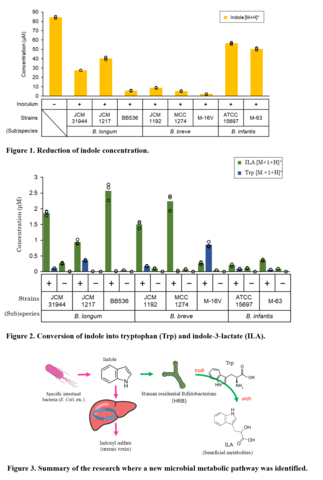
Human-Residential Bifidobacteria (HRB) strains such as Bifidobacterium longum BB536, B. breve M-16V, B. breve MCC1274, and B. infantis M-63, significantly reduced the concentration of indole produced by Escherichia coli, a known indole producer (Figure 1). Subsequently, the research demonstrated that HRB strains can convert the potentially harmful indole into tryptophan (Trp) and beneficial indole-3-lactate (ILA) (Figure 2). The study also identified a new microbial metabolic pathway involving tryptophan synthase β subunit (TrpB) and aromatic lactate dehydrogenase (ALDH) in the conversion process (Figure 3), highlighting the sophisticated mechanisms by which specific HRB strains contribute to gut health. (Graphic: Business Wire)
Research Background
The research focused on indole, a compound produced by certain intestinal bacteria, which is metabolized in the liver and converted into indoxyl sulfate, a typical urinary toxin. When renal function is impaired, indole and indoxyl sulfate can accumulate in the blood, leading to potential health issues, such as the progression of kidney dysfunction. The formation of indole, which is derived from tryptophan, an essential amino acid for humans, may lead to harmful impacts that are inevitable and pose significant health concerns. In collaboration with Kyoto University, Morinaga Milk’s new research aimed to investigate whether HRB strains could reduce the concentration of indole and transform it into a beneficial metabolite, and understand the underlying mechanism.
Groundbreaking Findings Backed HRB Superiority
- Reduction of Indole Concentration: The study revealed that a specific type of bifidobacteria living in humans, including Morinaga Milk’s HRB strains such as Bifidobacterium longum BB536, B. breve M-16V, B. breve MCC1274, and B. infantis M-63 significantly reduced the concentration of indole produced by Escherichia coli, a known indole producer (Figure 1).
- Conversion of Indole into Tryptophan (Trp) and Indole-3-Lactate (ILA): The research demonstrated that selected bifidobacterial strains, including Morinaga Milk’s HRB strains, can convert indole into tryptophan (Trp) and indole-3-lactate (ILA) (Figure 2). While tryptophan is a necessary amino acid, ILA has been identified as an immunomodulatory compound that supports intestinal and systemic immune health. This discovery marks a significant step forward in understanding how beneficial gut bacteria can transform harmful substances into compounds that promote health.
- Metabolic Pathway Elucidation: The study identified a new microbial metabolic pathway involving tryptophan synthase β subunit (TrpB) and aromatic lactate dehydrogenase (ALDH) in the conversion process (Figure 3). The researchers confirmed that selected bifidobacterial strains, including Morinaga Milk’s HRB strains can efficiently transform exogenous indole into ILA and Trp. This elucidation of the metabolic pathway provides a detailed understanding of the biochemical processes involved, highlighting the sophisticated mechanisms by which bifidobacteria contribute to gut health.
- Exclusive Presence in HRB: An extensive genome database search of 11,943 bacterial strains revealed that the co-occurrence of trpB and aldh genes is exclusive to HRB species. This specificity underlines the unique probiotic potential of these bifidobacteria in human health applications. The genomic analysis underscores the distinctiveness of HRB, positioning them as uniquely capable of performing these beneficial transformations.
Implications for Health
These findings highlight the potential of HRB strains, such as those commercialized by Morinaga Milk, in mitigating the harmful effects of indole by converting it into beneficial ILA. This novel function of bifidobacteria highlights their beneficial effects on human, where indole and its metabolites pose potential adverse health effects for individuals with high risks of chronic kidney disease. Moreover, the conversion of indole into tryptophan and ILA also suggests broader implications for overall gut health. Tryptophan is essential for protein synthesis and serves as a precursor for serotonin, a neurotransmitter that plays a critical role in mood regulation and overall well-being. The production of ILA, with its immunomodulatory properties, further supports the immune system, suggesting the additional health potentials of HRB as probiotics. These findings provide valuable insights into the reasons why HRB species thrive in the human intestinal tract and maintain a symbiotic relationship with the human host.
Continued Commitment to HRB Research
Morinaga Milk Industry remains dedicated to advancing our understanding of HRB and their health benefits. This discovery is a testament to our commitment to innovative research and developing high-quality, scientifically-backed probiotic products that contribute to human health and well-being. Our ongoing research endeavors aim to uncover even more ways in which HRB strains can benefit human health, reinforcing our position as a leader in the field of probiotics.
Embrace the Future: Aim Higher!
Under the Morinaga Milk Group's 10-Year Vision, the company aims to achieve an overseas sales ratio of 15% or more by the fiscal year ending March 2029. The company will continue its effort in developing and providing effective HRB probiotics with a higher level of safety and quality, aiming to strengthen its probiotic sales in the global marketplace to help achieve the goal.
About Morinaga Milk Industry
Morinaga Milk Industry Co., Ltd. is one of the leading dairy product companies in Japan, with over a century of history in harnessing the nutritional properties of dairy products and functional ingredients. Morinaga Milk is also a key global probiotics manufacturer that excels in innovative technology and offers a premium line of probiotics and functional ingredients worldwide. Since the 1960s, Morinaga Milk has been engaged in research on the safety, functional health benefits, and mechanisms of action of probiotic bifidobacteria to better understand their role in maintaining human health. For more information about Morinaga Human-Residential Bifidobacteria (HRB) probiotics, please visit us at https://morinagamilk-ingredients.com/.
View source version on businesswire.com: https://www.businesswire.com/news/home/20240530532346/en/
Contact details:
Morinaga Milk Industry Co., Ltd.
Investor& Public Relations Department: Mitsunori Watanabe / Kazuaki Kajikawa
International Division: Junichi Minami / Chyn Boon Wong
E-mail: interntl-pr@morinagamilk.co.jp
Morinaga Milk website: https://www.morinagamilk.co.jp/english/
