
EMBARGOED
12.01AM, MONDAY 8TH JULY 2024
Stuck in traffic: Almost half of Melbourne residents are missing out on public transport
NEW CLIMATE COUNCIL ANALYSIS has found over 2.1 million people living in Melbourne don’t have access to frequent, all-day public transport, leaving them stuck using polluting and expensive cars for most of their trips.
The minimum level of public transport service required to get people out of cars runs every 15 minutes between 7am-7pm and within 800 metres of our homes. Climate Council’s new report, ‘Next Stop Suburbia: Making Shared Transport Work for Everyone in Aussie Cities’, shows almost half of people living in Melbourne don’t have access to this level of service. Some of the biggest service gaps for Melbourne are in suburbs like Cardinia, Mornington Peninsula, and Fawkner.
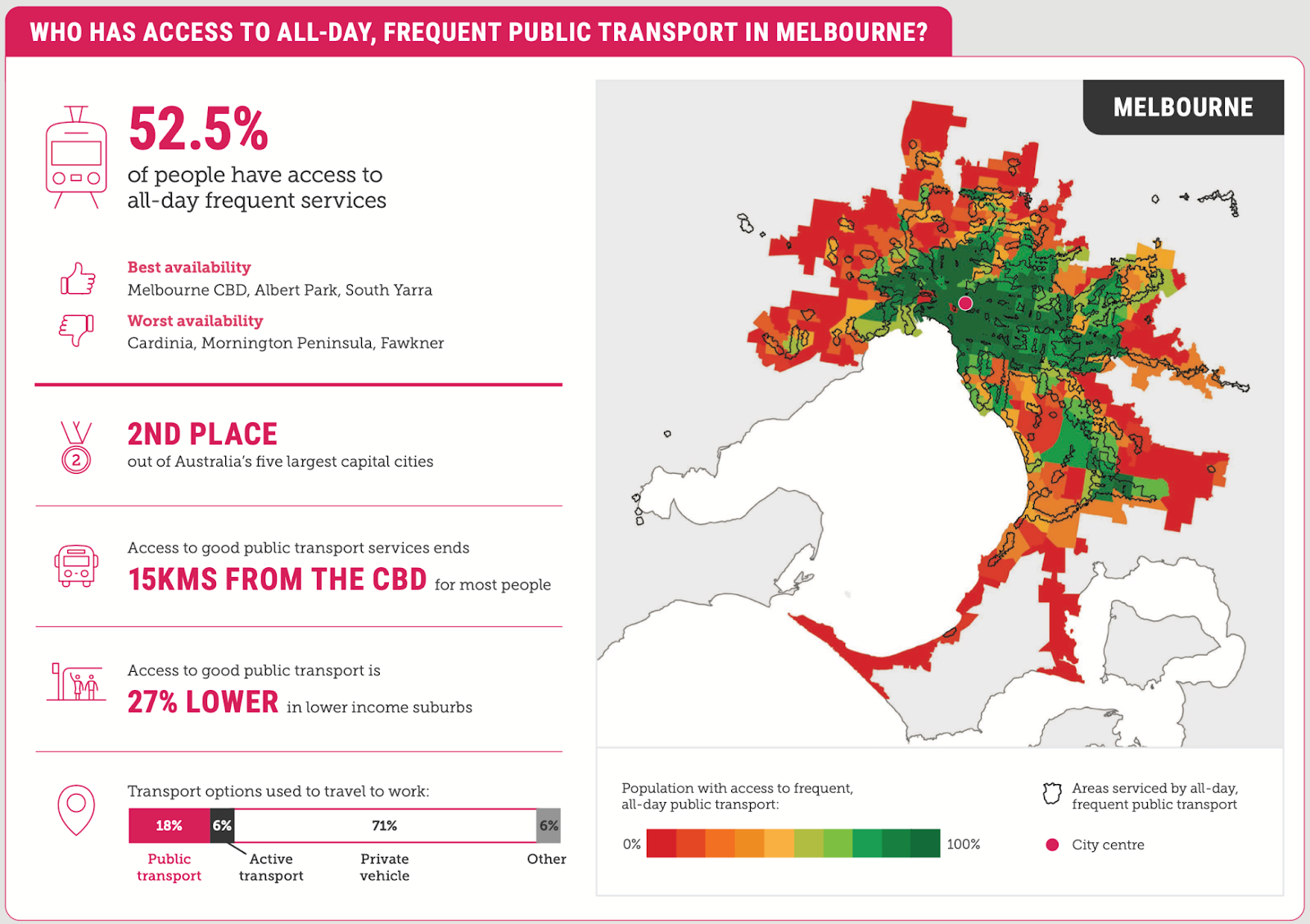
Climate Council Head of Policy and Advocacy, Dr Jennifer Rayner, said: “At the moment, only one in four people in Melbourne use shared and active transport to get to work. That’s because too many communities are being left in the lurch and unable to access services that meet their needs.
“With a step-up in investment from all levels of government, we can transform a car-dependent city like Melbourne to give more people a better choice of fast, convenient and reliable clean transport options. People travelling anywhere across Melbourne, at any time throughout the day, should be able to simply ‘turn up and go’ from point A to B.
“To get us out of our expensive, polluting cars, governments need to centre shared and active transport in all transport and land use planning. This includes new investments that enable the uptake of shared and active transport, like better-connected footpaths and walkways, and improving the quality and frequency of public transport services. Smart urban planning will also deliver more housing near existing transport routes.”
“Big-ticket items like the Suburban Rail Loop are important, but sometimes simple investments like better buses and bike paths in the suburbs can make the biggest and fastest difference. Improved transport infrastructure will slash climate pollution from transport while also cutting the cost of living, making our streets safer and less congested, and cleaning up our air.”
Climate Councillor and public health physician, Dr Kate Charlesworth, said: “Clogged city roads are a familiar sight but we need smarter, healthier transport solutions than simply building more roads, which just adds to our congestion and climate pollution problems. We should all be able to breathe clean air and spend time outdoors without worrying about harmful pollution entering our lungs.
“Particulate pollution from cars has adverse effects on our hearts and lungs, on pregnant women and children. It’s also estimated to be responsible for more than 11,000 premature deaths in Australian adults. We can prevent these harms by delivering better shared and active transport options so more people can leave the car at home.
“We have everything we need right now to make our transport system cleaner and better. For the sake of our health, governments should step up investment that helps more people in Melbourne use shared and active transport more often.”
ENDS
About us:
The Climate Council is Australia’s leading community-funded climate change communications organisation. We provide authoritative, expert and evidence-based advice on climate change to journalists, policymakers, and the wider Australian community. For further information, go to: climatecouncil.org.au or follow us on social media: facebook.com/climatecouncil and twitter.com/climatecouncil
Contact details:
For interviews please contact Zerene Catacutan on 0438 972 260, [email protected], or Jemimah Taylor Jemimah Taylor on 0478 924 425, [email protected]