EMBARGOED UNTIL 00:01
Monday 16 September 2024
Urgent action needed – ‘community’ is the challenge and solution for people with dementia
New research released today by Dementia Australia for Dementia Action Week demonstrates a decade of persistent poor understanding of dementia among Australians is leading to stigma and discrimination.
The research report – ‘People in the community’ are the challenge and the solution: Towards a dementia-friendly future’ – reflects the ongoing realities of stigma and discrimination experienced by people living with dementia. Data in the report from 2024 shows that:
- Nearly three in four people (71 per cent) with a loved one living with dementia felt that people patronised their loved one
- Three in four (76 per cent) felt people treated their family member or friend with dementia as though they were not smart
- Two in three identified ‘people in the community’ as the most common source of discrimination.
- One in three suggested that people avoid or exclude their loved one with dementia
Other surveys conducted by Dementia Australia have found that one in three people think dementia is a normal part of ageing – which has increased slightly in the past decade. As well, alarmingly, in 2012 and 2024 surveys, 68 per cent of people say they know very little about dementia.
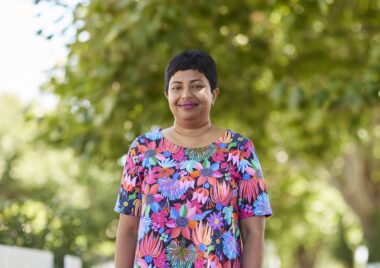
Dementia Australia Advisory Committee Chair Bobby Redman, who lives with dementia, said it is almost unbelievable that we are still having to talk about the limited awareness and understanding about dementia.
“Why do people treat us differently? What have we done to deserve this? As a Dementia Advocate, it angers me. Why are people not listening? All we are asking for is to be understood, respected and supported – just basic human rights,” Ms Redman said.
“If local councils, businesses and organisations recognise that dementia is no less of a disability because it is invisible, we could feel supported. If friends and others in our community keep an eye out for us and make sure we are included, we can feel less socially isolated.
“There is some great work happening in some communities to combat this discrimination and stigma which is heartwarming and encouraging – but we need to do more.
“Communities and Governments – local, State and Territory and Federal – need to raise awareness and understanding of dementia and to take action to make communities more inclusive for people living with dementia.”
Dementia Australia CEO Professor Tanya Buchanan said the research shows that it is indeed ‘people in the community’ who are the most common source of discrimination towards people living with dementia.
“Australian and international studies show that stigma and discrimination associated with a dementia diagnosis can discourage people from seeking health care, including a diagnosis, and reduce social engagement with family, friends and the broader community, which has knock-on impacts on the physical, cognitive and psychosocial health of the person with dementia,” Professor Buchanan said.
“It is incredibly disappointing that Australians’ understanding of dementia has not shifted in a decade and profoundly concerning that more people now think dementia is a normal part of ageing than they did a decade ago. Dementia is not a normal part of ageing.
“We know that we can do better as there are great examples of dementia-friendly communities from around the country.
“And that’s why this Dementia Action Week (16-22 September) Dementia Australia is calling for urgent and sustained action by communities and governments at all levels to increase their awareness and understanding of dementia – and to become the solution.”
Head to dementia.org.au/DementiaActionWeek to find out how you can join us to create a future where all people impacted by dementia are supported and welcomed in their communities, no matter where they live.
-Ends-

Dementia Australia is the source of trusted information, education and services for the estimated more than 421,000 Australians living with dementia, and the more than 1.6 million people involved in their care. We advocate for positive change and support vital research. We are here to support people impacted by dementia, and to enable them to live as well as possible. No matter how you are impacted by dementia or who you are, we are here for you.
For support, please contact the National Dementia Helpline on 1800 100 500. An interpreter service is available. The National Dementia Helpline is funded by the Australian Government. People looking for information can also visit dementia.org.au
Media contacts: Gabrielle Prabhu, 0403 177 754, [email protected] | Andrea Hogan, 0406 904 118, [email protected]
When talking or writing about dementia please refer to Dementia-Friendly Language Guidelines.
Note to Editors:
We request, where possible, details for the National Dementia Helpline 1800 100 500 appear alongside news stories about dementia, as these stories often prompt questions or concerns:
If this story has prompted any questions or concerns, please call the National Dementia Helpline 1800 100 500 (24 hours, 7 days a week) or visit dementia.org.au.