
Australia’s under-18 workers could each have $10,000 more at retirement if an outdated exclusion that denies them super contributions is abolished, a new report has found.
Under-18s are currently denied compulsory super contributions unless they work more than 30 hours a week, due to a discriminatory rule that is complex for businesses to track and ensure legal compliance.
A new report from the Super Members Council finds about nine in 10 teenagers do not reach the 30-hour work threshold each week, denying about 505,000 teenage workers about $368 million in total super contributions a year.
Rigorous analysis in the new report has found:
- A typical teenager who works for at least two years would benefit from almost $2,200 in their super by the time they are 18 years old.
- This would mean they have $10,000 more (in today’s dollars) when they reach retirement age.
- About 505,000 under-18 workers were excluded from being paid super in 2024-25, missing out on an average of $730 each in super contributions – a combined total of $368 million.
Super Members Council CEO Misha Schubert said paying under-18s super sets their retirement saving on the right footing and gives their super the maximum amount of time to grow.
“Every Australian worker, at every age, deserves the right to set themselves on the path to a dignified retirement,” she said
“Australians strongly support universal super – and know it’s a workplace right. Super should be for everyone, paid from the first hour of your first job, and fixing this outdated exclusion is overdue.”
“As every smart investor knows, thanks to the magic of compound returns, a dollar invested early in life in super has the most power to grow our retirement savings exponentially over our lives,”
SMC research shows 85% of Australians think anyone who does paid work should get super contributions.
When super was introduced in the 1990s, the super rate was only 3% and there were fears the smaller balances of teens could be eaten away from fees and insurances. But now, the super rate is 11.5% paid on top of wages, and there are fee caps on low balances and limits on insurance for teens.
A typical teen who works for at least two years could earn as much as $2,200 in super contributions by the time they reach 18, which means teens now are missing out on a lot more than those in the 1990s.
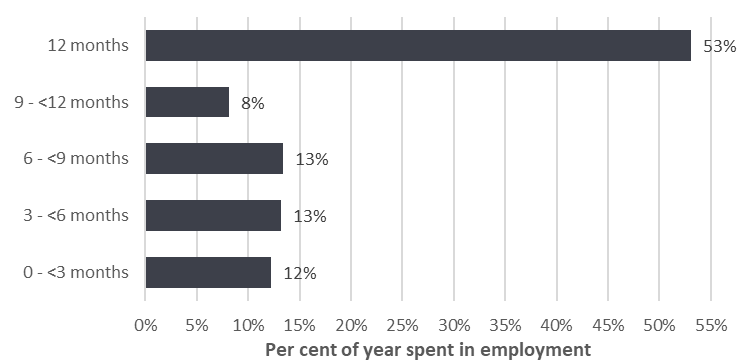
Work for many teens is not just about earning some pocket money on the side, with analysis showing the majority of under-18s are in ongoing employment throughout the year.
Removing the current 30-hour threshold would also simplify administration for employers, who currently face the challenge of tracking hours for under-18 workers and lessen risks of underpayment.
The analysis shows most under-18s are employed in either very large or very small businesses, and with tax deductions, the cost to business is only about $260 million a year.
SMC acknowledges the impact on some businesses and recommends a transition period to give businesses time to adjust, as was done in 2022 when the Coalition Government ended another exclusion and required super to be paid for workers earning less than $450 a month.
“The recommendation to make super universal for under-18 workers is a crucial step towards an even fairer and more inclusive super system,” Ms Schubert said.
“It will help young Australians to have a consistent and positive experience of Australia’s super system from the start of their working lives.”
“This is a modest investment for our children’s future – adding just 0.03% to total employee costs. SMC supports a phased transition and looks forward to working with employer groups to bring about this key reform in a way that enables a smooth implementation for business.”
Figure 1: Distribution of hours worked by under-18s, all jobs. Source: HILDA, waves 19 to 22.
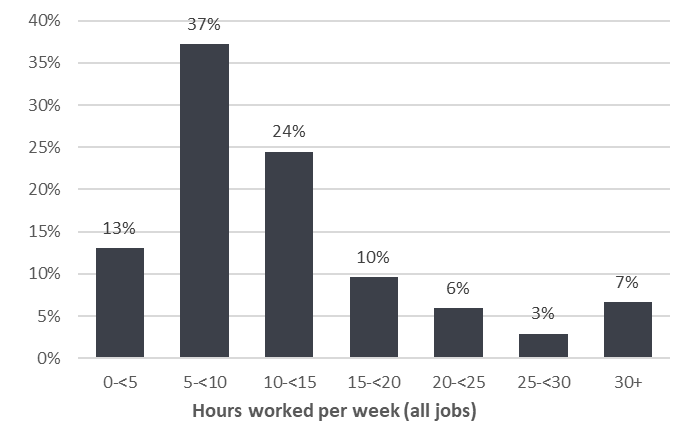
Figure 2: Work history for under-18s. Source: HILDA, waves 19 to 22.
About us:
We are a strong voice advocating for more than 11 million Australians who have over $1.5 trillion in retirement savings managed by profit-to-member super funds. Our purpose is to protect and advance their interests throughout their lives, advocating on their behalf to ensure superannuation policy is stable, effective, and equitable.
Contact details:
James Dowling: 0429 437 851, [email protected]