
FOR IMMEDIATE RELEASE
FRIDAY 20TH DECEMBER 2024
New year, new gear: New Vehicle Efficiency Standard revs off the starting line at the stroke of midnight
The Albanese Government’s New Vehicle Efficiency Standard (NVES) that will come into effect on January 1 will see cleaner and cheaper to run cars sold in Australia, cutting climate pollution produced by new cars by more than half. The policy is a huge win for our climate, our health and our hip-pockets, preventing 20 million tonnes of climate pollution by 2030.
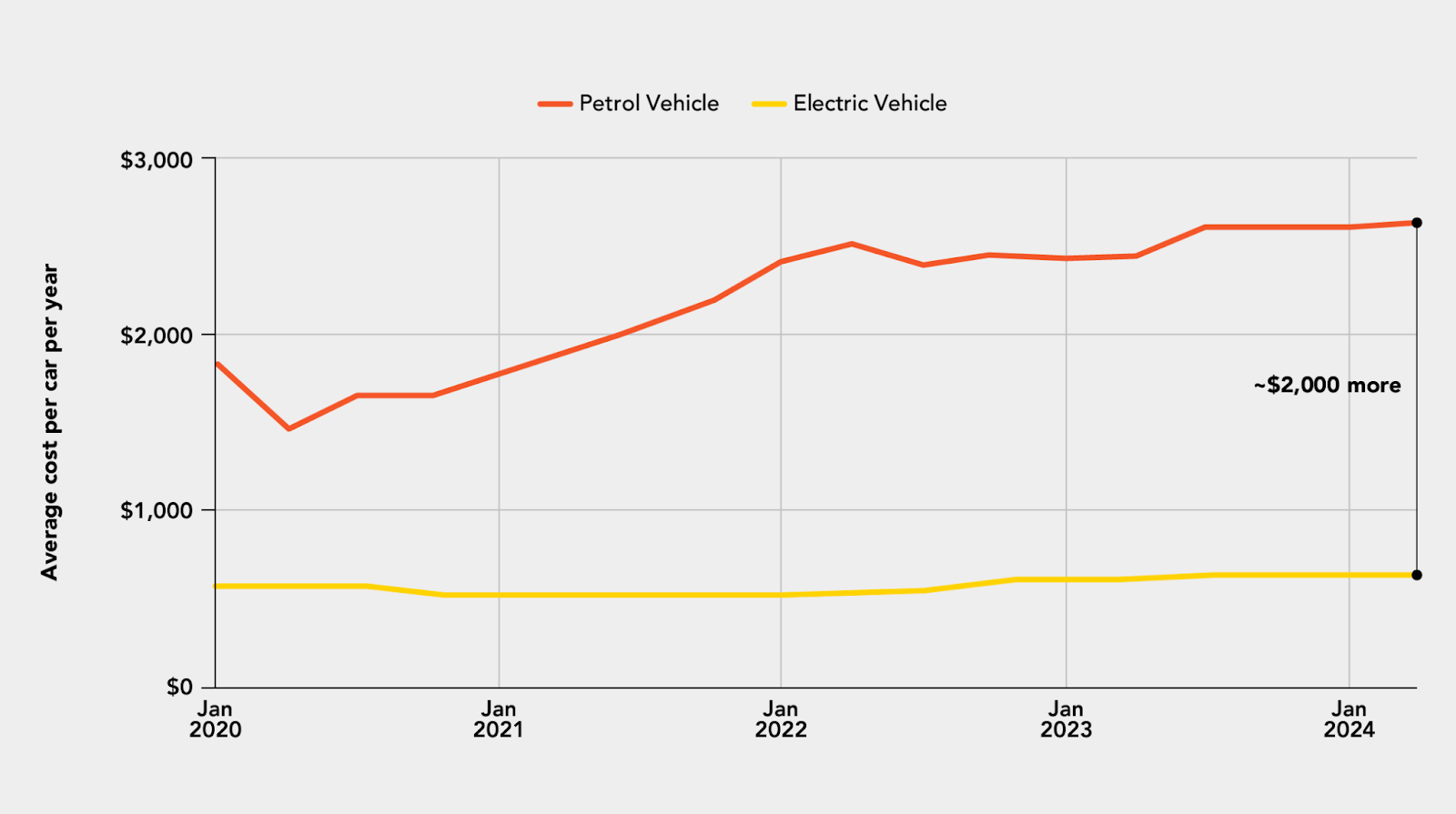
For more than two decades, uptake of low- and zero-emissions vehicles was held back by a lack of fuel efficiency standards, hurting our hip-pockets, air quality, and environment. Meanwhile, high petrol prices rose faster than inflation and other transport costs – filling a petrol car costs about $2,000 more than charging an electric vehicle.
Source: Under Pressure: The Climate Crunch Fuelling Inflation and Hurting Aussie Families, p.13
Climate Council Fellow and Chief Executive of Public Transport Association Australia New Zealand (PTAANZ), Lauren Streifer, said: “What better way is there to start the new year than by taking a significant step towards a cleaner and safer future for Australia? For too long, Australia has been dependent on expensive-to-run, high-polluting cars. The New Vehicle Efficiency Standard gets the world’s biggest car companies contributing towards Australia’s efforts to reduce climate pollution from transport.
“It marks an important step to slash dangerous climate pollution further and faster this decade, particularly as fossil fuel-powered cars release most of the toxins in our air and contribute to unnatural disasters from a warming planet.
“Embracing cleaner cars that are cheaper to run will help take the pressure off of Aussie households and drive towards a better future that we can all enjoy. We’ll soon see more Australians move away from expensive petrol bills, while cleaning dirty air, and reducing pollution that does damage to our climate.”
Providing more people in our cities with cleaner ways of getting around means we can clean up air pollution from traffic congestion.
“This new standard marks a turning point in Australia's efforts to slash climate pollution from transport this decade. Low- and zero-emission vehicles are an essential part of the puzzle, and we can go further by taking advantage of huge opportunities in shared and active transport, which includes public transport, rideshare, walking and bike riding. This will give Australians better and cleaner choices in how they get from point A to B,” Streifer said.
ENDS
For interviews please contact the Climate Council media team on 0485 863 063, [email protected]
About us:
The Climate Council is Australia’s leading community-funded climate change communications organisation. We provide authoritative, expert and evidence-based advice on climate change to journalists, policymakers, and the wider Australian community. For further information, go to: climatecouncil.org.au or follow us on Facebook, Instagram, X, and LinkedIn.