
Skip to content
Transport Automotive

NVES helping the suburbs more than the inner city

Electric Vehicle Council 2 mins read

Australians living in the outer suburbs and earning middle incomes will have access to modern and fuel efficient cars that will save them up to $3,000 per year under the New Vehicle Efficiency Standard (NVES), according to the Electric Vehicle Council.

The vehicle efficiency standard is about driving down prices for cleaner cars in Australia. It incentivises car makers to gradually reduce the total emissions of the cars they sell, giving motorists dozens more choices at a lower purchase price and cheaper running costs.  

Electric Vehicle Council CEO Julie Delvecchio said: “The New Vehicle Efficiency Standard is helping more Australians living in the outer suburbs make the switch to cleaner cars that will save them up to $3,000 per year. 

“All major mainstream car makers are adapting to Australia's incremental standards, the same way they adapted to standards in the US and Europe. Manufacturers who want to send their dirtiest cars to Australia are the only ones with anything to lose from this very sensible and measured policy.

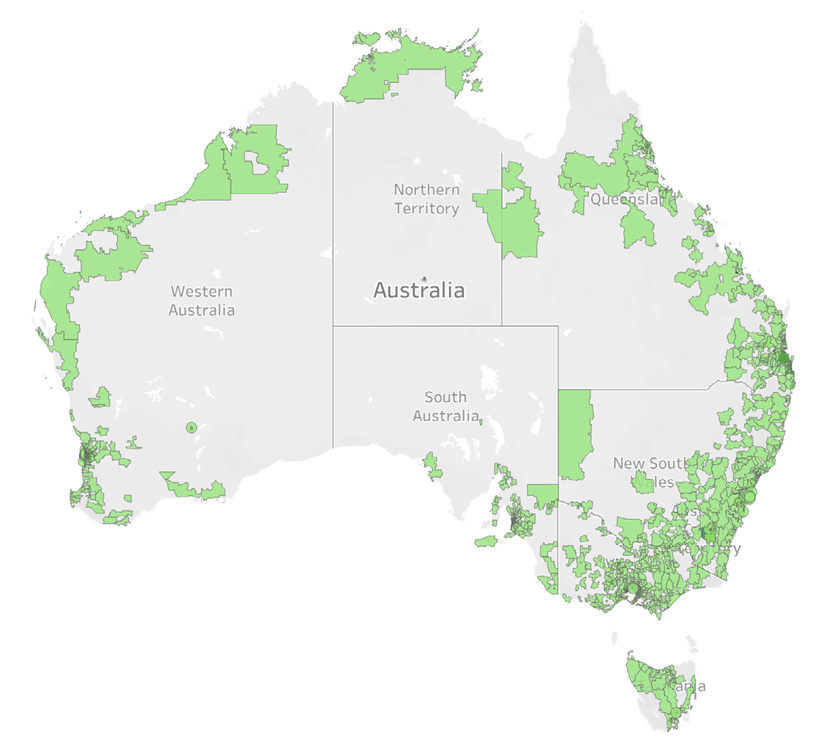
"Far from electric cars only being bought by people living in the inner city, EVC data shows the people adopting electric vehicles the most are those living in the outer suburbs – areas like Kellyville in Sydney's north-west and Werribee in Melbourne's south-west. 

“Traditional suburbs have overtaken inner-city suburbs in EV uptake. Our data shows that outer metropolitan suburbs have accounted for 43 per cent of uptake. When combining outer metropolitan, regional and rural, this accounts for 61 per cent of EV uptake in 2023.

“This indicates that EV adoption is growing more rapidly in outer suburban, regional and rural areas than inner metropolitan areas. These communities often commute longer distances, meaning they benefit the most from ditching expensive overseas fuel. 

“People living in the outer suburbs also tend to have access to a garage or driveway for home charging, and the added advantage of rooftop solar panels—features that are often harder to come by in the built-up inner city. People living in regional centres are also embracing EVs too including in Toowoomba and Ballarat.

“The NVES is about benefiting all Australians - it’s lowering the cost of running a car by up to $3,000 per year, giving us a wider range of cleaner cars for all lifestyles and reducing air pollution to improve the air we all breathe.

“Australia needs the New Vehicle Efficiency Standard to continue in the race to catch up with the developed world. Before this year, Australia was the world’s dumping ground for the dirtiest, fuel-hungry cars - an unenviable reputation that’s now firmly in the rearview mirror.”

Overview of 2023 BYD and Tesla EV sales by postcode. Source: BYD and Tesla
Media contact: Sofie Wainwright 0403 920 301

More from this category

  • Transport Automotive
  • 10/03/2026
  • 09:58
Road Freight NSW (RFNSW)

RFNSW calls for fuel security for NSW freight operators

Peak body Road Freight NSW (RFNSW) has warned that escalating hostilities in the Middle East are continuing to drive-up petrol and diesel prices across Australia and today called on the Albanese Government to ensure adequate, consistent fuel supply for freight operators. RFNSW Chief Executive Officer Simon O’Hara said any sustained rise in global oil prices would lead to higher prices at the bowser, increasing the cost of transporting groceries, pharmaceuticals, construction materials, agriculture and other essential goods. “Diesel is the life blood of the freight industry and is by far, the biggest operating cost for trucking operators, who move the…

  • Defence, Transport Automotive
  • 05/03/2026
  • 10:42
Australian Electric Vehicle Association

MEDIA RELEASE: EVs have always been about fuel security

As the United States and Israel’s attack on Iran continues to plunge the region into chaos, oil andgas prices are skyrocketing. The inflationary impact will be felt in key sectors like transport andlogistics, agriculture and mining, with consumers invariably paying the price. The AustralianElectric Vehicle Association (AEVA) was formed under near-identical circumstances, following theYom Kippur war of 1973. Independence from liquid fossil fuels is an energy security priority. “EVs have always been about fuel security” said AEVA National President, James Pickering.“53years ago, AEVA was formed by a team of scientists, engineers, energy and transport professionals,and ordinary Australians; all with the…

  • Government Federal, Transport Automotive
  • 05/03/2026
  • 09:17
Electric Vehicle Council

Retaining Electric Car Discount Key to Shielding Australians from Soaring Petrol Prices

Key Facts: Petrol prices have risen above $2 per litre in Australian cities due to Middle East conflict, prompting calls to retain the Electric Car Discount Electric vehicles can save households up to $3,000 annually in transport costs, primarily through avoiding petrol expenses The Electric Car Discount has helped over 114,000 Australians transition to electric vehicles 5 March 2026 As the Middle East conflict drives petrol prices above $2 per litre in Australian cities, the Electric Vehicle Council is calling on Federal and State Governments to strengthen support for electric vehicles and protect the Electric Car Discount. With global oil…

  • Contains:

Media Outreach made fast, easy, simple.

Feature your press release on Medianet's News Hub every time you distribute with Medianet. Pay per release or save with a subscription.