Media Release
26 March 2025
This year’s Australian Government budget maintains the decades-long tradition of spending on treatments and hospitals, rather than investing in preventive health measures that stop people getting sick in the first place, say Australia’s public health professionals.
“We implore this and future governments to enact a precautionary principle to ensure the public’s money is invested in fences at the top of the cliff, rather than ambulances at the bottom of it,” Public Health Association of Australia CEO, Adj Prof Terry Slevin, said.
“The Australian Government’s most recent public hospitals funding agreement with states and territories, table below, showed Commonwealth spending increased by 12% in one year.
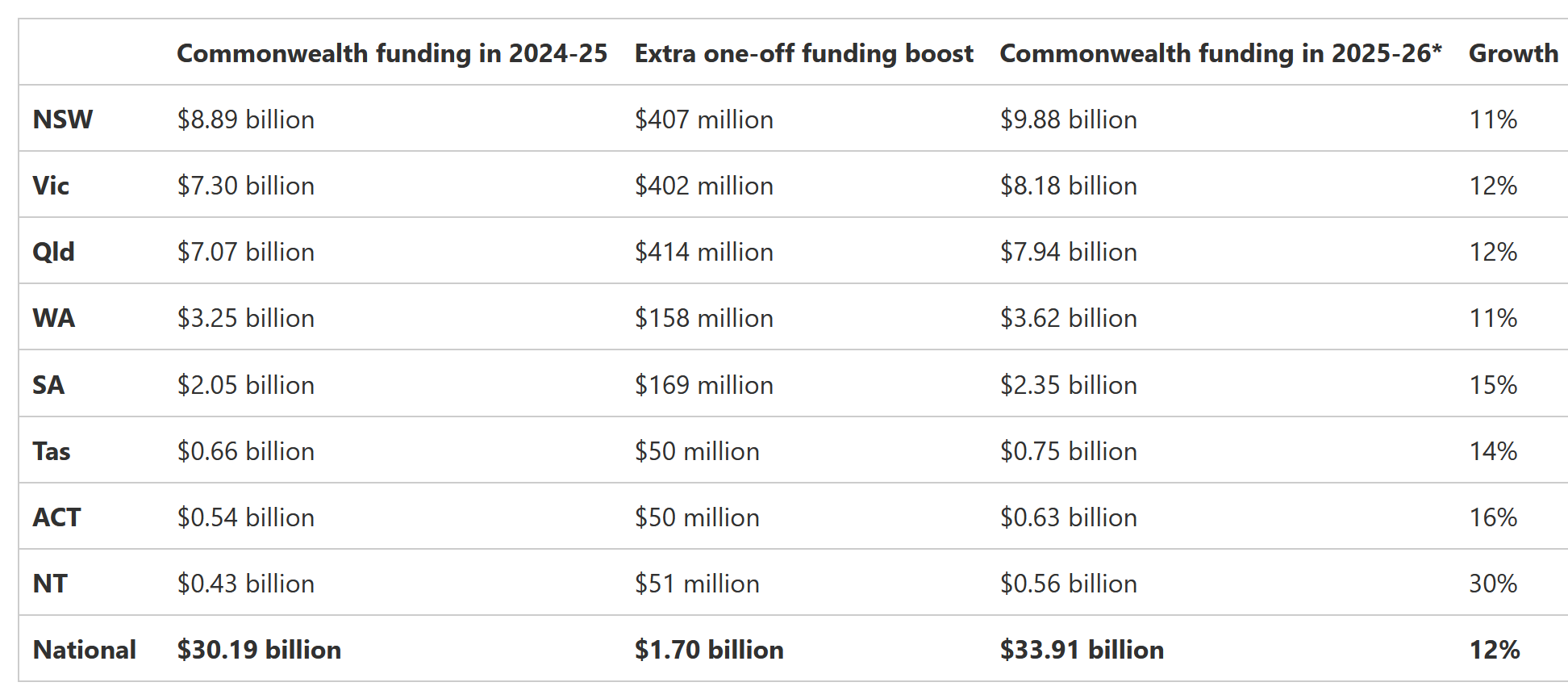
“It is simply not sustainable for this to continue for another 20 years. The only rational response is to reduce demand by investing in making people healthier, through real commitments in prevention.
Source: Department of Health and Aged Care, 6/2/2025
“Most health measures in this year’s budget have already been announced.
“These include the investment of $251.7 million into the Australian Centre for Disease Control (Aus CDC), because the country needs an independent entity to lead national efforts against both infectious and chronic diseases. We enthusiastically welcome the investment in the Aus CDC.
“While we know Labor intends to make permanent the interim Aus CDC should it win the forthcoming election, the Opposition has yet to make clear its position about what they will do for pandemic preparedness.
“We hope Opposition Leader Peter Dutton will announce the Liberals’ plans in his budget-reply speech, or prior to the election, so that voters have a clear understanding about this vital piece of public health infrastructure.”
There’s also $188 million for tackling illicit tobacco and associated nicotine products, announced on 12 March, which includes scanning more shipping containers at ports and boosting cooperation with regional authorities. We applaud Minister Mark Butler’s strong stance against illicit tobacco and vaping, and for standing up to Big Tobacco’s ceaseless attacks on tobacco excise.
Regarding women’s health, we appreciate funding to put listings for contraceptives, endometriosis, and IVF treatments on the Pharmaceutical Benefits Scheme, announced on 16 March, and Assistant Minister Ged Kearney’s ongoing efforts to tackle medical misogyny.
The public health community welcomes the funding in this budget for the $25 cap for medicines under the Pharmaceutical Benefits Scheme, as well as $8.5 billion to deliver an additional 18 million bulk billed GP visits each year.
There is also $644 million toward primary care access as part of the Urgent Medicare Clinics scheme. These are equity measures that should improve access to health care for vulnerable people, for whom cost can be a major barrier.
For further information/comment:
Paris Lord (he/him), PHAA Communications & Media Manager, 0478 587 917, [email protected]
About us:
About the Public Health Association of Australia
We’re Australia's peak body for public health and advocate for the health and wellbeing of everyone. We strive to help prevent – rather than cure – illness and disease. We represent around 2,000 individual members from more than 40 professional groups interested in the promotion of public health. We have branches in every state and territory. Learn more at https://www.phaa.net.au/
Contact details:
For further information/comment:
Paris Lord (he/him), PHAA Communications & Media Manager, 0478 587 917, [email protected]