Media Release 13/03/25
Where’s the community in climate action?
We won’t fix global, unless we talk local
13 March 2025
Over the last week most us will have checked in with friends and family in South East Queensland and Northern NSW. With four million battening down, schools closed, evacuation centres open and the ADF on standby, most Australians knew someone in the uncertain path of TC Alfred.
Now there’s mostly collective relief. ‘Dodged a bullet’. Buckets, mops and chainsaws are at work, and the power and the phones are slowly being reconnected.
Until next time.
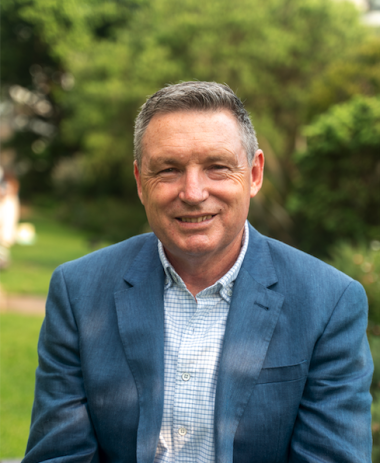
David Crosbie, CEO of the Community Council for Australia said one of the remarkable things about Alfred, was the slow-motion unfolding of havoc and prolonged rekindling of memories and trauma from not-so-long-ago disasters: ‘We knew there was great potential for disaster. Government and communities knew they had to prepare. And we knew people and communities would need support before, during and after.’
Mr Crosbie said that unlike a lot of discussion about climate change there was a direct connection between talking about the impact of severe weather and what we wanted for our communities.
‘There was a sense of we are all in this together. There was a collective goal to see each other through. To keep people safe, and to restore lives and communities. And there was urgency.
Unfortunately, the same sense of urgency is not being attached to investing in our community capacity to prepare, respond, recover and adapt to future disasters and climate change. A lot of what we do seems to involve wishful thinking about communities coming together. Why aren't we investing more in supporting community building infrastructure?'
In a week where Sydney is hosting over 200 events to advance our response to climate change, Mr Crosbie says we are a long way from centring community in our response to the biggest slow-motion multi-pronged threat to our future. And that’s a fundamental problem.
‘When we are focused on the experience of people and community, we begin talking less about the science, the forecasts and the responses in big amorphous terms, and more about what they mean for our everyday lives and our local community.’
‘It’s no accident that those who seek to undermine climate action by dividing communities are very good at this. They talk about local jobs, power lines, your power bill and the intrusion of windfarms on local countryside. They divide communities by working from the ground up.’
Mr Crosbie said that until communities are engaging with the impacts of climate change and opportunities of energy transition in the same conversation as the one about the kind of future and opportunities they want for their community, their children and their children’s children, there is a disconnect.’
‘It is a disconnect we need to fix if we are to embrace the opportunities of a renewables future and build unity and the responses we need to climate change locally, nationally and globally.’
As Australia seeks to co-host COP31with the Pacific in 2026 (the UN climate conference seeking to save the planet), Mr Crosbie said the road to delivering for people, planet, peace and prosperity begins by engaging with and investing in communities, listening to their voices and connecting their local experience, knowledge and aspirations to national and global agenda for an inclusive response to climate change.
On Friday, that’s the focus of the closing session of Climate Action Week. Community advocates will be telling their stories – they will be putting community into the climate discussion. From the Kimberley to Terrey Hills, from Bankstown to the Tiwi Islands, from Wombarra to the Pacific, from local to global.
More information:
Taking Local Climate Action to the World through COP31 and Beyond
Media Contacts:
Deborah Smith, 0418 244 883 [email protected]
David Crosbie, 0419 624 420 [email protected]
About us:
The Community Council for Australia is an independent non-political member-based organisation dedicated to building flourishing communities by enhancing the extraordinary work undertaken by the charities and not-for-profit sector in Australia. CCA is a peak body for charities that seeks to change the way governments, communities and not-for-profits relate to one another.