26 June, 2025 – Nature's role in building resilience to bushfires, floods and other disasters is at the forefront of a multi-million dollar national program, announced today at the international Ecosystem Services Partnership Conference (ESP11) in Darwin.
The National Nature-led Resilience Program, led by NRM Regions Australia, aims to improve awareness, and increase investment, in nature-based solutions for climate risks like floods and bushfires.
The new program will draw upon the expertise and experience of Australia’s national resource management (NRM) sector to provide governments, communities, farmers, businesses and others with the evidence, knowledge, and frameworks needed to support greater uptake of nature-based solutions.
Program Lead Sarah Hoyal of NRM Regions Australia said “Nature provides significant protective benefits for people, infrastructure and economies. We need to think of nature as part of our essential infrastructure for climate adaptation and resilience, alongside built or ‘grey’ infrastructure.”
Regional NRM organisations will deliver an initial set of nature-based solution trials and project enhancements in four states - Queensland, Western Australia, Tasmania, and New South Wales - with plans to expand to other states and territories in coming years. Four trials are being undertaken around the country while evaluation of more than 150 other nature-based solutions sites is also planned.
The NRM-led trials include:
-
In South-West WA: strategic revegetation to create living or green fire breaks on productive land to reduce landscape-level bushfire risks.
-
In Tasmania: significant long-term flood recovery works on agricultural land will be evaluated to help design and deliver new flood resilience projects.
-
In WA’s Northern Agricultural region: rehydration of riparian landscapes and stabilisation of hydrological systems to reduce flood and bushfire risks across the landscape.
-
in North Queensland: First Nations-led cultural fire management to improve landscape health and reduce bushfire risks.
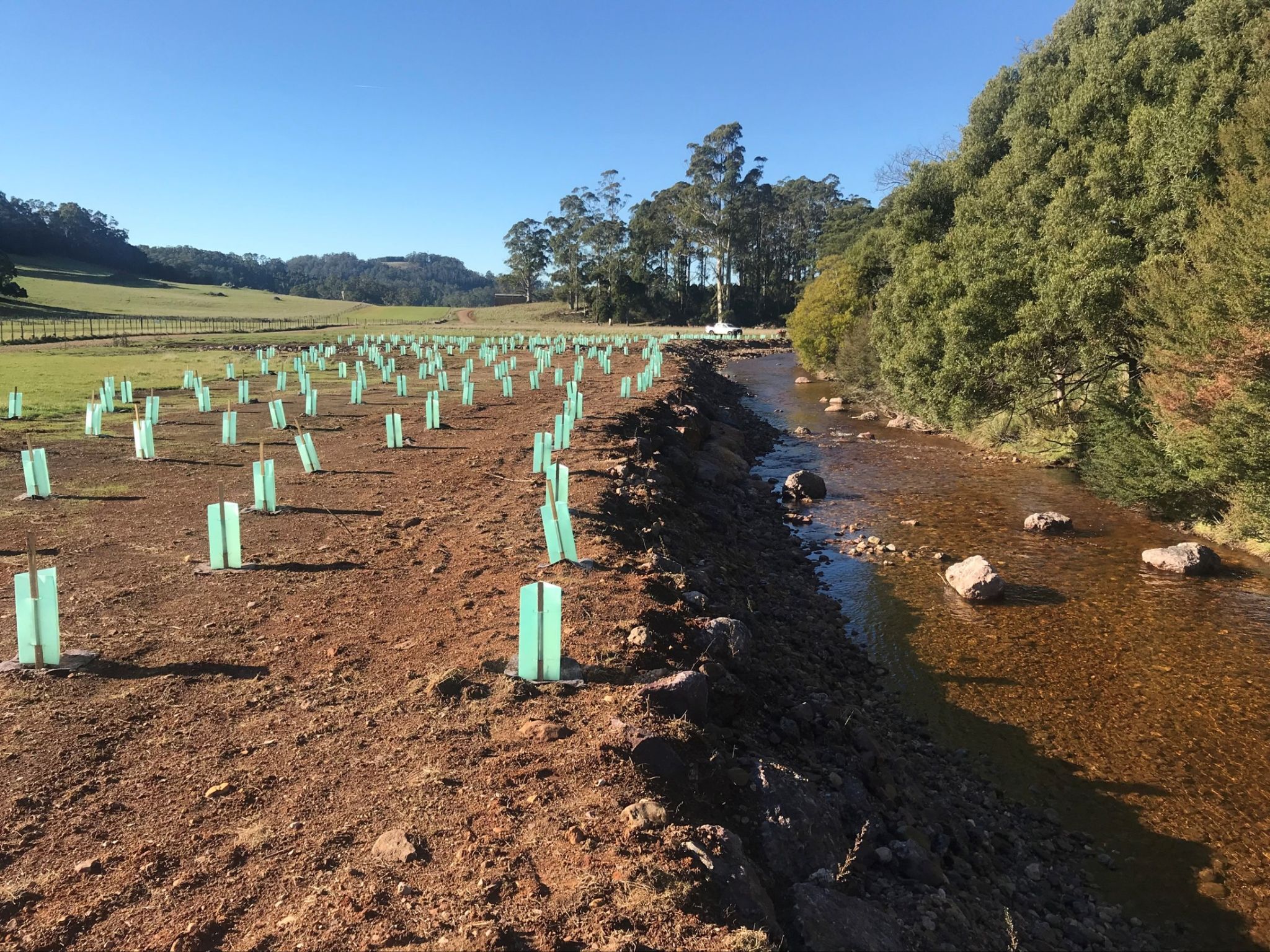
Worsening impacts of climate change and natural disasters require urgent and integrated landscape-scale solutions. Nature-based Solutions protect, manage, and restore landscapes, enabling communities to address and adapt to climate challenges and build resilience to extreme events.
“Over the past six months alone, the Australian economy has taken a $2.2bn1 hit from natural disasters that have damaged or destroyed public and private property and infrastructure,” said Program Lead Sarah Hoyal.
“The Climate Change Authority now projects that if effective action isn’t taken, costs will increase to $8.7 billion per year by 2050.2
“We have to think and invest differently to direct more funding towards resilience actions, rather than disaster response and recovery where most funding currently ends up. Research shows that every dollar invested in Nature-based Solutions returns at least nine dollars to the community in benefits.3
The Head of Existential Threats at the Minderoo Foundation, Tim Rutherford offered strong support for the Program: “It is critical we invest in Nature-based Solutions such as and management activities to protect our natural assets and surrounding communities.
“Minderoo Foundation is proud to be partnering with NRM Regions Australia to deliver this regionally and culturally appropriate program. We are excited by the opportunity to improve environmental and economic conditions across the country.”
Program Lead Sarah Hoyal said regional NRM organisations across the country have unique expertise in delivering Nature-based Solutions.
“Nature-based Solutions have long been core business for Regional NRM organisations,” she said. “Their work to protect soils from erosion, to store more carbon in landscapes, to restore vegetation along rivers and waterways helps communities to maintain water quality, protect agricultural productivity and support native plants and animals.”
Established more than two decades ago, the Australia-wide network of regional NRM organisations works in partnership with First Nations Australians, landholders, communities, industries, conservationists, and governments to restore and sustain biodiversity and productive landscapes.
In that time, NRM organisations have removed feral pests from over 110 million hectares of land, applied fire management techniques to over 11 million hectares, built over 100 feral-free enclosures, and revegetated over 35,000 hectares of native animal habitat. At least 10 NRM organisations are receiving funding under the Nature-led Resilience Program.
ENDS
Contact:
Sarah Hoyal, Program Lead, NRM Regions Australia - 0488 681 916
Dr Bek Christensen, NbS Knowledge Broker, NRM Regions Australia - 0401 047 727
Website: https://nrmregionsaustralia.com.au/
References
1 Guardian, 1 June 2025, Natural disasters cost Australia $2.2b
2 Home safe: National leadership in adapting to a changing climate. Climate Change Authority, June 2025
3 Closing the Gap: Investing in natural capital to meet the SDGs. UNEP, June 2024.
The benefit-to-cost ratio (BCR) of closing the natural capital gap to meet the nature-related Sustainable Development Goal targets in Australia is 9.3, meaning that, on average, every $1 invested in closing the natural capital gap will bring $9.3 in benefits.
Background facts