

-
Monash University engineers have developed a world-first, device that accurately tracks how much breastmilk a baby drinks - in real time.
-
Perceived insufficient milk supply (PIMS) is one of the leading reasons women stop breastfeeding before six months, despite meeting their baby’s needs.
-
Inspired by her own experience as a new mum, Dr Fae Marzbanrad created the AI-powered monitor - now close to commercialisation.
For countless new mums, one of the hardest parts of breastfeeding isn’t the latch or the logistics - it’s the uncertainty. Is my baby getting enough? Am I making enough?
Perceived insufficient milk supply (PIMS) is a major reason why women stop breastfeeding before the minimum six months recommended by Australian guidelines.
A large review, published in 2021, found that – amongst breastfeeding mothers – perceived insufficient milk supply (PIMS) is one of the major reasons for discontinued breastfeeding, with approximately 50 per cent of mothers reported PIMS as the reason for stopping breastfeeding.
Now a Monash University researcher has developed a smart device that measures, in real time, how much milk a baby consumes while breastfeeding.
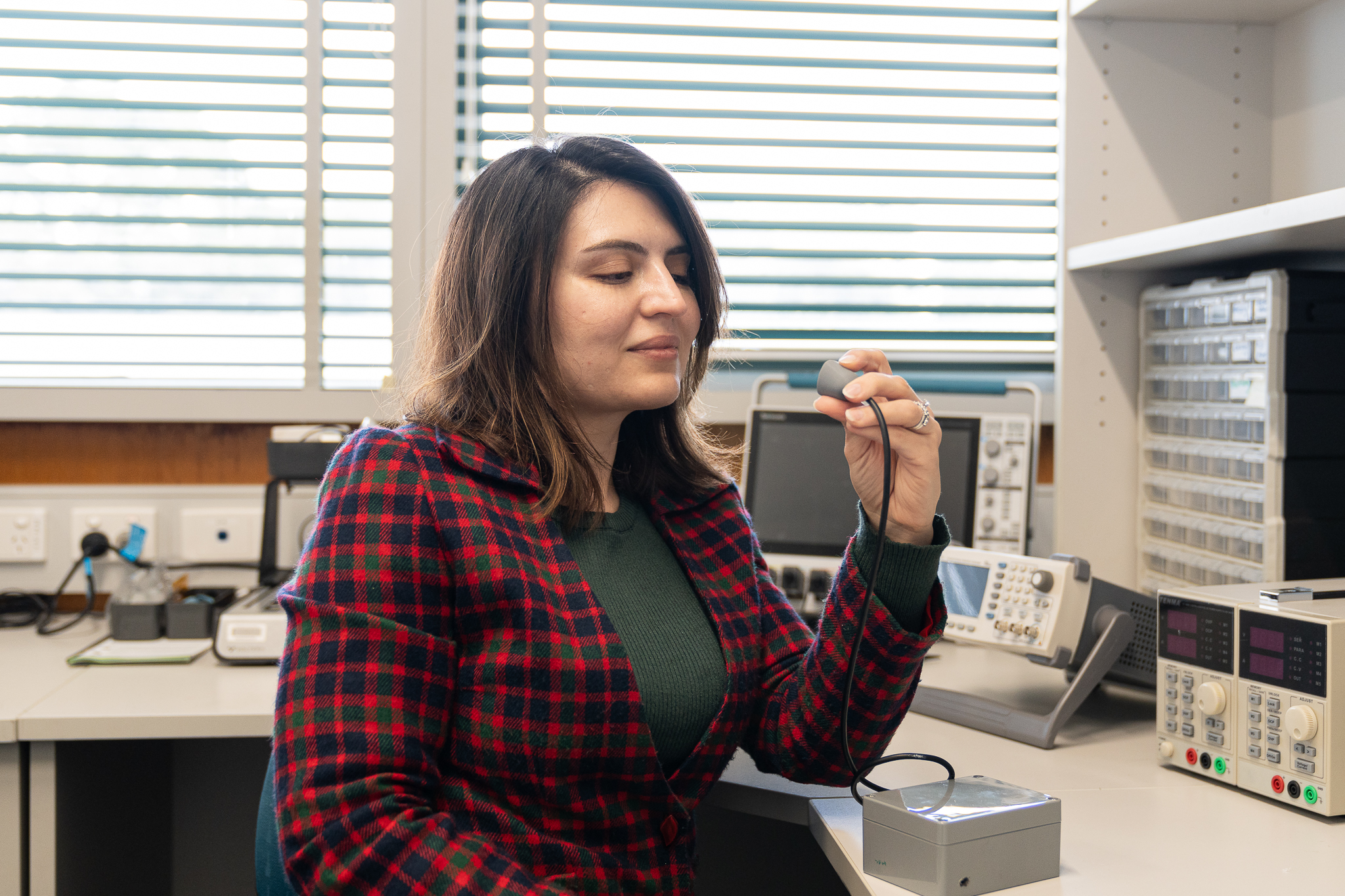
The device, developed by Dr Fae Marzbanrad and her team at the Faculty of Engineering, works by placing a small probe on the baby’s neck while feeding. . A working wireless prototype has been developed and is now close to commercialisation.
The sensor records signals that use AI to instantly measure the amount of milk the baby consumes per feed.
“My baby wasn’t putting on enough weight, which was a stressful and difficult experience as an overwhelmed new mum,” said Dr Marzbanrad, head of the Biomedical Signal Processing Research Lab at Monash.
“I also found that this was a common experience for other women in my mother’s group. So, I developed a device to solve this problem, and many mums I know are now waiting for it and willing to pay for it.”
In a new pilot study of 24 newborns, the Infafeed monitor successfully showed that it can track newborn feeding accurately, addressing a longstanding gap in neonatal feeding assessment with a non-invasive, AI-powered solution.
“Maternal concern about insufficient milk supply is a major cause of premature cessation of exclusive breastfeeding. The Infafeed monitor provides a non-invasive objective tool for assessing neonatal milk intake, with the potential to reduce unnecessary supplementation, enable early identification of feeding problems, and support breastfeeding continuation,” Dr Marzbanrad said.
The monitor was developed in collaboration with Associate Professor Atul Malhotra, a neonatologist from Monash Department of Paediatrics and Monash Children's Hospital. The researchers believe that, if validated in larger studies, the monitor could enhance breastfeeding support strategies in both clinical and home settings.
“The technology could be particularly beneficial for preterm or low birth weight babies when they transition from gastric tube feeding to breast or bottle feeding, helping them gain weight more effectively while providing parents with accurate data and peace of mind,” Associate Professor Malhotra said.
The work has already generated significant interest among parents and medical professionals eager for a reliable, non-invasive solution to monitor infant feeding.
DOI: 10.5005/jp-journals-11002-0121
MEDIA ENQUIRIES:
Courtney Karayannis, Media and Communications Manager
Monash University
T: +61 408 508 454 or [email protected]
GENERAL MEDIA ENQUIRIES
Monash Media
P: +61 3 9903 4840
For more experts, news, opinion and analysis, visit Monash News.