mRNA Victoria funds 2 Florey projects to prevent and treat Alzheimer’s disease
Key points
-
mRNA Victoria has funded 2 Alzheimer’s disease research projects that could position Victoria as a leader in the development of mRNA-based therapies.
-
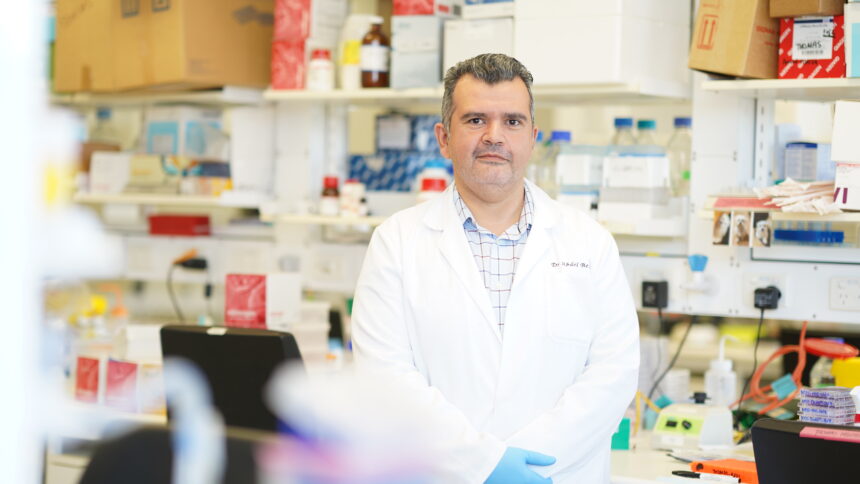
Dr Abdel Belaidi will develop an mRNA-based system that crosses the blood-brain barrier and aims to slow or even halt disease progression.
-
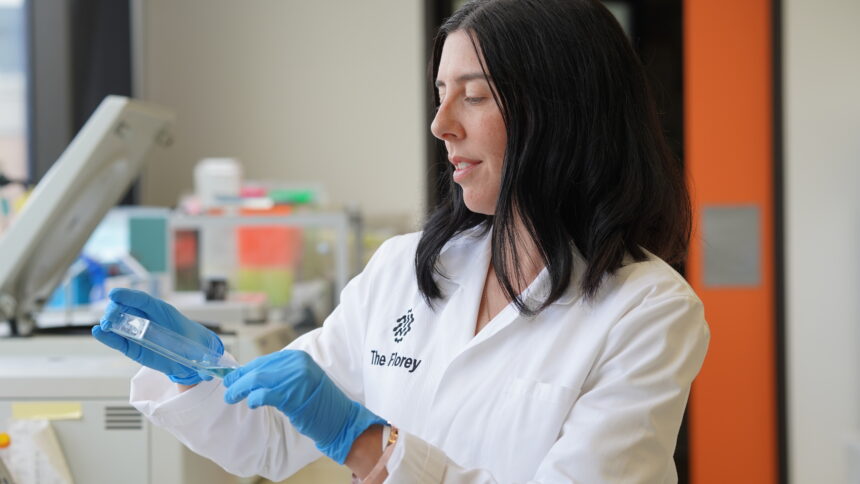
Dr Rebecca Nisbet will develop an mRNA vaccine that aims to prevent Alzheimer’s disease from developing.
Florey researchers working at the cutting edge of dementia research have received funding from mRNA Victoria to develop treatments and a vaccine for Alzheimer’s disease.
Since mRNA vaccines were developed during the COVID-19 pandemic, researchers around the world have been working on ways to harness the potential of this technology to treat neurological conditions.
The funding, announced by Victoria’s Minister for Economic Growth and Jobs Danny Pearson MP, enables Dr Abdel Belaidi and Dr Rebecca Nisbet to take advantage of the rapid development of mRNA research to pursue their projects.
Development of apolipoprotein E (APOE)-targeted mRNA therapeutics for the treatment of Alzheimer’s disease
“Alzheimer’s disease is the leading cause of dementia and a major cause of death in Australia,” Dr Belaidi said. “Despite recent breakthroughs in mRNA technology and Alzheimer’s research, we still lack effective treatments.”
Dr Belaidi’s work builds on the discovery that some people, despite having gene variants that cause an inherited form of Alzheimer’s disease, are protected from developing dementia.
“These people carry rare genetic variants that protect against inherited Alzheimer's disease. I recently uncovered that APOE and APOE receptors exert an important function in the brain by protecting neurons from death.
“I am now working to develop a therapy that will use mRNA to deliver beneficial protein variants to protect neurons and slow progression of the disease.”
Dr Belaidi said it would be the first use of mRNA to penetrate the brain and is a technique that could be used to treat other neurological conditions.
“This project not only has the potential to change the treatment landscape for Alzheimer’s disease but also positions Victoria as a leader in the development of mRNA-based therapies, enhancing the State's reputation as a hub for innovative biomedical research,” Dr Belaidi said.
Development of a mRNA vaccine for the prevention of Alzheimer's disease
"One of the causes of Alzheimer’s disease is the clumping together of a toxic molecule called amyloid-beta in the brain,” Dr Nisbet said. "Targeting amyloid-beta and clearing it from the brain shows promise as a treatment.”
Dr Nisbet aims to develop a vaccine for Alzheimer’s disease that can stimulate the immune system to produce protective antibodies that function by clearing amyloid-beta from the body and preventing its accumulation in the brain.
“If successful, an mRNA vaccine targeting amyloid-beta will be cost-effective and may enable long-term pre-symptomatic treatment, with the potential to prevent Alzheimer’s disease from developing in later life.”
She said the project lays the foundation for establishing a platform for developing mRNA vaccines for neurodegenerative diseases, with the potential to expand Victoria’s mRNA clinical pipeline.
“This is an opportunity for Victoria to develop and grow an mRNA pipeline for vaccines targeting neurological diseases, bringing Victoria to the forefront of innovation for neurological treatments,” she said.
-ends-
Notes to editor:
The Florey is an independent medical research institute devoted to tackling brain and mental health conditions. Our mission is to improve lives through research. We envisage a world where early detection and timely intervention mean these conditions are preventable or treatable, so that we can all live full and healthy lives.
We have 57 teams investigating our research priorities: Dementia, Neurodegeneration and Immunology, Stroke and Critical Care, Epilepsy and Neurodevelopment, and Mental Health.
Find out more about us on our website: www.florey.edu.au
Contact details:
Media contact:
Kathryn Powley, Media and Communications Manager
[email protected] | 0456 666 271