Skip to content
Environment, Finance Investment

HESTA welcomes 25% boost to Capacity Investment Scheme

HESTA 2 mins read

29 July 2025

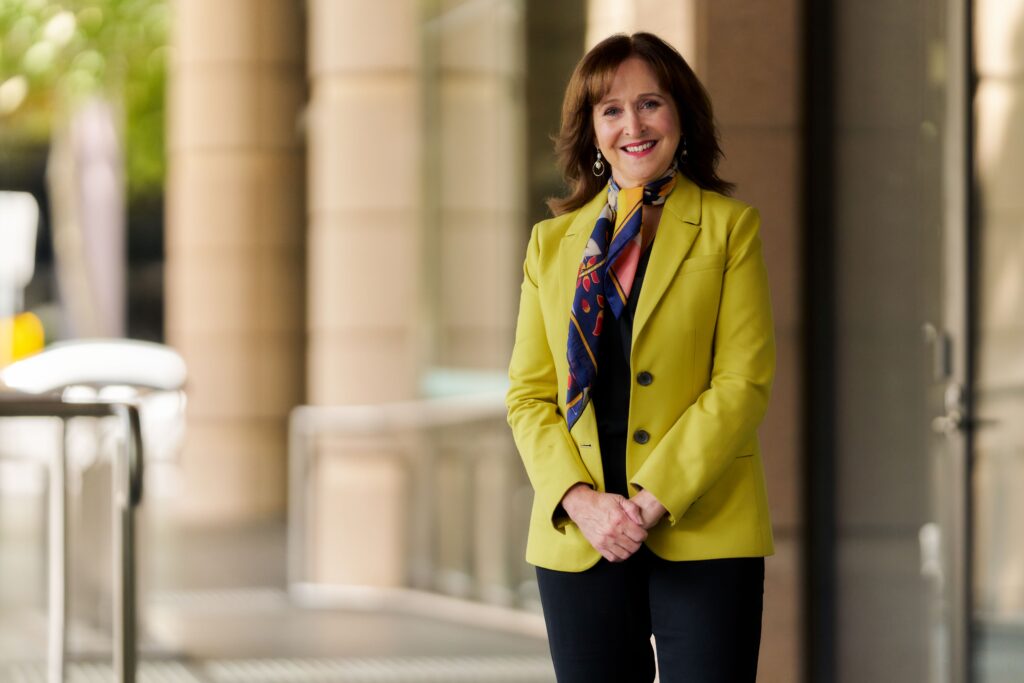
Attributable to HESTA CEO Debby Blakey: 
 
Today’s Federal Government announcement is a welcome step forward in unlocking the scale of renewables investment needed to accelerate Australia’s transition to a low-carbon future. 
 
Australia is uniquely positioned to become a global powerhouse in renewables, thanks to our abundant natural resources and significant investor appetite to deliver strong investment returns while reshaping how energy is supplied.   
 
The 25% expansion of the Capacity Investment Scheme (CIS) to 40 gigawatts demonstrates a clear commitment to building a strong pipeline of high-quality renewable investment opportunities. We believe this will support further grid decarbonisation, more private investment and continue Australia's progress toward the ambitious 82% renewable energy generation target by 2030. 
 
With $96 billion* in funds under management, HESTA stands ready to invest more in Australia’s energy transition and we’ve set a target to have 10% of our portfolio invested in climate solutions by 2030.1 
 
In addition to the expanded CIS, we want to see the Federal Government set a strong and ambitious 2035 climate target, as this will help give investors the certainty they need to supercharge investment in Australia’s shift to a low-carbon future. 


Ends.


About HESTA

HESTA is one of the largest superannuation funds dedicated to Australia’s health and community services sector. An industry fund that's run only to benefit members, HESTA now has more than one million members (around 80% of whom are women) and currently manages approximately $96 billion* in assets invested around the world.

*Information is current as at the date of issue. 


1 Such as renewable energy and sustainable property. Identification of opportunities has been based upon the Sustainable Development Investment Asset Owner Platform (SDI AOP) Taxonomy. Investments that are aligned to SDG 7, 11.6 and 13 have been included in the baseline. More information available at https://www.sdi-aop.org/sdi-classification. For further information on these objectives please refer to HESTA’s Climate Change statement https://www.hesta.com.au/content/dam/hesta/Documents/hesta-climate-change-statement.pdf 

Media

More from this category

  • Energy, Environment
  • 13/03/2026
  • 07:30
Rewiring Australia

Electrification pilot expands into Bulli

Bulli locals can team up with their neighbours to cut power bills and modernise their homes as part of an expansion to an ambitious community-driven electrification push underway in the NSW Illawarra led by Rewiring Australia. Households across Clifton, Scarborough, Wombarra, Coledale, Austinmer and Thirroul are being offered subsidies to ditch gas appliances as part of the ‘Electrify 2515’ initiative, with Bulli residents the latest now eligible to participate. Under the scheme, households receive subsidies to replace gas heaters, cooktops and hot-water systems with modern electric alternatives and receive a free smart energy device to help monitor and control household…

  • Environment, Science
  • 13/03/2026
  • 06:30
Monash University

Fish stocks are on the line: Climate change impacts global fishing yields

As the saying goes, there are plenty more fish in the sea – but climate change is rapidly challenging that notion, with fish stocks around the world under threat. New modelling fromMonash University predicts how climate change will alter fishing yields in many regions, threatening food security, livelihoods and the future of marine life as a sustainable food source. Existing prediction models have looked at how fish species respond to warming temperatures in the absence of evolutionary change. However, research published today in Science now looks at how fish will evolve in response to future climates. Fisheries provide billions of…

  • Finance Investment, Government Federal
  • 13/03/2026
  • 06:01
ACOSS

South Australia benefits far less than eastern states from capital gains tax discount

People in South Australia receive the third-lowest benefit from the capital gains tax (CGT) discount in the nation, while wealthy electorates in Sydney and Melbourne benefit the most, new ACOSS analysis shows. South Australia receives just 4% of national expenditure on the CGT concession, worth around $992m per year, an average of just $907 per person, with only Tasmania and the Northern Territory benefitting less. It receives less than half the average per person benefit received by New South Wales. The electorate of Sturt benefits the most in South Australia but is still ranked only 31st nationally, receiving $193 million…

Media Outreach made fast, easy, simple.

Feature your press release on Medianet's News Hub every time you distribute with Medianet. Pay per release or save with a subscription.
