
Available for Comment
Radio - Live, Pre-recorded and Talkback, TV, Print,
In-studio and Panel Discussions
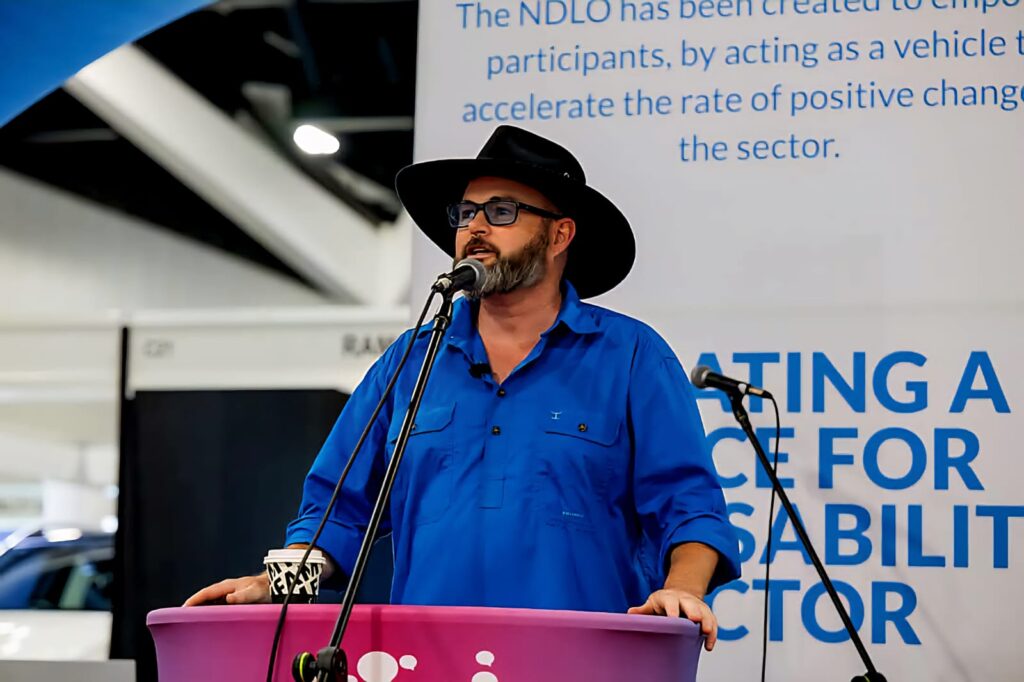
MR RIVER NIGHT
Leading National Disability, Child Safety and Community Sector Advocate, Professional and Speaker
Co-founder at Developing Australian Communities
Public Officer at the National Disability Leadership Organisation
Mr Night is physically located in Brisbane this week and can travel interstate if needed.
Mr Night is an adult Living with Disability, a National Disability Sector Advocate, carer, father and outspoken supporter for reform and improvements in the Disability and NDIS sector with a 30+ year career working across Disability, Youth Justice, Guardianship, Child Safety, Education, TAFE, Aged Care, Forensics Disability and Mental Health sectors.
"It seems common sense is being throw out with the bathwater following the latest NDIS price changes as regional service funding is cut. But perhaps it is because a bigger plan is at hand at state levels. The problem is we just don't know because codesign now seems to be as elusive as trying to catch smoke with a fishing net", said National Disability Sector Advocate Mr River Night today.
The Australian Physiotherapy Association, Dietitians Australia, Australian Podiatry Association, Speech Pathology Australia, Occupational Therapy Australia, the Australian Psychological Society, Exercise & Sports Science Australia and Osteopathy Australia are calling on the Federal Government and the National Disability Insurance Agency to immediately halt and review the NDIS pricing decision which poses a direct threat to essential supports and choice for people with disability.
“Early intervention is crucial for children, and we want them to access this at some level in regional areas so that children can grow, develop, and become more independent, faster and with greater capacity. Instead of simply cutting funding, let’s take the approach of saying, ‘We are cutting one thing because our plan is to…’. That last piece is what is sadly missing.
“We are wasting NDIS funds on report writing for the NDIS—reports that, according to their own CEO, are often not even read. At the same time, we are cutting funding for those very services. We are also cutting travel allowances and reducing access to these services, and like many in regional Australia, we are left without a plan. It’s like being sent up the proverbial creek without a paddle.
“When participants are not living in cities or major residential areas, their funding is wasted and used up quickly because the hours available to fund allied health and other services are disproportionately absorbed by travel costs rather than direct service delivery,” said Mr Night.
“We don’t fund regional disability services to operate remotely, so children and adults living with disability experience significant inequity just to receive any type of support or service—and now our Federal Agency has cut that funding even further.
“The reason we fight so hard for allied health and capacity-building services in rural areas is that these services foster independence and lasting change in a person’s life. This has the potential to reduce long-term reliance on services in the future.
“What I hope from the recent announcement is that this will act as a precursor to the State system announcing proper service planning for foundational supports instead.
“We have seen discussions about bringing NDIS fees for allied health services in line with other settings, but what people don’t seem to understand is that, in other settings, health services have the capacity to charge gap fees on top of what Medicare funds. This isn’t possible right now for NDIS-funded professionals.
“Our allied health staff are at breaking point. There are major wait times and a lack of capacity across health services. The NDIS is requiring reports from these professionals as evidence to fund, and more recently, to defend people from being removed from the NDIS.
“My fear is that we are setting up a health system—already beyond capacity—for a huge fall, and not coordinating a good system or response, so it is on the verge of collapse.
“We must connect the dots and coordinate between departments, state and federal, and devise a solution that is cost-effective because it is efficient and flexible. Proactive policy results in long-term cost savings.”
Key Facts:
· Regional Disability Services Face Funding Cuts: Calls Grow for Coordinated, Equitable Solutions
· “Sent Up the Creek Without a Paddle”: Rural Communities Struggle as NDIS Funding Slashed
· Allied Health in Crisis: Funding Reductions Threaten Support for Regional Australians with Disability
· NDIS Report Writing Costs Spark Outcry Amid Cuts to Direct Disability Services in Rural Areas
· Urgent Reform Needed: Disability Advocates Warn of System Collapse Without Proactive Action
Contact details:
M 0401429403