
Skip to content
Animal Animal WelfareRights, Environment

Councils vote YES to shark nets removal trial

Humane World for Animals 2 mins read

Humane World for Animals has applauded decisions by three Sydney Councils to take part in a trial removal of one shark net from each of their respective Local Government Areas this summer (1 September 2025 – 31 March 2026). 

Central Coast, Northern Beaches and Waverley Councils each accepted the invitation to trial shark net removal from one beach per council from NSW Minister for Agriculture, Tara Moriarty.  

The councils have long called for the removal of shark nets from all their beaches to make them safer for swimmers and marine wildlife.  

Following an extension to Minister Moriarty’s deadline of 22 August, Central Coast Council was the last of the three councils to officially confirm their stance on the matter in a General Meeting of Council on Tuesday, 26 August, rounding out a chorus from the trio that the removal of shark nets is welcomed.  

“We congratulate Central Coast, Northern Beaches and Waverley Councils for progressing this issue which will benefit both people and wildlife,” said Humane World for Animals marine biologist, Lawrence Chlebeck. “We are encouraged that Minister Moriarty is heeding the call of the people of Sydney and taking this practical and important first step toward the removal of shark nets for good”.  

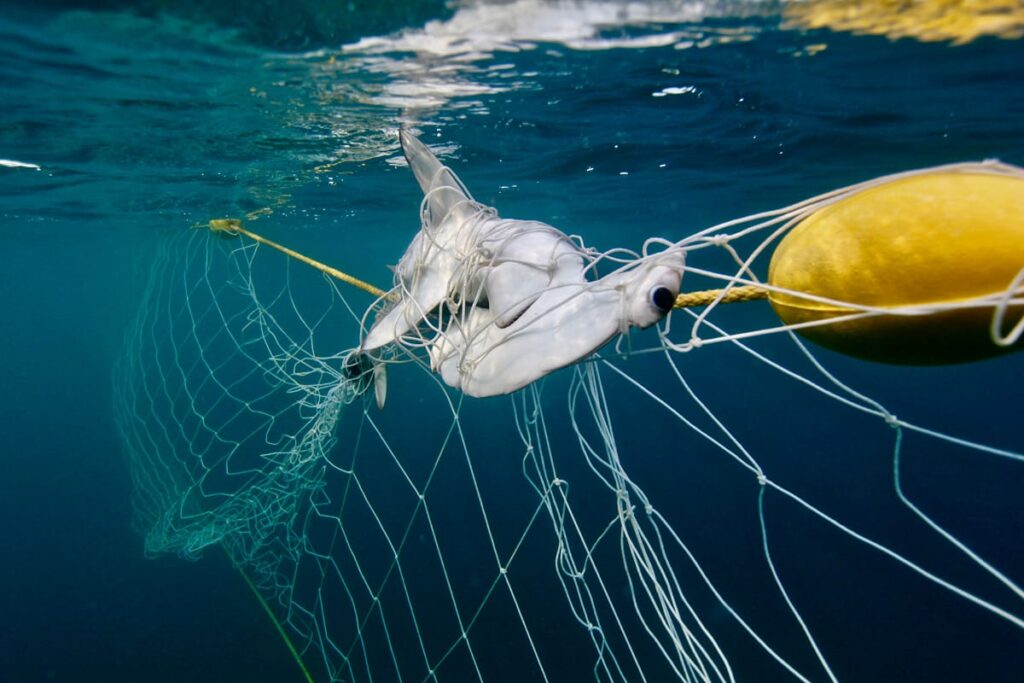
Shark nets have been deployed at ocean beaches between Newcastle and Wollongong every summer since the 1930s, causing incalculable harm to marine wildlife with no positive effect on the safety of swimmers at those beaches.  

Conversely, both data and imagery obtained under Freedom of Information applications proves that shark nets attract sharks, thereby increasing the risk of shark bites.  

“Shark nets are like deploying a ping pong net on a football pitch,” said Mr Chlebeck. “At only 150m in length and unfurled on beaches that are often several kilometres long, shark nets don’t offer swimmer protection—they simply entangle our treasured whales, dolphins and turtles and, in doing so, ring a dinner bell for sharks to come nearer to shore”. 

More information on shark nets and Humane World for Animals Australia’s campaign to see the cessation of their use in New South Wales is available at: https://humaneworld.org.au/marine-wildlife/sharks/ 


Contact details:

For interviews, contact Lawrence Chlebeck: 0481774581 
Media

More from this category

  • Environment, Legal
  • 16/03/2026
  • 10:12
NSW Environment Protection Authority (EPA)

FORESTRY CORPORATION OF NSW TO PAY $450,000 AFTER GIANT AND HOLLOW-BEARING TREES ILLEGALLY LOGGED

The organisation responsible for managing timber production in NSW’s state-owned native and plantation forests has been ordered to pay $450,000 in penalties after prosecution by the NSW Environment Protection Authority (EPA). Forestry Corporation of NSW (FCNSW) was convicted and sentenced over the illegal logging of six giant and three hollow-bearing trees in Wild Cattle Creek State Forest near Coffs Harbour in June and July 2020. The NSW Land and Environment Court found that the logging of these trees by FCNSW contractors caused harm to koala habitat within forest that now forms part of the footprint of the Great Koala National…

  • Contains:
  • Environment
  • 16/03/2026
  • 09:51
NSW Environment Protection Authority (EPA)

NSW’S MOST CONTAMINATED WATERWAYS REVEALED IN LANDMARK MICROPLASTIC REPORT

Link to vision, grabs and images: https://bit.ly/4b6mZo0 An Australian-first microplastic assessment has found the Cooks River, Dee Why Lagoon, Muddy Creek and upper Parramatta River are NSW’s most contaminated coastal waterways. The NSW Environment Protection Authority (EPA) has partnered with the NSW Department of Climate Change, Energy, the Environment and Water (DCCEEW) to deliver the Broadscale Microplastic Assessment. The report ranks coastal waterways by microplastic concentration in the top 15 centimetres of surface water, from most to least contaminated. The three-year comprehensive study will help environment authorities understand how microplastics end up in waterways and where to focus further research.…

  • Contains:
  • Animal Animal WelfareRights, Political
  • 16/03/2026
  • 07:00
Australian Koala Foundation

Call continues for Koala Protection Act (KPA)

The Australian Koala Foundation (AKF) is still fighting for a national KoalaProtection Act (KPA), grounded in a simple principle: the rule of law mustprotect…

  • Contains:

Media Outreach made fast, easy, simple.

Feature your press release on Medianet's News Hub every time you distribute with Medianet. Pay per release or save with a subscription.