A research ‘dream team’ is collating a database to better understand how, when and why dreams occur.
A Monash University-led international paper (co-authored by 53 authors across 37 institutes across the world) published in Nature Communications, explains how the international DREAM database has evolved to coordinate existing research and encourage more.
The researchers explain that neuroimaging studies of dreaming are essential to investigate the neurocognitive processes of consciousness during sleep, but limited by the number of observations that can be collected per study.
As a result, more research releasing such data is needed to better understand when, how and why we dream.
To make progress in the field, the paper’s authors attempted to collect and standardise data published on dreaming and neural recording in one place, making it freely available for further research.
The DREAM database has collated what is available, allowing for methodological and conceptual variability, and may reveal ways that better enable data to be recorded and analysed.
The database already contains more than 2500 cases of brain recordings and whether participants were dreaming or not. The team plans to expand it to include more detailed dream contents for each case, but this would require ethics approval and more collaboration.
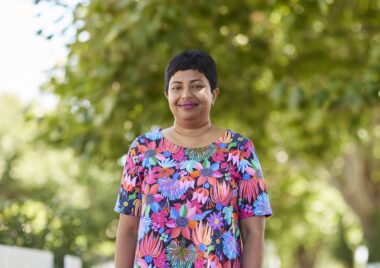
Senior author Professor Nao Tsuchiya, from the Monash University’s Turner Institute for Brain and Mental Health and School of Psychological Sciences and ATR Computational Neuroscience Laboratories in Japan, said the database would greatly help the understanding of how and why we dream.
“This is unprecedented as each dream experiment is extremely costly and data sharing has been extremely rare in this field,” Professor Tsuchiya said. “Understanding how, when, and why dreams occur can help answer one of science’s deepest questions: how can we detect consciousness when people can’t communicate?
“This challenge is central not just in everyday sleep, but in critical cases like anesthesia and unresponsive wakefulness syndrome. Intriguingly, people who wake from surgery with memories often describe the experience as ‘intraoperative dreaming’. Studying the brain activity linked to dreaming may offer a powerful new way to detect hidden consciousness.
“This is just the beginning. Following this, much more new research will follow. We already have contact with multiple authors who are using this data. We are preparing a manuscript to standardise dream research, and our database is expandable, adding new data as it is published.
“As our dataset grows, it opens the door to fundamental questions: why are we sometimes conscious during sleep, and sometimes not? Why do some people remember dreams nightly while others rarely do? And why can a few people realise they’re dreaming—sometimes even controlling their dreams?
“Exploring these questions brings us closer to understanding the brain mechanisms behind conscious experience itself.”
Relatively recent developments have included:
-
a discovery that brain waves can be read to predict when a person is dreaming (Siclari 2017, Nature Neuroscience)
-
research that showed some lucid dreamers can use eye movements to signal the contents of dreaming by eye movements (Konkoly et al 2021, Current Biology)
-
some drugs (galantamine) increase the proportion of lucid dreaming (LaBerge et al 2018, PLOS One)
Most dream studies use electroencephalography (EEG) neuroimaging to record what happens during sleep and dreaming. This non-invasive technique measures the electrical activity of the brain’s neurons.
Dr Rubén Herzog, who worked as the paper’s co-first author during his postdoctoral stay at the Paris Brain Institute, said combining personal recollections with neuroimaging showed great promise.
“The joint analysis of first-person experience (dream reports) with brain activity holds the promise to a better understanding of dreaming and consciousness,” Dr Herzog said.
The DREAM database will expand its collection of standardised datasets on human sleep EEG and other data. Initially this comprises 20 datasets, 561 participants, and 2649 awakenings (the period leading up to waking up).
“We also provide several examples of analyses, showcasing the database’s high potential in paving the way for new research questions at a scale that any single research group cannot achieve,” the researchers wrote.
The DREAM database involves a range of researchers and organisations listed here
MEDIA ENQUIRIES
Cheryl Critchley – Media and Communications Manager (medical)
E: [email protected]
P: +61 (0) 477 571 442
GENERAL MEDIA ENQUIRIES
Monash Media
P: +61 3 9903 4840
E: [email protected]
For more Monash media stories, visit our news and events site