
Poor storage conditions are causing avoidable quality decline across the legume supply chain - costing growers and processors, new research shows.
After harvesting, legumes are often stored in bulk silos or on-farm sheds where they can be exposed to hot Australian summers with little or no temperature or humidity control.
High temperatures and humidity during storage trigger internal damage in faba and adzuki beans, making them harder to cook, less nutritious, and less suitable for processing (eg canning or protein extraction), the research found.
In a series of studies published in Carbohydrate Polymers, Food Hydrocolloids, and Food Bioscience, researchers found that storing faba and adzuki beans at high temperatures (above 40 °C) and humidity levels (over 80%) triggers internal changes in the beans’ protein, starch, and lipid structures.
According to lead author Associate Professor Sushil Dhital, how beans are stored after harvest can make or break their final quality, even if they were grown and harvested perfectly.
“There's a perception that once beans are harvested, the job is done. But we found that poor storage conditions can quietly ruin bean quality and undo months of good work in the paddock,” Associate Professor Dhital said.
“We saw that even perfectly bred and harvested beans can develop serious quality issues if not stored correctly. Beans stored at 40 °C and 80% humidity became structurally resistant to water absorption and much harder to cook. Their protein and starch are different to those of freshly harvested,” Associate Professor Dhital said.
“The problem is known as the 'hard-to-cook' (HTC) defect. It means beans take longer to soften, are harder to digest, and can develop off-flavours. This has real implications for food manufacturers, canning companies, and exporters who rely on consistent, high-quality product.” The major problem of variation of plant protein functionality with batches is linked to this HTC phenomenon.
Australia is one of the world’s top producers and exporters of legumes. Yet, postharvest handling remains relatively overlooked.
The research team highlighted the need for investment in temperature and humidity-controlled storage systems, along with policy support to ensure the preservation of postharvest quality.
They’re calling for greater industry awareness - particularly from The Grains Research and Development Corporation, which funds research to improve Australia’s grain productivity and sustainability - regarding the impact of storage on bean quality.
“Millions are invested in breeding better beans and improving agronomy. But without proper storage, much of that value is lost. We need a shift in focus from paddock to postharvest,” Associate Professor Dhital said.
“Postharvest quality preservation is the missing piece in the value chain. If we want to deliver consistent legume-based products and support farmer profitability, this is where we need to act.”
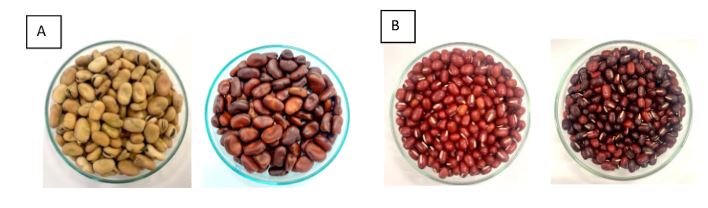
The research focused on two widely grown legume varieties in Australia, faba and adzuki beans. Despite differences in size and colour, both displayed similar postharvest deterioration under these harsh storage conditions, which closely resemble typical Australian summers.
Across three linked investigations, the research team led by PhD candidate Dilini Perera found that:
-
Beans stored in hot, humid conditions couldn’t hydrate or soften properly.
-
Internal starch became more crystalline, limiting water absorption and slowing cooking time.
-
Protein solubility and digestibility declined, making the beans less suitable for protein extraction.
-
Cotyledon (bean interior) cell walls failed to separate properly during cooking.
-
Seed coat colour darkened, reflecting deeper biochemical changes and perceived quality loss.
“Postharvest conditions are just as important as genetics and farming practices. If we don’t control temperature and humidity, we risk losing the gains made on-farm,” Perera said.
Read the research papers:
https://doi.org/10.1016/j.foodhyd.2025.111803
https://doi.org/10.1016/j.carbpol.2024.123119
https://doi.org/10.1016/j.fbio.2024.105270
MEDIA ENQUIRIES
Courtney Karayannis
Media and Communications Manager
T: +61 408 508 454 or [email protected]
GENERAL MEDIA ENQUIRIES
Monash Media
P: +61 3 9903 4840
For more experts, news, opinion and analysis, visit Monash News.