

Skip to content
Environment

New Qld deforestation data “big red flag” for EPBC Act

Greenpeace Australia Pacific 2 mins read
Key Facts:

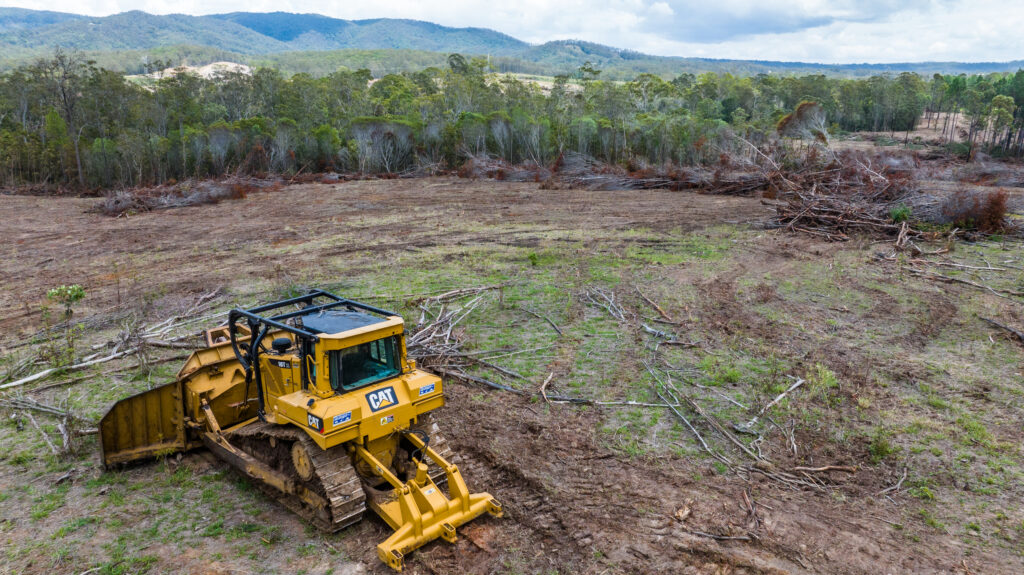
High res images and footage of recent deforestation can be found here


BRISBANE, Thursday 07 August 2025 — New figures from the Queensland Government show deforestation in Queensland is the worst in the nation and worsening under the current national environment law, with 332,015ha of land, including endangered ecosystems and koala habitat, wiped out as reported in the latest Statewide Landcover and Trees Study report (SLATS). 


The new figures reveal that the majority (86%) of forest and bushland in Queensland was cleared for pasture conversion,
primarily for beef production. The new figures also reveal a shocking 8% increase in the bulldozing of remnant forest – native forest that has never been cleared and is home to endangered and endemic species like koalas and gliders. Deforestation in the Great Barrier Reef catchment accounted for almost half (44%) of the state’s total clearing, an increase on the previous year, flying in the face of promised reef protection.


It comes as the federal government prepares to overhaul Australia’s broken nature laws through the Environmental Protection and Biodiversity Conservation (EPBC) Act, which currently allows native forest logging and most agricultural deforestation.


Gemma Plesman, Greenpeace Australia Pacific Senior Campaigner, said: 


“The data is devastating, and a big red flag for Australia’s national environment law. The need for stronger protections is bleedingly obvious. These figures show that the size of land bulldozed in Queensland in just one year is double the size of London.


“In 2018, the Queensland government changed the vegetation management laws with the aim of protecting remnant and native forests, but these new figures paint a grim and clear picture that nature protection must be a federal government-scale job.


“Our national environment law is broken and failing to prevent nature destruction – Queensland proves it. Destructive businesses are exempt under the current act, using loopholes to wipe out koala habitat and destroy old growth, and putting pressure on an already threatened Great Barrier Reef. Queensland’s national treasures are at risk under the current Act.


“Environment Minister Murray Watt has the opportunity to put nature first in Australia’s reformed nature laws – we’re calling on Minister Watt to put forward a strong EPBC Act that will protect Australia's nature and wildlife, and close the loopholes for destructive businesses bulldozing our forests."

—ENDS—


About us:

Greenpeace Australia Pacific is a global independent campaigning organisation that uses peaceful protest and creative confrontation to expose environmental problems and promote solutions that are essential to a green and peaceful future.


Contact details:

For more information or to arrange an interview, please contact Kimberley Bernard on +61 407 581 404 or [email protected]

Media

More from this category

  • Environment
  • 09/12/2025
  • 09:45
NSW Environment Protection Authority (EPA)

$1.16 MILLION HELPS COUNCILS TEAM UP TO CUT WASTE AND COSTS

Seven council-led initiatives will share $1.16 million to develop smarter, more cost-efficient waste and recycling services in the Northern Rivers, Hunter, Riverina, Central West, South West Sydney and South-East regions. The NSW Environment Protection Authority (EPA)’s Joint Procurement Funded Support program offers eligible groups up to $500,000 per project to access tailored advice, build partnerships and plan future waste infrastructure and services. NSW EPA Executive Director of Programs and Innovation Alexandra Geddes said the grants give councils and regional waste groups the backing they need to pool knowledge, boost capability and strengthen resources. “Regional councils consistently tell us that joining…

  • Contains:
  • Environment, General News
  • 08/12/2025
  • 12:38
Australian Conservation Foundation

ACF spokespeople available for interview on bushfires and climate/nature risk

As another dangerous summer begins – with bushfires having already destroyed dozens of houses and one firefighter having been killed – Australian Conservation Foundation spokespeople are available for media analysis on extreme weather. ACF spokespeople can: Discuss the impact of bushfires on nature, threatened species and communities Join the dots between extreme weather, the unstable climate and the expansion of the gas industry ACF’s campaigns director Dr Paul Sinclair said: “Australians are at the forefront of the climate crisis and experts warn the unstable climate is making extreme weather events harder to predict. “The direct costs of climate change are…

  • Banking, Environment
  • 08/12/2025
  • 08:18
Australian Conservation Foundation

Banks neglect to count the emissions from deforestation linked to their finance

Australia’s big four banks are likely to be drastically underreporting the emissions from the deforestation they finance, as they all fail to track, manage or disclose the extent of deforestation occurring in their loan portfolios. New analysis by the Australian Conservation Foundation estimates emissions from land clearing events on 77 agricultural properties financed by ANZ (including Suncorp), NAB, Commbank and Westpac over the four years to 2024. The analysis found this deforestation, which destroyed wildlife habitat, released more than 7.5 million tonnes of carbon that had been stored naturally in the landscape. These emissions were produced from 19,286 hectares of…

Media Outreach made fast, easy, simple.

Feature your press release on Medianet's News Hub every time you distribute with Medianet. Pay per release or save with a subscription.