
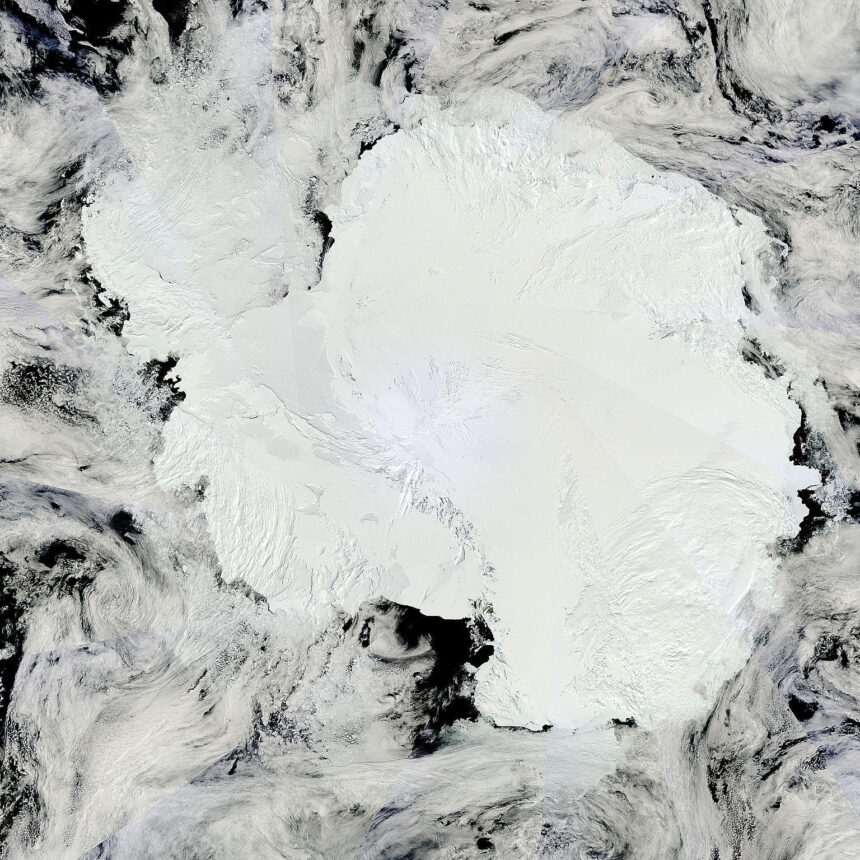
A team of experts say the rapid and potentially irreversible changes happening across Antarctica’s ice, ocean and ecosystems will accelerate climate impacts worldwide.
The changes happening now in Antarctica will have serious consequences for Australia and beyond unless urgent action is taken to cut global carbon emissions, according to new research published today in Nature.
Researchers from UNSW Sydney and The Australian National University (ANU) are part of an international team who say the large and sudden changes happening in Antarctica are not only connected but accelerating.
Lead author Dr Nerilie Abram, Chief Scientist at the Australian Antarctic Division (AAD), says there is an urgent need to stabilise Earth’s climate and prepare for widespread impacts.
“Rapid change has already been detected across Antarctica’s ice, oceans and ecosystems – and this is set to worsen with every fraction of a degree of global warming,” says Dr Abram, who carried out this study during her time as Professor of Climate Science at ANU.
Co-author Professor Matthew England from UNSW says there are consequences for Australia.
“These include rising sea levels that will impact our coastal communities, a warmer and deoxygenated Southern Ocean that’s less able to remove carbon dioxide from the atmosphere – leading to more intense warming in Australia and beyond – and increased regional warming from Antarctic sea ice loss.”
Melting land and sea
Sea ice is the frozen seawater that surrounds Antarctica.
Dr Abram says the sudden loss of sea ice in the region has a range of knock-on effects.
“This includes making the floating ice shelves around Antarctica more susceptible to wave-driven collapse.”
She warns the West Antarctic Ice Sheet (WAIS) is at severe risk of collapse as global carbon dioxide levels continue to rise. This loss would raise sea levels by more than three metres, threatening coastal cities and communities worldwide.
“Such a collapse would result in catastrophic consequences for generations to come,” Dr Abram says.
Wildlife under threat
Much of Antarctica’s wildlife depends on sea ice to breed.
“The loss of sea ice brings a heightened extinction risk for emperor penguins, whose chicks depend on a stable sea ice habitat prior to growing their waterproof feathers,” Prof. England says.
“The loss of entire colonies of chicks has been seen right around the Antarctic coast because of early sea ice breakout events.
“Some colonies have experienced multiple breeding failure events over the last decade.”
The researchers warn other species are also under threat, including krill, seals and several other penguin species. Tiny ocean plants that many animals depend on for food – phytoplankton – are also affected by warming and acidification.
“Another potential risk is a collapse in the Antarctic overturning circulation, which would mean vital nutrients remain at the seafloor instead of being recirculated back to the surface where biological systems – including marine animals – depend on them,” Prof. England says.
Already fragile
Dr Abram says both sea ice loss and a slowdown in deep ocean circulation are already showing signs of being more sensitive to warming than previously thought.
“As sea ice is lost from the ocean surface, it is also changing the amount of solar heat being retained in the climate system. That is expected to worsen warming in the Antarctic region,” Dr Abram says.
“Other changes to the continent could soon become unstoppable, including the loss of Antarctic ice shelves and vulnerable parts of the Antarctic ice sheet that they hold behind them.”
Future planning needed now
Dr Abram says efforts through the Antarctic Treaty System to reduce pressure on ecosystems are important – but won’t be enough on their own.
“While critically important, these measures will not help to avoid climate-related impacts that are already beginning to unfold,” she says.
“The only way to avoid further abrupt changes and their far-reaching impacts is to reduce greenhouse gas emissions fast enough to limit global warming to as close to 1.5 degrees Celsius as possible.
“Governments, businesses and communities will need to factor in these abrupt Antarctic changes that are being observed now into future planning for climate change impacts, including in Australia.”
Contact details:
Melissa Lyne
UNSW newsroom