

Skip to content
Energy, Indigenous

Experts warn clean energy transition must not come at cost of Indigenous rights

Charles Darwin University (CDU) 2 mins read

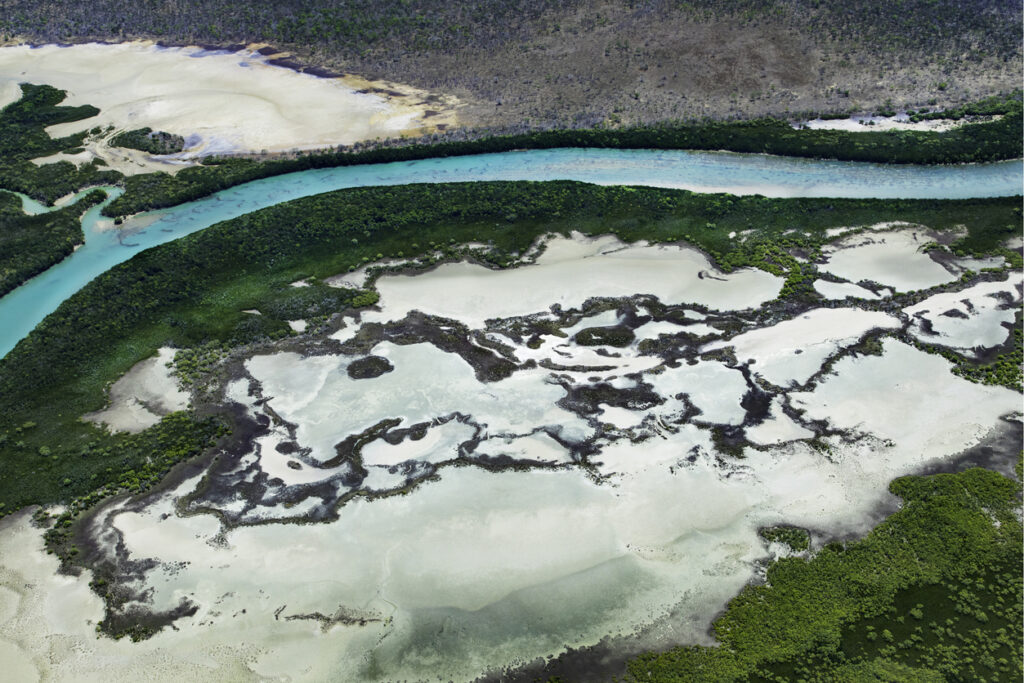
First Nations’ rights over Sea Country are being overlooked as Australia races into offshore gas and wind development, according to new research, with experts warning Traditional Owners remain excluded from decisions that threaten vital cultural, spiritual and economic connections.

According to a study in Heritage led by the Sea Country Alliance with Charles Darwin University (CDU), cultural rights at sea are far less recognised than those on land, creating a legislative gap that leaves Traditional Owners without a voice in offshore development.

Co-Chair of the Sea Country Alliance and the paper’s co-lead author, Rhetti Hoskins, said that without reform, offshore wind and gas risk becoming the next frontier of dispossession.

“For over 65,000 years Traditional Owners have cared for Sea Country, ensuring that the ecosystems thrived, and cultural connections remained strong," he said.

“Our connection to Sea Country is as important as it is to land, and yet, the protections that recognise our rights aren’t the same."

The research points to the Federal Court case Munkara v Santos (No 3) [2024], and illustrates the difficulties Traditional Owners face in safeguarding songlines, totems and other cultural heritage in the absence of free, prior and informed consent (FPIC).

The paper calls for urgent reforms to embed the United Nations Declaration on the Rights of Indigenous Peoples (UNDRIP) into offshore legislation and proposes a national Economic Empowerment Fund to ensure affected communities - including those in spill zones - share in the benefits.

Co-Chair of the Sea Country Alliance and the paper’s co-lead author, Gareth Ogilvie, said Australia must now step up as a global leader.

“Australia must not just meet but lead international best practice in approaching Sea Country as a holistic environment that includes cultural significance, plants and animals and minerals,” he said.

“Our Songlines connect the heart of Australia to the Australian coastline as it once was, now far out at sea - we understand Sea Country and terrestrial Country as one.”

CDU’s Asia Pacific School of Business and Law academic and the paper’s co-author, Matthew Storey, said Australia’s energy transition will be judged not only by its climate credentials but also by its justice credentials.

“Offshore energy development could either repeat the mistakes of past extraction regimes or set a global benchmark for Indigenous-led, culturally safe, and economically just energy development.”


Contact details:

Alyce Mokrzycki
Media and Communications Officer
 
Marketing, Media and Communications
E: [email protected]
W: cdu.edu.au
 
CDU logo

Media

More from this category

  • Energy, Government Federal
  • 08/12/2025
  • 17:43
ACOSS

ACOSS supports end of energy rebate, need urgent measures to help those with the least

The government’s decision to not pursue a further round of energy bill rebates is the right call - but must be backed up with investment to reduce hardship for those most in need. “People on lower incomes urgently need relief, but these rebates were a short term, poorly targeted policy that failed to meaningfully help those who needed it,” said ACOSS CEO Cassandra Goldie. "We regularly hear from people who can't afford their gas and electricity bills because homes aren’t energy efficient, and their incomes are simply too low. “The government has spent $6.8 billion on energy bill rebates. For…

  • Energy, Political
  • 08/12/2025
  • 11:11
Greenpeace Australia Pacific

Labor must stop propping up dirty gas and support industry to decarbonise

SYDNEY, Monday 8 December 2025 — Greenpeace Australia Pacific has warned the Albanese government against plans to subsidise gas for industrial users, saying it should instead be supporting industry todecarbonise. Media reports today that Labor is weighing up an intervention to start bulk-buying gas and selling it at discounted rates to industrial users, comes as the government is expected to announce an East Coast gas reservation policy in the coming weeks. Greenpeace says the intervention would be at odds with Australia’s commitment to phase out inefficient fossil fuel subsidies, including under the Glasgow Climate Pact and the Belém Declaration on…

  • Energy, Finance Investment
  • 07/12/2025
  • 22:30
Climate Energy Finance

NEW REPORT: CHINA’S RISING TIDE OF $180bn IN OVERSEAS CLEANTECH INVESTMENT SINCE 2023 DRIVES GLOBAL ENERGY TRANSITION; AUS MISSES OUT

EMBARGOED TO 10.30pm AEDT SUNDAY 7 DECEMBER 2025 CHINESE CLEANTECH INVESTMENT INTO AUSTRALIA HAS COLLAPSED, PUTTING AT RISK THE COUNTRY’S NET ZERO & INDUSTRIAL DECARBONISATION GOALS A new report released today by independent think tank Climate Energy Finance (CEF), Rising Tide: China’s Outbound Cleantech Capital Surge Drives Global Collaboration Toward Net Zero, finds that Chinese firms have committed more than US$180bn of outbound foreign direct investment (OFDI) in cleantech since the start of 2023 – up 80% since CEF’s Green Capital Tsunami report a year ago. China’s investment into cleantech manufacturing and clean energy infrastructure spanned batteries, battery materials, solar…

Media Outreach made fast, easy, simple.

Feature your press release on Medianet's News Hub every time you distribute with Medianet. Pay per release or save with a subscription.