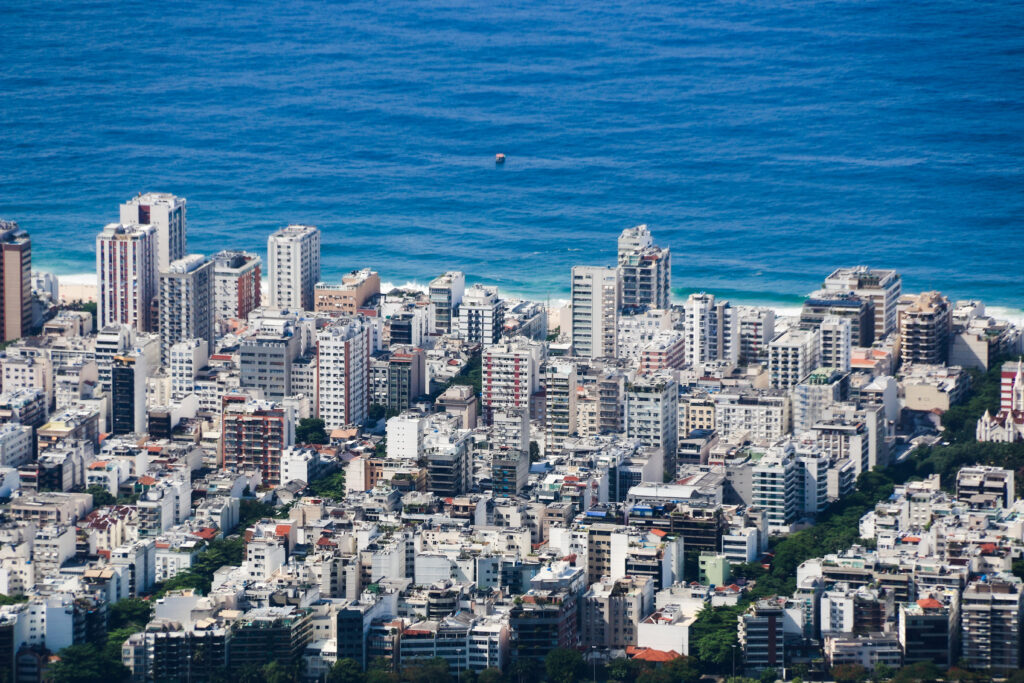

-
An global study of 155 countries shows more than half of coastal settlements are relocating inland.
-
People in lower-income regions are more likely to move or stay close to the coast, driven by their livelihoods.
-
The study warns that overconfidence in protective infrastructure may encourage risky developments close to the coast, particularly among wealthier groups, which data reveals are more likely to remain on coastlines.
Human settlements around the world are moving inland and relocating away from coastlines as sea levels rise and coastal hazards grow more severe, but a new international study shows the poorest regions are being forced to stay put or even move closer to danger.
The study, published in Nature Climate Change, analysed decades (1992–2019) of satellite nighttime light data across 1,071 coastal regions in 155 countries.
It found that human settlements in 56 per cent of the regions analysed relocated further inland, 28 per cent stayed put, and 16 per cent moved closer to the coast.
Low-income groups were the more likely to move closer to the coast, driven largely by the growth of informal settlements and the search for better livelihoods. Human settlements shifted most towards coastlines in South America (up to 17.7 per cent) and Asia (17.4 per cent), followed by Europe (14.8 per cent), Oceania (13.8 per cent), Africa (12.4 per cent) and North America (8.8 per cent).
Lead author Xiaoming Wang, an adjunct Professor based at the Monash Department of Civil and Environmental Engineering, said relocation was largely driven by vulnerability and the capacity to respond.
“For the first time, we’ve mapped how human settlements are relocating from coasts around the world. It’s clear that moving inland is happening, but only where people have the means to do so.
“In poorer regions, people may have to be forced to stay exposed to climate risks, either for living or no capacity to move. These communities can face increasingly severe risk in a changing climate”
Oceania had some of the closest settlements to the coast globally, reflecting the region’s reliance on coastal economies.
“In Oceania, we see a common reality where wealthier and poorer communities are both likely to relocate towards coastlines in addition to moving inland,” Adjunct Professor Wang said.
“On one hand, the movement closer to coastlines can expose vulnerable populations to the impacts of storms, erosion, and sea-level rise. On the other hand, it can expose those wealthy communities to the growing coastal hazards.”
The study also highlights concerns that overconfidence in protective infrastructure encouraged risky development close to the coast.
“It is interesting to note that high-income groups also had a relatively higher likelihood to remain on coastlines, such as in Europe and North America. This can be due to their capacity and wealth accumulated in coastal areas,” Adjunct Professor Wang said.
The study warns that relocation inland may become unavoidable as sea levels rise and climate change intensifies.
“Relocating away from the coast must be part of a long-term climate strategy, and the rationale for policy and planning to relocate people requires meticulous consideration of both economic and social implications across individuals, communities and regions,” Adjunct Professor Wang said.
“Alongside climate change mitigation, it needs to be combined with efforts to reduce coastal hazard exposure and vulnerability, improve informal settlements, balance coastal risks with livelihoods and maintain sustainable lifestyles in the long-term. Without this, coastal adaptation gaps will continue to be widened and leave the world’s poorest behind.”
The study was an international collaboration on climate adaptation research between Adjunct Professor Wang, the Institute for Disaster Management and Reconstruction at Sichuan University, and researchers from Denmark and Indonesia.
The collaboration aims to understand how communities cope with recurring coastal hazards and highlights gaps in adaptation that need urgent attention.
Read the research paper: https://doi.org/10.1038/s41558-025-02435-6
MEDIA ENQUIRIES
Courtney Karayannis, Media and Communications Manager
Monash University
P: +61 408 508 454
GENERAL MEDIA ENQUIRIES
Monash Media
P: +61 3 9903 4840
For more experts, news, opinion and analysis, visit Monash News.