
Skip to content
Environment

SOUTHERN MEATS FINED FOR OFFENSIVE ODOURS IN GOULBURN

NSW EPA < 1 mins read

The NSW Environment Protection Authority (EPA) has fined Southern Meats Pty Ltd $30,000 following community complaints about strong, unpleasant odours – described by residents as decaying waste  – drifting across parts of Goulburn in April 2025.

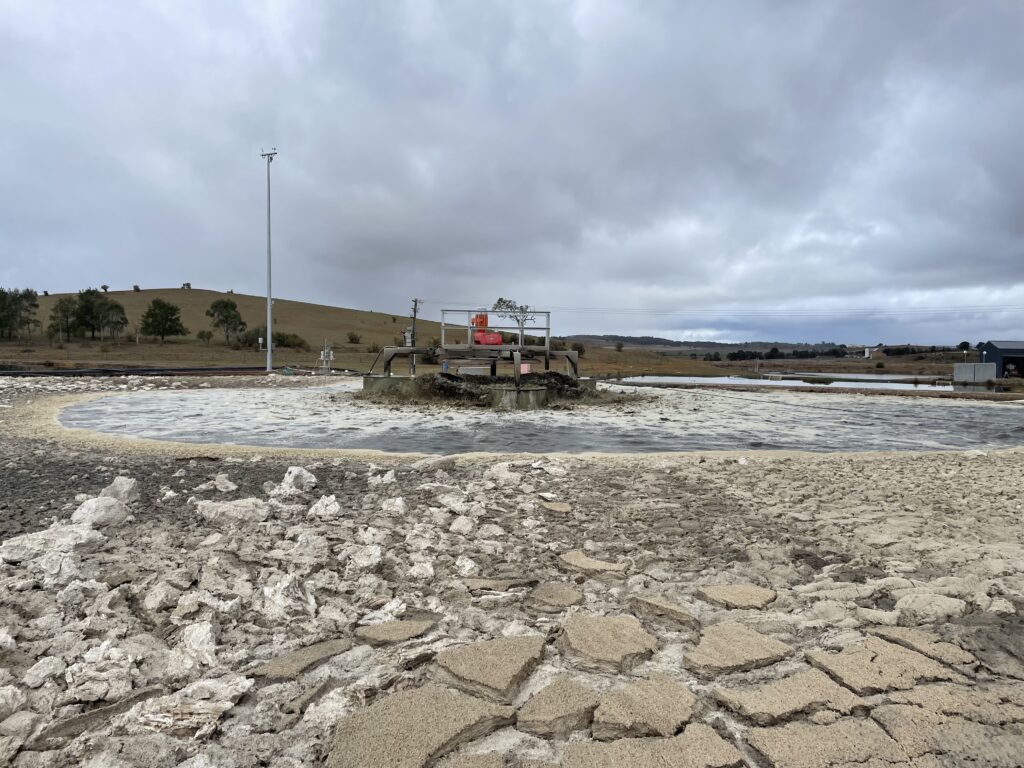
The odours are believed to have been caused by a failure in part of the abattoir's wastewater treatment system, which led to untreated water discharging into an onsite dam.

EPA Director Regulatory Operations, Steve Orr, said no community should be exposed to such intense and offensive odours, and the abattoir has been held to account.

“Residents should be able to open their windows or step outside without being hit with the stench of decaying waste,” Mr Orr said.

“After receiving around nine complaints from the community, our officers conducted odour surveys across the affected areas and were able to clearly trace the foul smells back to the abattoir on Mazamet Road.

“We then issued Southern Meats with a Clean-Up Notice, requiring them to urgently bring in experts to identify the source and recommend actions to address it. Through these efforts, the company progressively reduced the odours impacting residents.

“The operators of this facility have a clear responsibility under their licence conditions to treat and manage waste in a way that prevents odours and protects the community.”

In addition to the $30,000 penalty, the EPA has issued Southern Meats with a Prevention Notice requiring improved measures to prevent similar issues in the future.

Under the Prevention Notice, Southern Meats has committed to upgrading its monitoring systems and strengthening management plans, including enhanced staff training, to better protect the local community and environment from future odour incidents.

Odour complaints can be reported to the EPA’s Environment Line at [email protected].


Contact details:

ISAAC CAREY | 0436 646 346

24-hour Media Line (02) 9995 6415 [email protected]

Media

More from this category

  • Environment, Transport Automotive
  • 12/12/2025
  • 14:27
NALSPA

Electric Car Discount review must drive clean energy transition and cost-of-living relief

The National Automotive Leasing and Salary Packaging Association (NALSPA) has today welcomed the federal government’s announcement of the statutory review of the Electric Car Discount, noting that the policy continues to be highly effective in encouraging Australians to make the switch to cleaner cars.The federal government announced today that next year it will review the Electric Car Discount, otherwise known as the EV FBT exemption which came into effect in July 2022.The review will consider the operation of the Electric Car Discount over the first three years it has been in place, as required by the legislation.“We will actively participate…

  • Banking, Environment
  • 12/12/2025
  • 10:38
Australian Conservation Foundation

NAB shareholders owning $9.74bn in shares call on the bank to do better on deforestation

Investors owning $9.74 billion of shares in Australia’s largest agribusiness bank have backed a resolution calling on NAB to disclose deforestation linked to its lending.* The resolution on disclosure of financed deforestation, facilitated by the Australian Conservation Foundation and co-filed by SIX, Australian Ethical, Melior Investment Management, was supported by 13.98% of shares voted at NAB’s AGM today. A second resolution, calling on the bank to set out a strategy to eliminate financed deforestation, was supported by 10.39% of NAB shares voted. Jolene George, head of corporate advocacy at the Australian Conservation Foundation, said: “The support for the resolution on…

  • Environment
  • 12/12/2025
  • 10:34
UNSW Sydney

Droughts lasting longer across Australia, study shows

A studytracking not only the forces that drive drought but the damage it leaves behind has revealed that droughts have lasted longer in Australia in recent decades, especially in areas with the most people and farms. UNSW researchers analysed drought trends across Australia between 1911 and 2020 based on rainfall shortages and falling river and dam levels. Their analysis showed that, since 1971, the time spent under drought conditions has increased across most of Australia, especially in the southeast and southwest, which are densely populated and key breadbaskets. The increasing dryness was especially felt during winter and spring, which are…

Media Outreach made fast, easy, simple.

Feature your press release on Medianet's News Hub every time you distribute with Medianet. Pay per release or save with a subscription.