

INTERVIEW OPPORTUNITIES
Chris Tanti, CEO Leukaemia Foundation or Lisa Smith, CEO Stem Cell Donors Australia - to speak to the points raised in the media release and appeal to Australians aged 18-35 to sign up to the stem cell registry to help save a life this World Marrow Donor Day.
An Australian recipient of a stem cell transplant - to speak about their lived experience with blood cancer and receiving a life-saving stem cell transplant.
For media enquiries and to interview a spokesperson, email [email protected] or call 0473 154 079.
Australia is facing a critical shortage of registered stem cell donors – and the solution lies with younger Australians.
On World Marrow Donor Day (20 September), the Leukaemia Foundation and Stem Cell Donors Australia are urging people aged 18-35 to take one simple action that could save a life – sign up to become a stem cell donor.
At any one time, around 1,000 Australians are urgently waiting for a suitable donor match as part of their life-saving treatment[i]. Around 90% of those waiting are living with blood cancer[ii].
Leukaemia Foundation CEO, Chris Tanti, said Australia’s small donor pool is devastatingly putting lives at risk with immediate action needed to help tackle the issue.
“More than 20,000 Australians will be diagnosed with blood cancer this year[iii], and around 20 per cent will need a stem cell transplant to survive,” said Mr Tanti.
“Right now, too many Australians are waiting months – sometimes more than a year – to find a suitable donor match.
“With an often-acute disease like blood cancer, that delay can sadly mean the difference between life and death.”
Stem cell transplants, also known as bone marrow transplants, replace unhealthy blood stem cells with healthy ones from a donor, giving many blood cancer patients their only chance of survival.
However, the number of Australians registered as donors is far too low to meet demand, with only 1.2% of people aged 18-35, signed up to the national registry[iv].
“Australia is lagging far behind other countries in terms of registered stem cell donors,” said Mr Tanti.
“In Germany for example, around 22 per cent of young people are signed up to the registry[v] – clearly showing what’s possible when awareness and action align.”
Unlike most other transplanting nations who on average have halved their dependency on foreign donors in the last decade, Australia’s dependency has increased to around 8 in 10 patients relying on an overseas donor[vi].
With a significant lack of local donors in Australia from diverse cultural backgrounds, Australian patients are more reliant than ever on overseas donors and registries.
“We are seeing a substantial rise in the numbers of stem cell transplants performed in Australia with an increase of 35 per cent since 2020[vii],” said Lisa Smith, CEO, Stem Cell Donors Australia.
“There is a critical need to widen the donor pool and ensure more local donors, from diverse ancestries, are available to find the best possible match for each patient requiring a transplant.
“While the Australian registry reflects the diversity of the Australian population reasonably well, there’s simply not enough young donors to meet the needs of Australian patients.”
A patient’s chance of finding a suitable donor match greatly increases when there are lots of donors that share the same ancestry. This is particularly important for First Nations patients who are dependent on the Australian registry to find a donor.
Sadly, some Australians still have difficulty in finding a suitable donor anywhere in the world – even with the 42 million stem cell donors worldwide[viii] – further highlighting the urgent need for more local registered donors.
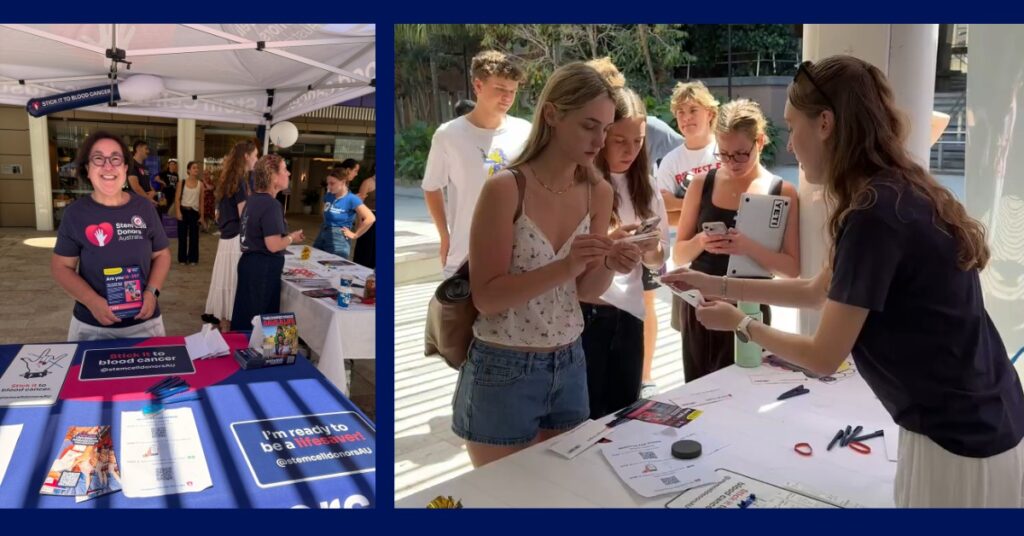
Stem Cell Donors Australia’s cheek swab initiative makes signing up to become a donor fast and easy. And for most, the donation process itself is straightforward – similar to donating plasma.
“It’s a common misconception that donating stem cells is painful, but for the majority of donors, it’s absolutely not,” said Ms Smith.
“In most cases, it’s just like giving blood: stem cells are collected from one arm, while blood is returned through the other. A simple procedure that has the power to save a life.”
Leukaemia Foundation CEO, Mr Tanti added; “When we think about saving the life of an Australian fighting blood cancer, we often picture drugs and research changing the future – but for someone in need of a stem cell transplant, survival doesn’t rest on science alone.”
“The act of a selfless stranger willing to donate their stem cells is a decision that literally gives life to another, and one of the most powerful acts of generosity a young Australian can make.”
More donors mean more matches and more hope for Australians facing blood cancer.
On World Marrow Donor Day, you can help save the life of an Australian fighting blood cancer by signing up to become a stem cell donor. Visit leukaemia.org.au for more information.
About us:
About the Leukaemia Foundation: The Leukaemia Foundation stands with Australia to help cure and conquer blood cancer – with care. Together we are attacking every blood cancer, from every direction, in every way we can. We stand beside every Australian to be their voice and their someone-to-turn to, fighting to get them access to the best care. We also accelerate research that is delivering rapid advancements in blood cancer diagnosis and treatments. Plus, we provide services and support that empower people living with any blood cancer to live well after diagnosis. You can learn more about the Leukaemia Foundation and blood cancer at leukaemia.org.au.
Contact details:
Please contact the Leukaemia Foundation media team: [email protected] or call 0473 154 079