
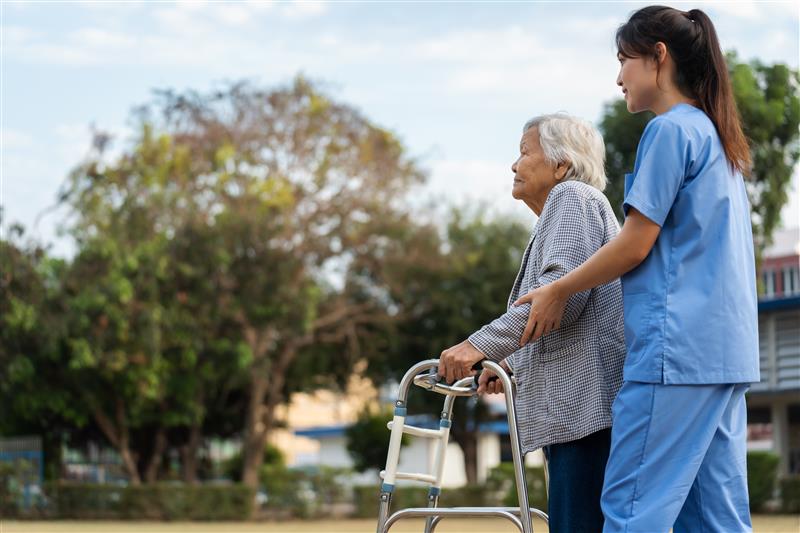
New Australian study shows how tailored education for hospital staff is improving care for people with dementia.
A new study led by Prof. Lynn Chenoweth from UNSW’s Centre for Healthy Brain Ageing (CHeBA) has shown that educating hospital staff in person-centred dementia care leads to better care experiences, greater staff confidence, and improved rehabilitation outcomes for older Australians.
Published in Geriatric Nursing, the study evaluated a dementia care education program delivered to nurses, doctors and allied health professionals at a sub-acute aged care rehabilitation hospital. The goal was to help staff better support older patients with dementia as they recover from injury or illness.
The results were striking. Six months after completing the training, staff reported significantly greater confidence and understanding in how to care for people with dementia. Observations showed more meaningful communication and engagement with patients, and overall improvements in service quality.
“This kind of care recognises the whole person - not just their illness,” said Professor Chenoweth. “When staff are equipped to see and respond to the individual needs, abilities and preferences of people with dementia, outcomes improve - not just clinically, but emotionally and socially.”
The education was based on the Kitwood model of person-centred care, a globally recognised approach that prioritises dignity, respect and emotional wellbeing in dementia care. It also encouraged staff to involve family members and focus on the goals that matter most to the person receiving care.
Prof. Henry Brodaty, internationally respected dementia expert and co-author of the study, said: “Person-centred care is vital in healthcare. It helps people with dementia feel valued, understood and empowered, even in hospital settings that can otherwise be confusing or distressing. This study confirms the value of educating staff to adopt that mindset and approach.”
The program also led to lasting changes across the hospital, with updated policies, new communication tools, and more collaborative care planning between staff, patients and families.
The researchers say the findings offer a clear path for other hospitals and aged care settings to improve dementia care through education and culture change.
“Small changes in how we train and support our staff can make a big difference to how older people with dementia experience care and recovery,” Prof. Chenoweth said.
- ENDS -
About us:
CHeBA is a self-funded research centre with a vision to achieve, through research, healthier brain ageing and better clinical care of age-related brain diseases. Centre for Healthy Brain Ageing (CHeBA) | UNSW Sydney
Contact details:
Helena Hudson, Centre for Healthy Brain Ageing - 0414 292 383