
The study, published in Nature Water, aimed to better understand GHG emissions in tropical rivers, lakes and reservoirs by collating the growing number of observations from across the world’s tropics – including many systems that were previously less represented in global datasets.
Greenhouse gases are the gases in the atmosphere which trap heat, with the main three being carbon dioxide, methane and nitrous oxide. They are released naturally from inland waters, but human activities can greatly increase these emissions.
The results found while these waters still produce significant amounts of GHG emissions, it is 29 to 79 per cent less than previously thought.
Tropical flowing waters (streams and rivers) contributed to an estimated 46 per cent of emissions from global inland waters, and tropical standing waters (lakes, reservoirs, ponds) an estimated eight per cent.
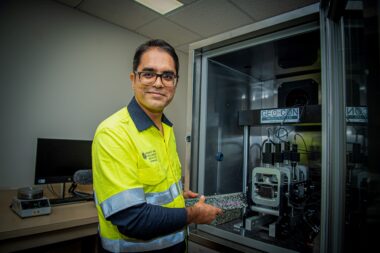
Lead author and CDU Senior Research Fellow Dr Clément Duvert said by expanding the dataset, greater accuracy in emissions could be gleaned and thus inform approaches to management and conservation.
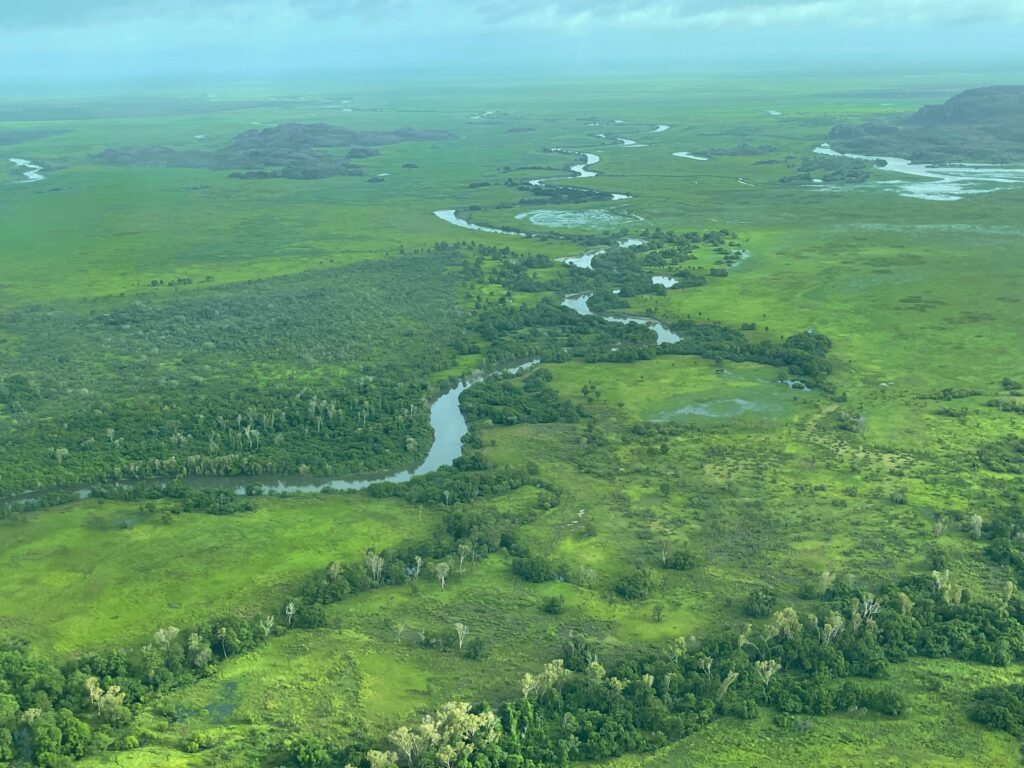
“We found the tropics cannot really be considered as one big emissions hotspot because of its complexity and the mosaic of different ecosystems, landscapes, morphologies and levels of human activity,” Dr Duvert said.
“Some areas in the tropics such as the Amazon or Congo are pristine, lush rainforests, but others are much drier, less productive, or mountainous, and we found this diversity really shapes the amount of gases that freshwater systems release.”
Assistant Professor Gerard Rocher-Ros, who is from Sweden’s Umeå University, is one of the paper’s co-authors and contributed with estimating the surface area of rivers as well as general data analysis.
“The large contribution of rivers in the tropics to greenhouse gas emissions stands in contrast with what we know about their drivers, this study really opens the door on next challenges to better predict carbon cycling in rivers,” Assistant Professor Rocher-Ros said.
Dr Duvert said the next frontier of this research could be to better quantify what portions of these emissions are natural and what are due to human activities.
“We found in this paper that human activities are a strong driver of greenhouse gas emissions,” Dr Duvert said.
“Where you have more activities such as agriculture, you will have higher inputs of organic matter and nutrients into streams, rivers, lakes and reservoirs, then a higher release of greenhouse gases.
“The tropics host most of the world’s population growth and agricultural expansion, which means that emissions from tropical waters are likely to rise in the future.”
“Understanding when and how human activities impact these emissions is important to inform management.”
The study was conducted alongside academics from institutions in Australia and around the world in Brazil, Singapore, China, Belgium, Switzerland, Germany, Sweden, Austria, Canada, France, United States and the Netherlands.
Hydroclimate and landscape diversity drive highly variable greenhouse gas emissions from tropical and subtropical inland waters is available in the journal Nature Water.
Contact details:
Raphaella Saroukos she/her
Research Communications Officer
Marketing, Media & Communications
Larrakia Country
T: +61 8 8946 6721
M: 0427 895 533
E: [email protected]
W: cdu.edu.au

Charles Darwin University acknowledges all First Nations people across the lands on which we live and work, and we pay our respects to Elders both past and present.
CRICOS Provider No. 00300K | RTO Provider No. 0373 | TEQSA Provider ID PRV12069