Skip to content
Environment

TOMAGO CONCRETE COMPANY FINED FOR IGNORING EPA ORDERS

NSW EPA 2 mins read

The NSW Environment Protection Authority (EPA) has fined Recycled Concrete Products Pty Ltd (RCP) $30,000 after the company breached a Prevention Notice requiring it to cease accepting waste.

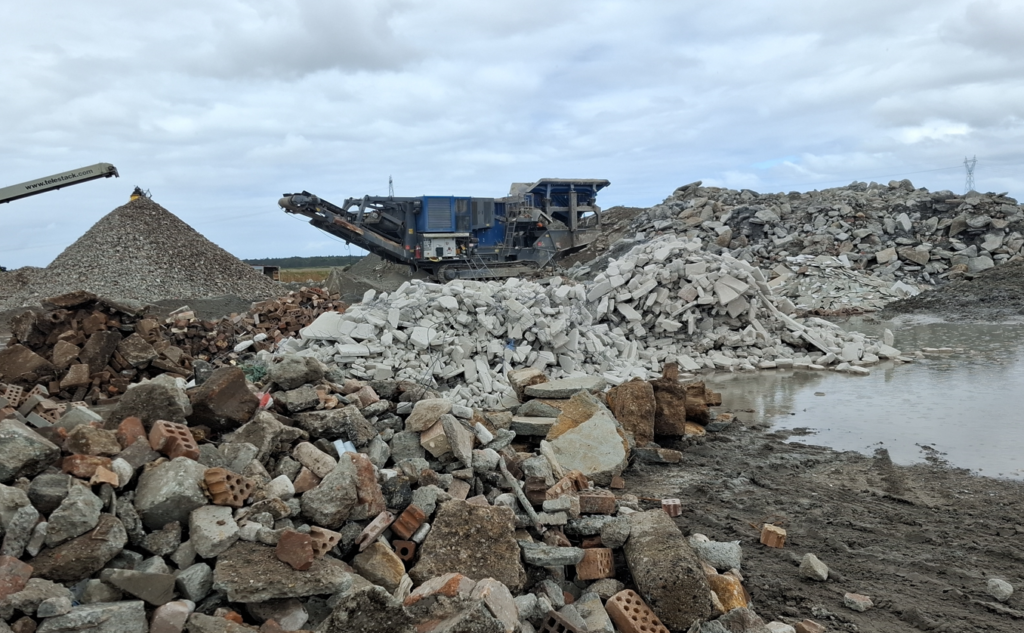
RCP operates a recycling facility at Tomago near Newcastle, converting used concrete, bricks and pavers into products such as road base. The site is licensed to process a maximum of 30,000 tonnes of concrete waste each year.

In December last year, the EPA issued a Prevention Notice directing RCP to stop accepting waste until 25 March 2025, after the company exceeded its annual limit. Despite this, EPA inspections found RCP continued to receive up to 600 tonnes of extra waste during the restricted period, roughly the weight of 300 average-sized cars.

This follows an earlier Penalty Infringement Notice in March this year, when the EPA fined RCP $30,000 for exceeding its annual waste limit by more than 25,000 tonnes, the breach that triggered the Prevention Notice.

EPA Director Operations, David Gathercole, said the operators repeated breaches continued to put the environment at risk.

“This isn’t a one-off mistake. It’s the second time the EPA has fined RCP this year for accepting waste they are not permitted to,” Mr Gathercole said.

“Compliance orders and waste limits are set to protect waterways, air quality and the surrounding community. Ignoring them undermines those protections and puts the environment at risk.

“When operators accept more waste than allowed, it can overwhelm the site’s systems and increase the risk of pollution run-off in wet weather events or dust escaping into the local environment.

“We are continuing to monitor operations at RCP and will consider harsher regulatory responses if the company continues to operate outside the conditions of its licence.”

The company has resumed operations and has strict reporting requirements to the EPA.


Contact details:

ISAAC CAREY | 0436 646 346

24-hour Media Line (02) 9995 6415 [email protected]

Media

More from this category

  • Environment, Transport Automotive
  • 12/12/2025
  • 14:27
NALSPA

Electric Car Discount review must drive clean energy transition and cost-of-living relief

The National Automotive Leasing and Salary Packaging Association (NALSPA) has today welcomed the federal government’s announcement of the statutory review of the Electric Car Discount, noting that the policy continues to be highly effective in encouraging Australians to make the switch to cleaner cars.The federal government announced today that next year it will review the Electric Car Discount, otherwise known as the EV FBT exemption which came into effect in July 2022.The review will consider the operation of the Electric Car Discount over the first three years it has been in place, as required by the legislation.“We will actively participate…

  • Banking, Environment
  • 12/12/2025
  • 10:38
Australian Conservation Foundation

NAB shareholders owning $9.74bn in shares call on the bank to do better on deforestation

Investors owning $9.74 billion of shares in Australia’s largest agribusiness bank have backed a resolution calling on NAB to disclose deforestation linked to its lending.* The resolution on disclosure of financed deforestation, facilitated by the Australian Conservation Foundation and co-filed by SIX, Australian Ethical, Melior Investment Management, was supported by 13.98% of shares voted at NAB’s AGM today. A second resolution, calling on the bank to set out a strategy to eliminate financed deforestation, was supported by 10.39% of NAB shares voted. Jolene George, head of corporate advocacy at the Australian Conservation Foundation, said: “The support for the resolution on…

  • Environment
  • 12/12/2025
  • 10:34
UNSW Sydney

Droughts lasting longer across Australia, study shows

A studytracking not only the forces that drive drought but the damage it leaves behind has revealed that droughts have lasted longer in Australia in recent decades, especially in areas with the most people and farms. UNSW researchers analysed drought trends across Australia between 1911 and 2020 based on rainfall shortages and falling river and dam levels. Their analysis showed that, since 1971, the time spent under drought conditions has increased across most of Australia, especially in the southeast and southwest, which are densely populated and key breadbaskets. The increasing dryness was especially felt during winter and spring, which are…

Media Outreach made fast, easy, simple.

Feature your press release on Medianet's News Hub every time you distribute with Medianet. Pay per release or save with a subscription.