
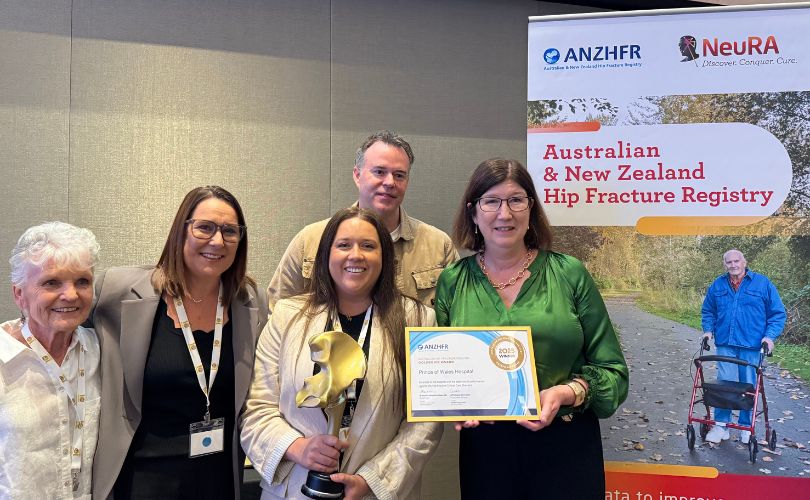
Hip fractures are common and the effects can be devastating, but patient care has improved during the decade since the Australian and New Zealand Hip Fracture Registry (ANZHFR) was established.
Hip fractures affect around 20,000 older people each year in Australia and 4,000 in New Zealand. These injuries are associated with substantial morbidity, mortality, reduced quality of life and independence.
The ANZHFR was established in 2015 to collect data about older people admitted to hospital with a broken hip in Australia and New Zealand. It is designed to allow hospitals to audit the care they provide against key markers of safe, high-quality care. The data can then be used to improve clinical performance, examine national trends, advocate for better clinical care and ultimately optimise patient outcomes.
As the Registry celebrates its 10-year milestone, co-chairs Professor Jacqueline Close, AM, and Associate Professor Chris Wall noted key achievements as increased participation by hospitals and improved outcomes for patients.
“The registry has improved our understanding of what is happening for patients when they arrive at hospital after experiencing a hip fracture, including the assessments and care they receive,” said Professor Jacqui Close, who is Senior Principal Research Scientist at Neuroscience Research Australia (NeuRA) and consultant geriatrician at the Prince of Wales Hospital.
“More than that though, it has helped us better understand the changes we could make to improve their experiences and their outcomes.”
Between 1 Jan 2015 and 31 December 2024, Australian and New Zealand hospitals have contributed 127,000 records to the Australian New Zealand Hip Fracture Registry. The number of hospitals contributing has grown from 25 in 2016 to 106 in 2024.
The Registry has produced the Hip Fracture Guideline, contributed to the development of the Clinical Care Standard and engaged with over 100 hospitals across Australia and New Zealand. Importantly it has also engaged with consumers to ensure it understands what really matters to people with a hip fracture.
“We’re really pleased to have delivered improved outcomes like access to pain relief, nutritional supplements, reduced time to surgery, increased assessments for frailty, cognition and delirium, plus getting up and moving after surgery,” said Assoc Prof Wall, who is also Director of Orthopaedics at Toowoomba Hospital.
“Research has shown that when care is delivered in line with the national standards, people are more likely to survive a hip fracture and have better outcomes.”
While the Registry and its supporters are celebrating its first decade and the achievements to date, they are also focused on the future and continued improvement for people who experience a hip fracture.
“The vision of the registry from now until 2030 is to drive excellence in the dignified care of older people following hip fracture using data to continually improve patient care outcomes and experience after hip fracture,” Prof Close said.
“The registry has achieved so much, but there is still so much more we can do.”
Congratulations to the team from Prince of Wales Hospital, NSW, who received the Golden Hip Award for Best Performing Hospital in this year's ANZHFR Awards.
You can read the 2025 ANZHFR Annual Report here.
About us:
Neuroscience Research Australia (NeuRA) is an independent, not-for-profit research institute based in Sydney aiming to prevent, treat and cure brain and nervous system diseases, disorders and injuries through medical research. To learn more about NeuRA: www.neura.edu.au
Contact details:
Katana Smith
Senior Media and PR Advisor
0452 140 477 | [email protected]