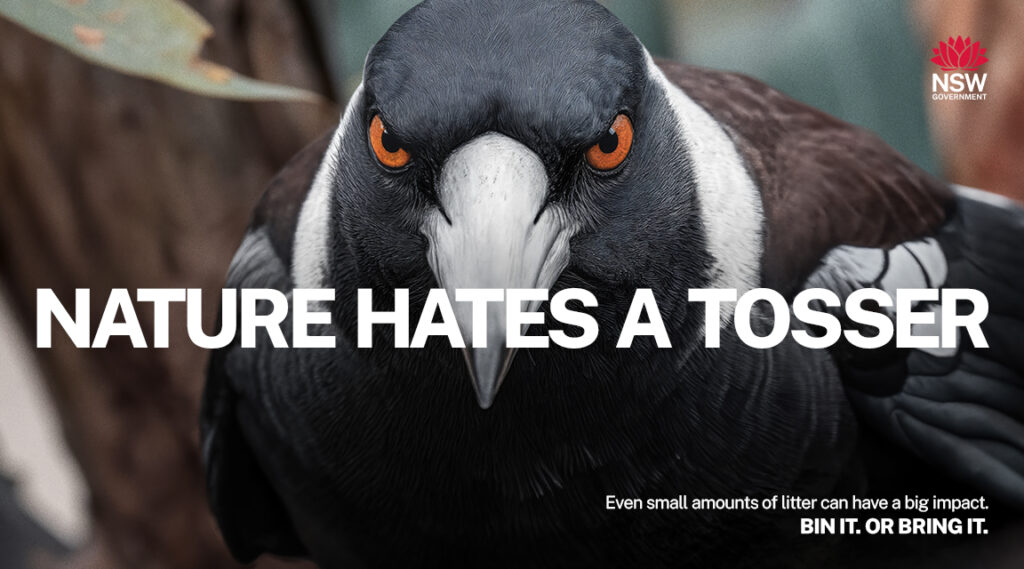
A quirky new awareness campaign featuring some of Australia’s most recognisable wildlife is confronting the harsh reality of litter in New South Wales – the rubbish that starts on our streets ends up in our rivers, waterways and oceans.
Launching on 23 November, Nature Hates a Tosser is the latest campaign from the NSW Government through the NSW Environment Protection Authority (EPA), calling on everyone to take personal responsibility for their rubbish and help protect our state’s wildlife and waterways.
The campaign reminds people that littering even one small item, like a bottle cap, cigarette butt or food wrapper, can have devastating consequences for native animals and ecosystems.
“Every piece of rubbish has a destination, and too often it ends up in the stomach of a bird, a turtle or a fish,” said NSW EPA Chief Executive Tony Chappel.
“Littering is not a harmless act. It is one of the simplest forms of pollution we can all prevent. This campaign asks people to think twice, take ownership and make sure rubbish ends up in the bin, not in nature or in the stomachs of our wildlife.”
The campaign’s research shows:
- 95 per cent of beach litter comes from suburban streets washed into drains and waterways
- Up to 90 per cent of seabirds have eaten plastic
- Every sea turtle examined in a 2018 research study had ingested plastic particles
- Eating just one piece of plastic gives a turtle a one in five chance of dying
- More than 100,000 marine mammals are killed by plastic every year
The Nature Hates a Tosser campaign features wildlife including the magpie and the green sea turtle to demonstrate the impact of everyday litter on animals that call NSW home.
Running across summer, the campaign will reach people when littering behaviour spikes, as warmer weather and outdoor activities lead to more packaging waste and takeaway rubbish.
The campaign supports the NSW Government’s goal to reduce litter by 60 per cent by 2030 as part of its broader Waste and Sustainable Materials Strategy.
Community groups, local councils and other government agencies will also be sharing the message, encouraging people to rethink their actions and keep their local environments clean.
Nature Hates a Tosser follows the EPA’s award-winning Don’t Be a Tosser campaign, which has helped drive significant reductions in litter across the state through education and awareness.
Find out more at: https://www.nsw.gov.au/naturehatesatosser
Contact details: