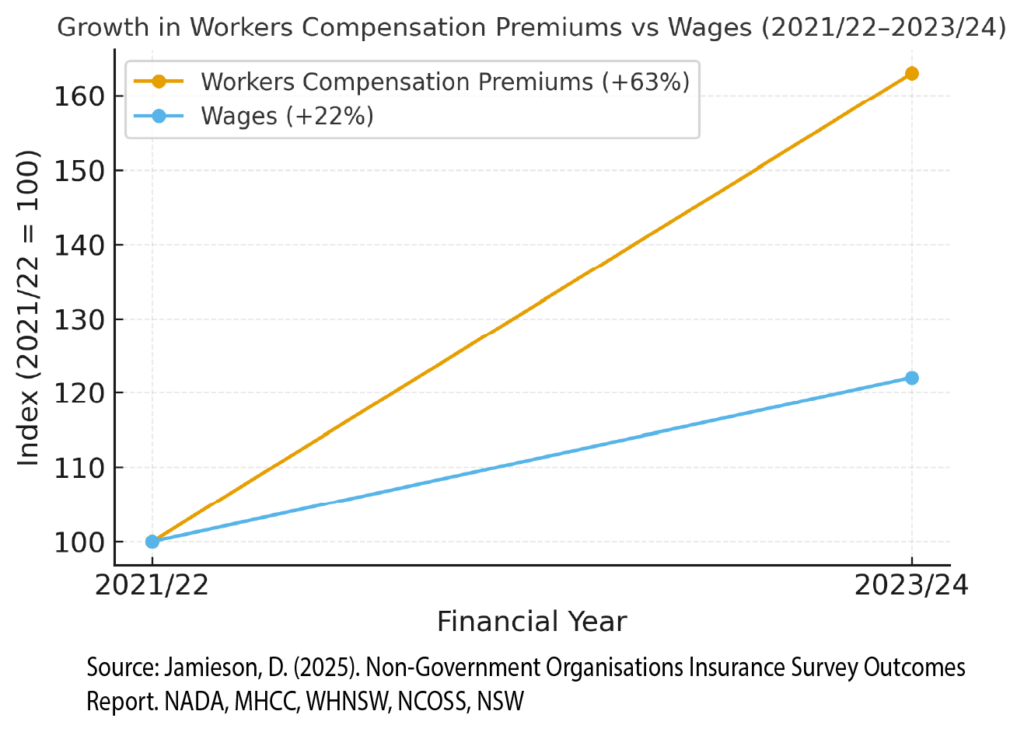

- Workers compensation premiums have risen 63% over three years whilst wages increased only 22%, with potential further increases of 56% predicted over the next five years
- Mental Health Coordinating Council (MHCC) calls for urgent reforms to protect workers whilst ensuring community mental health services remain sustainable
- Current premium increases are causing financial strain on organisations and diverting funds away from essential mental health support services
- Reform needs to address psychological injury prevention through stable funding, manageable workloads and safe working environments
- MHCC urges NSW Parliament to work together to deliver balanced, evidence-based reforms to the workers compensation system
FOR IMMEDIATE RELEASE
10 November 2025
MEDIA RELEASE
NSW Parliament must urgently resolve workers compensation reforms to protect workers and sustain essential community mental health services
Frontline workers and the organisations that employ them depend on a fair and reliable workers compensation system. As the peak body representing community-managed mental health organisations in NSW, Mental Health Coordinating Council (MHCC) urgently calls on the NSW Parliament to work together to deliver a fair and sustainable reform outcome that protects workers, stabilises rising premium costs, and ensures community organisations can continue providing essential mental health supports across NSW.
The recent Parliamentary Inquiry report on both Workers’ Compensation Legislation Amendment Bills has reinforced the need for practical and balanced reform. MHCC remains focused on ensuring reforms uphold the rights and recovery of workers while supporting the sustainability of community-managed mental health services.
Over the last two years MHCC has worked closely with our members, sector partners, and members of NSW Parliament to raise the challenges community-managed mental health organisations experience. At sector roundtables in recent weeks, attended by the Treasurer, senior ministers, and Opposition leaders, MHCC outlined the increasing strain on services and the need for balanced reform.
Findings from the sector’s recent NGO Insurance Survey Outcomes Report shows workers compensation premiums have risen by an average of 63 per cent over the past three years, while wages have increased by only 22 per cent. Treasury assessments indicate premiums may increase by a further 56 per cent over the next five years if no action is taken. For many organisations already supporting people with complex needs, these increases present serious financial pressures and divert funds away from critical services.
The community-managed mental health workforce delivers life-changing support every day, yet the cost of maintaining adequate insurance is growing faster than organisations can absorb. Without a more sustainable system, funding that should be directed to frontline support will increasingly be consumed by rising premiums.
MHCC CEO, Dr Evelyne Tadros said the sector remains committed to reform that strengthens prevention and protection for workers and enables organisations to operate sustainably.
"Community mental health workers play an essential role in supporting people through some of the most challenging moments in their lives. They deserve a system that supports them when they experience injury at work and helps them return to health and stability."
Dr Tadros emphasised the need to address the causes of psychological injury through prevention and early support.
"Many psychological injury claims are linked to resource pressures and increasing levels of distress in the community. Reform must include a focus on prevention. Stable funding, manageable workloads and safe working environments are vital to protecting staff and supporting recovery."
MHCC urges all sides of Parliament to work constructively towards a balanced, evidence-informed outcome that delivers a system built on robust, long-term solutions.
-ENDS-
About Mental Health Coordinating Council
Mental Health Coordinating Council (MHCC) is the peak body for community-managed mental health organisations in NSW. MHCC provides policy leadership, promotes legislative reform and systemic change, and develops resources and training to assist community mental health organisations to deliver quality and effective services underpinned by best practice principles. Visit mhcc.org.au
Media contacts:
Dr Evelyne Tadros, CEO, Mental Health Coordinating Council, 0419 223 360 or [email protected]
Julia Ni, Communications and Engagement Manager, Mental Health Coordinating Council, 0403 011 135 or [email protected]