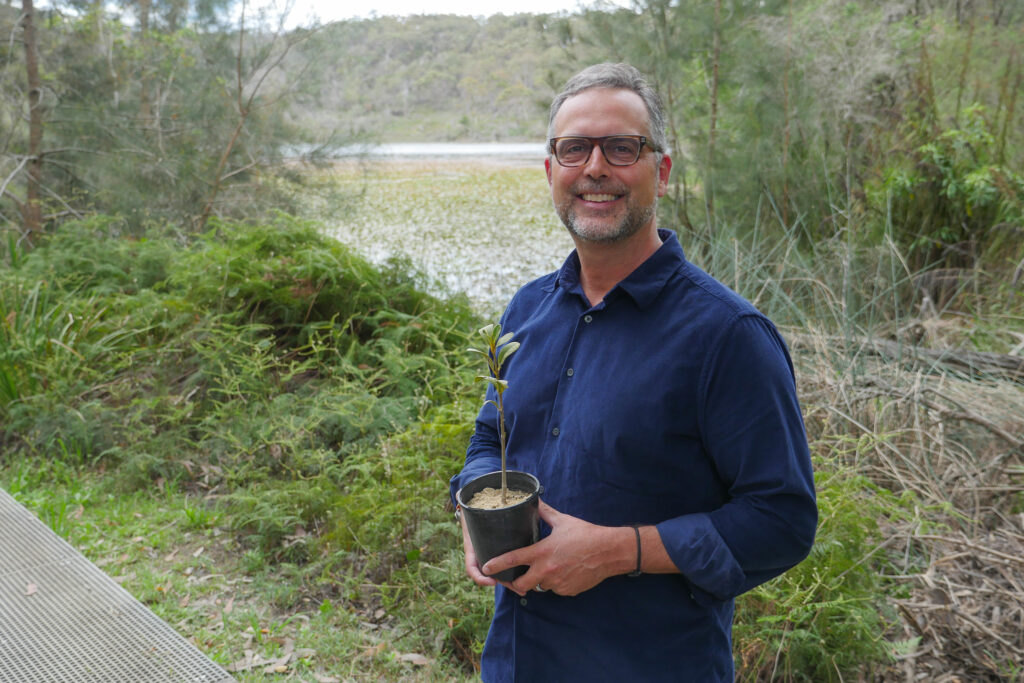
- UNSW Professor leading the way on intiatives to store carbon in wetland environments
- Past work has helped restore badly damaged environments across Australia
- Latest project aims to restore coastal habitats in Fiji with 'floating mangroves'
Growing up among the estuaries of New York state, studying abroad on Australia’s coastline, and rebuilding water systems as a volunteer in Nicaragua has helped UNSW's Environmental Engineering Professor Will Glamore understand the importance of 'blue carbon'.
Captured by coastal wetlands like mangroves, marshes and swamps, these environments hold up to four times more ‘blue’ CO2 than forests and trap carbon nearly 50 times faster.
Professor Glamore is a lead co-author of the Australian Government’s method for accrediting coastal wetland restoration projects on the national carbon market. He is helping make blue carbon projects a viable way to cut emissions.
Through research and teaching at the University’s Water Research Laboratory (WRL) in Sydney’s northern beaches, Prof. Glamore and his research partners have helped restore 1000s of hectares of coastal wetlands with a unique approach of nature-based technology and environmental engineering.
"Turning degraded land into thriving coastal wetlands using nature-based solutions is an exciting opportunity," he says.
"Every project starts off as a degraded landscape but, in the end, it is a beautiful mosaic of the tide, mangroves, and nature."
Turning the tide
Prof. Glamore has always been around water. Growing up on boats, his father sailed the entire east coast of the US and around the world as a merchant marine.
After swapping the tide for the Colorado mountains while at university, Prof. Glamore found himself missing the coastline and ended up on exchange to Australia in the early 1990s. Following several years as a dive instructor, he began his PhD in Wollongong.
"I came out to Australia looking to explore new coastlines and I’ve largely never left."
But it wasn’t until his time as a volunteer in Nicaragua that he saw the positive impact engineers can have on the environment. After the Contra War in Nicaragua, locals in a rural village near Chusli at the Honduras border were left suffering from dysentery and cholera.
"Deforestation impacted the town’s water supply and forced everyone to drink from the polluted river. Working with the community, we replanted their catchment and rebuilt the water supply. By the end of the trip, safe drinking water taps were located throughout the town.
"Until then, environmental engineering to me was just wastewater pump design. From that experience, my thinking radically changed on what an environmental engineer can do."
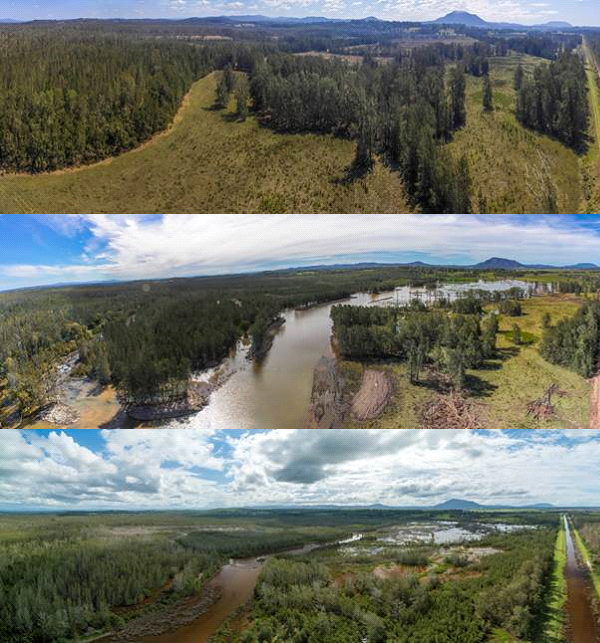
Caption: Big Swamp, near Taree in mid-northern NSW, a floodplain restored by Professor Glamore and his research partners. PHOTO: MidCoast Council
Blue futures
Back in Australia, Prof. Glamore’s PhD has shaped his life’s work. His thesis, an early example of nature-based solutions, used the power of tides to improve water quality and combat acidic groundwater.
Initially tested on small sites south of Sydney, this research quickly grew to larger sites across NSW, including the Tomago Wetlands in the Hunter River estuary.
[Video embedded in UNSW website article: https://www.youtube.com/watch?v=dN9t724NGBk]
Working with local collaborators, including National Parks and Fisheries, the professor’s team invented ‘smart gates’ that linked floodplains to the estuaries. Tidal waters from estuaries create new ecosystems in the plains, reduce flooding, provide fish nurseries and habitat for migratory shorebirds.
"It was amazing to see thousands of birds flock to the restored wetlands after travelling halfway across the world," he says.
It soon became obvious that the scale of coastal restoration needed to increase, despite their success. In 2021, the Australian Clean Energy Regulator started work on a new carbon abatement method focused on blue carbon and tidal restoration. Prof. Glamore was a lead collaborator, detailing how projects should be undertaken.
"Writing this method was a unique opportunity to apply our decades of research into a new nature-based industry across Australia.
"This approach will help to offset climate emissions and improve biodiversity, while providing private landholders an incentive to restore nature on unproductive land."
Pacific partnerships
Prof. Glamore’s current project is moving from down under to further afield.
Alongside his co-lead, Associate Professor and UN-recognised water expert Andrew Dansie, he is working on 'Project Halo' with experts across Oceania to upscale blue carbon benefits for the region with two main aims.
First, they are hoping to showcase their nature-based approach at low-lying sites, where tidal restoration can result in the rebirth of mangrove ecosystems.
Second, the team is bringing mangroves back on ‘floating’ wetlands into urbanised areas like ports or marinas.
“We hope to bring back the benefits of mangroves, including water quality, coastal defences, and habitat to developed areas where they can no longer grow on their own,” he says.
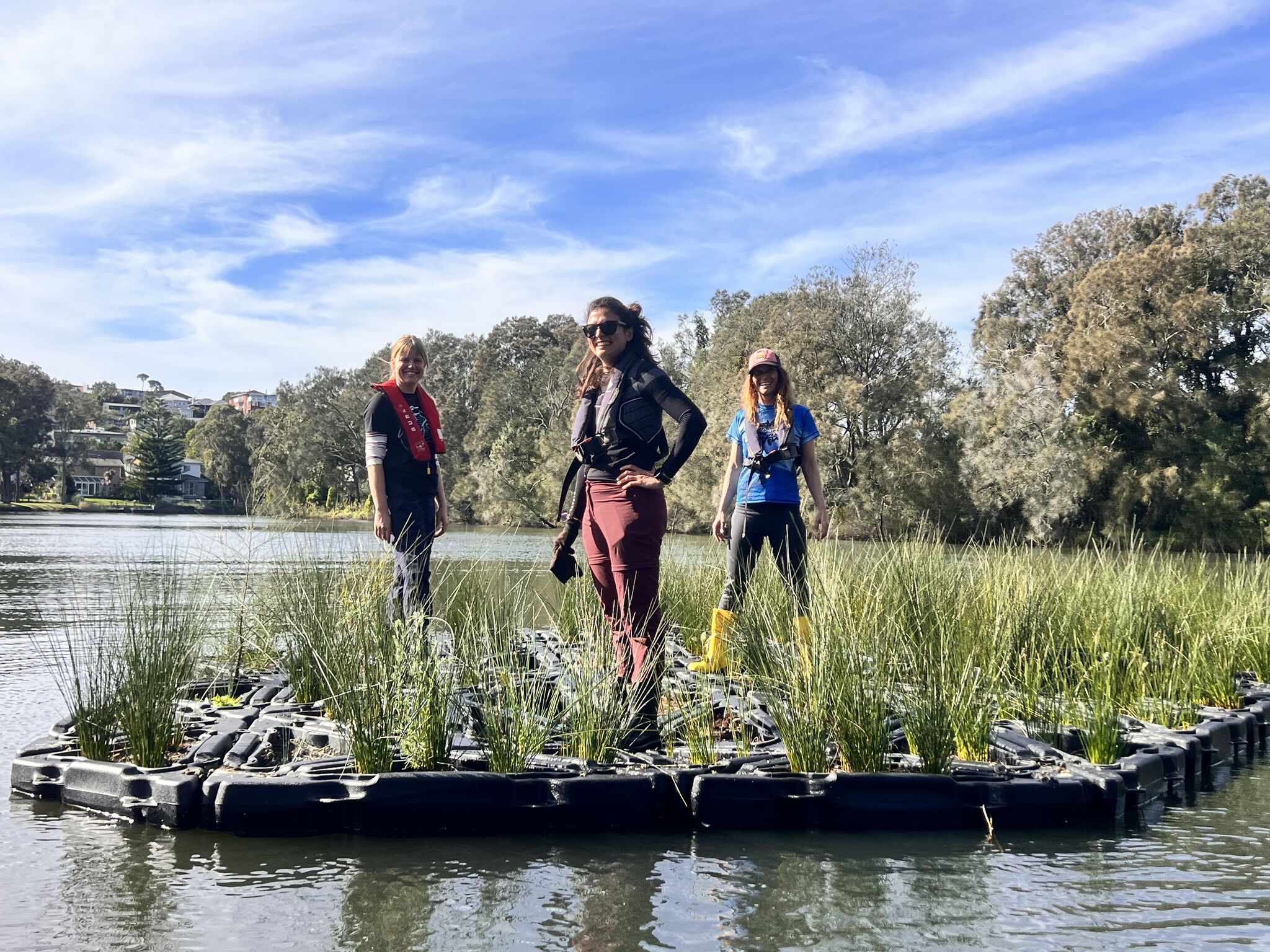
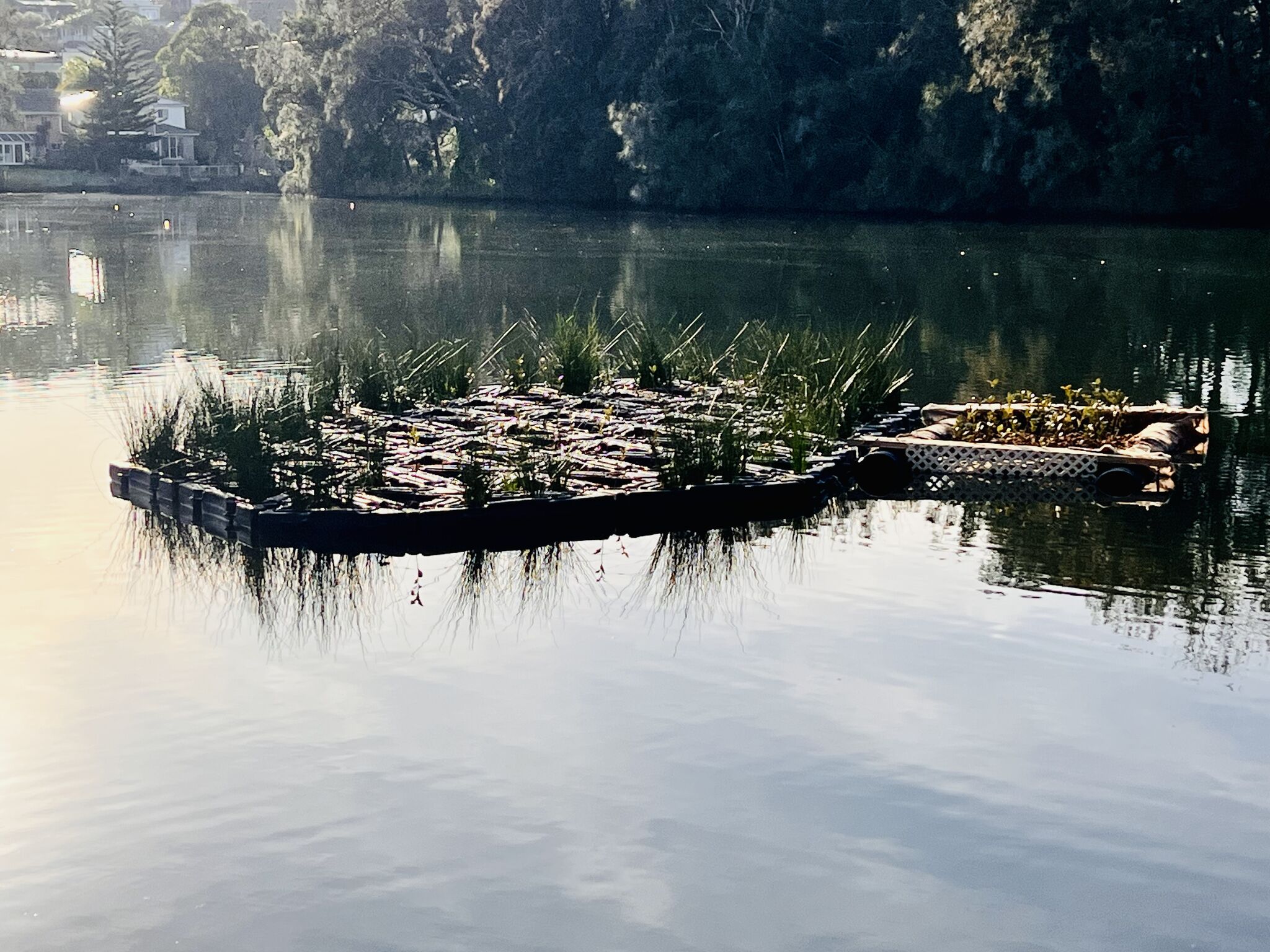
Caption: Photos from trial runs for the floating mangrove systems to be implemented in Fiji. PHOTO: Will Glamore / LinkedIn
In partnership with the University of the South Pacific (USP), Project Halo will work with communities while using world-leading science to restore the environment.
Research students involved are equally based in Suva and Sydney. They have the opportunity to graduate from both institutions.
With additional support from UNSW, the project has been given resources to hold workshops for schools and businesses, showing scale models of mangrove habitats and their restorative effects for marine environments while encouraging community engagement.
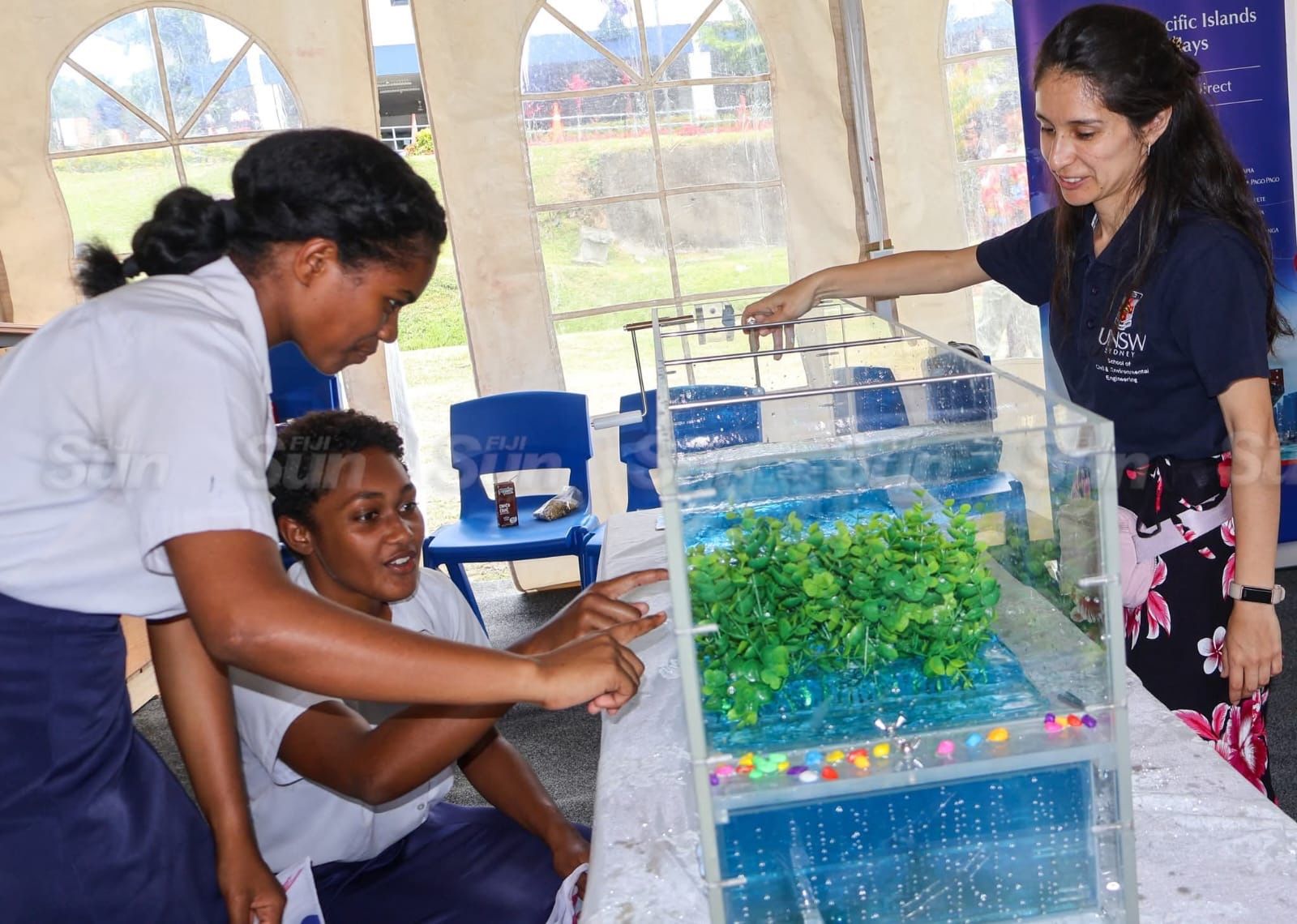
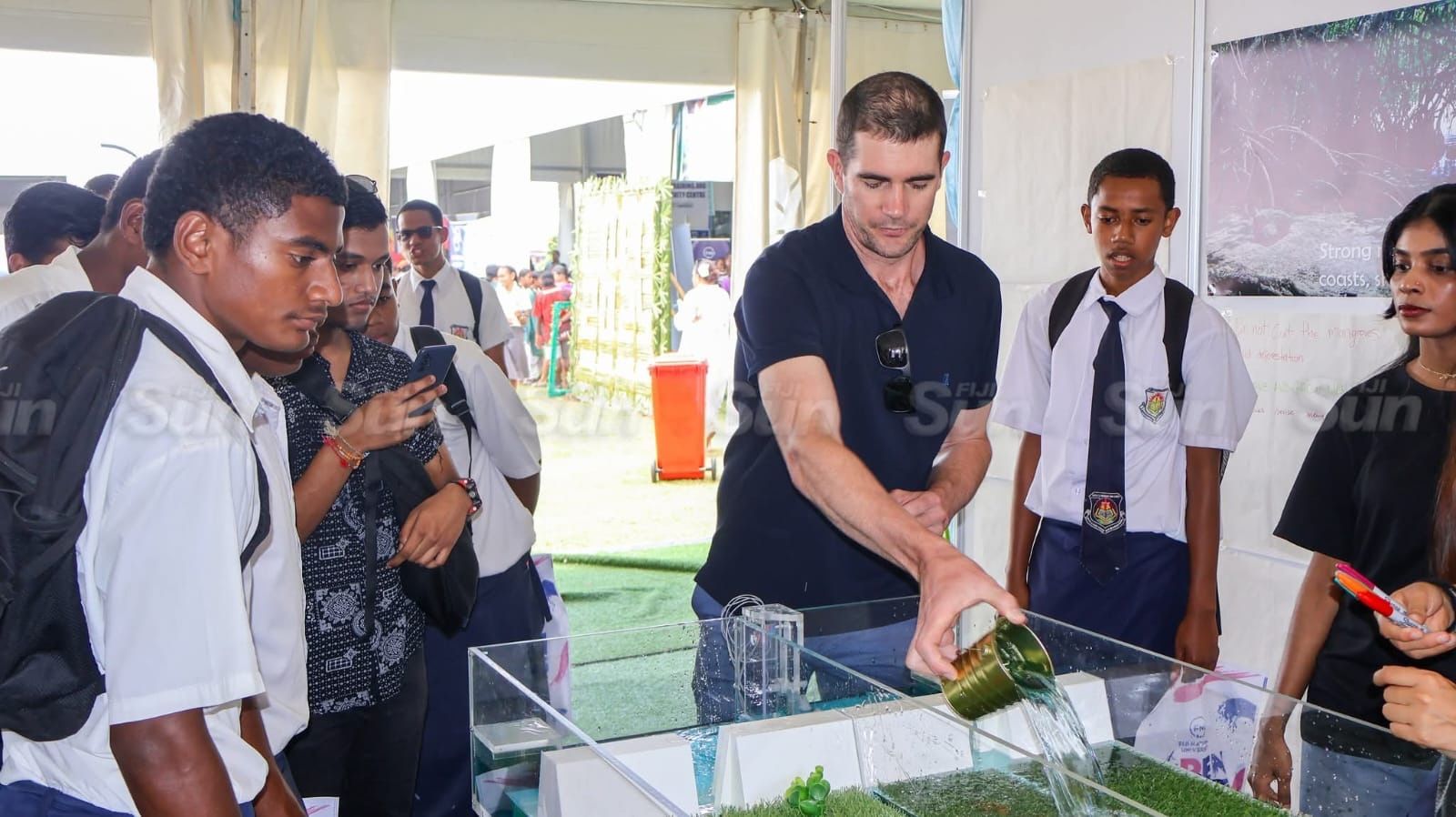
Caption: Photos from workshops held by the Project Halo team at Fiji National University to demonstrate the benefits of mangrove restoration. PHOTO: Laura Montaño Luna / LinkedIn
Project Halo is the result of the largest corporate philanthropic support ever made to UNSW Engineering, thanks to Swire Shipping.
“Working with Swire Shipping, the Philanthropy team at UNSW and Vice-Chancellor and President Attila Brungs, we’re able to maximise benefits for everyone involved," Prof. Glamore says.
"It is truly a once in a lifetime opportunity to build capacity across the Pacific in nature-based solutions.”
Making a splash
Prof. Glamore has learned many things from his international studies, and now it seems the world is taking notes from him and his team.
Amongst other projects, he is working with global maritime experts to develop practical guidance for implementing blue carbon projects.
As part of the World Association for Waterborne Infrastructure (PIANC), Prof. Glamore recently travelled to Brussels as co-lead of an international working report.
Once released, this guideline will help ports and harbours undertake evidence-based nature-based solutions for blue carbon projects.
Despite these positive steps, Prof. Glamore emphasises the pressing need for solutions at scale.
“The world is currently managing two global crises: climate change and biodiversity. Nature-based solutions can address both impending crises, but the scale of implementation must dramatically increase to ensure the same opportunities are provided for future generations.
“I grew up appreciating the rhythm of the tide and I am concerned that future generations will be afraid of its rising threat.”
Contact details:
For enquiries about this story, please contact Neil Martin, News & Content Coordinator (Engineering)