New rental data and planning reforms show granny flats have shifted from family accommodation into serious yield assets, with two bedroom secondary dwellings in Sydney and Melbourne now routinely earning investor grade income.
According to Fundd’s 2025 granny flat guide, typical two-bedroom granny flats in Sydney and Melbourne now rent for about $350 to $600 a week, pushing potential annual gross income into the $18,000 to $36,000 plus range depending on location and finish.
In Victoria, planning reforms introduced in late 2023 and now fully in effect allow “small second dwellings” of up to 60 sqm to be built without a planning permit in most residential zones and rented to non-family tenants under standard tenancy law, putting thousands of backyards into play for investors.
Similar reforms across New South Wales, Queensland, South Australia and Western Australia have shifted granny flats from restricted, family-only accommodation into a new category of income-producing residential infrastructure.
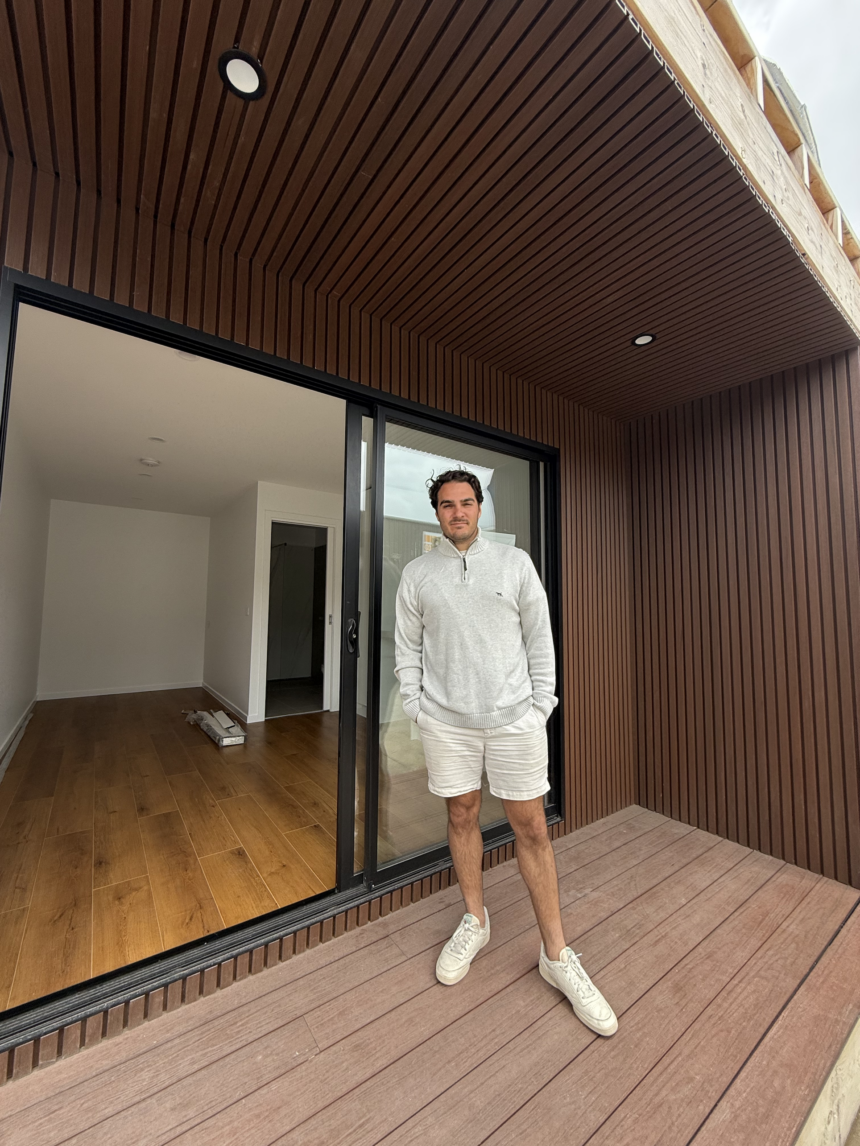
Against this backdrop, Melbourne-based Maple Property Group has delivered a fully tenant-ready dual-income property in just four and a half months from client engagement to completion, signalling how quickly private capital is now moving to activate new supply under the reformed planning framework.
The completed Victorian project, delivered end-to-end by Maple, involved the construction of a compliant small second dwelling behind an existing residential property. The home is already leased, allowing rental income to commence immediately on handover.
“All of our builds are turnkey,” said Beau Arfi, Maple CEO.
“Once construction is complete, tenants can move in straight away. There is no waiting period and no grey zone around compliance. The rules are now clear, and people are catching on fast.”
Maple currently works with more than 1,200 clients across Australia and is onboarding up to 50 new investors each month. Demand is increasingly driven by dual-income strategies rather than traditional buy-and-hold single dwellings.
Around 10% of Maple’s client base is now actively pursuing second-dwelling strategies, a figure that has climbed sharply over the past year as planning reforms have taken effect.
While the regulatory shift has made granny flats investable at scale, execution speed has emerged as the key differentiator.
“Policy has opened the door, but delivery is what solves housing,” Mr Arfi said.
“The bottleneck is no longer what is legal. It is how fast quality homes can be built, leased and integrated into long-term portfolio strategies."
Beyond build delivery, Maple’s model integrates finance, off-market property selection, property management, depreciation strategy and long-term acquisition planning. Investors engage through a structured, stepped education and strategy process rather than single-transaction broking.
The approach is increasingly resonating with first-time investors, FIFO and trade workers, and families under mortgage pressure seeking to unlock under-utilised backyard land.
“Many Australians are sitting on unused land while renting in a housing crisis,” Mr Arfi said. “Granny flats are no longer a niche idea. They are becoming core infrastructure for the next phase of residential supply. People are sitting on goldmines in their own backyards.”
ENDS
About us:
Maple Property Group is an Australian property investment firm specialising in residential investment strategy, construction delivery and long-term portfolio planning, with a growing focus on dual-income and second-dwelling projects.