WaterAid Australia and the Pacific Menstrual Health Network have today released a landmark report revealing widespread barriers preventing women and girls with disabilities across the Pacific from safely, comfortably and confidently managing their menstrual health.
From Silence to Solutions: Understanding the Menstrual Health Experiences of Women with Disabilities in the Pacific draws on a desk review of regional policies and 49 in-depth interviews across Fiji, Papua New Guinea and Vanuatu. The report identifies systemic gaps in information, access to products and facilities, discriminatory social norms and a lack of policy leadership.
The findings show nearly half of the women interviewed did not receive any menstrual health education before their first period, while 71% of women who had reached menopause learned about it only after experiencing symptoms.
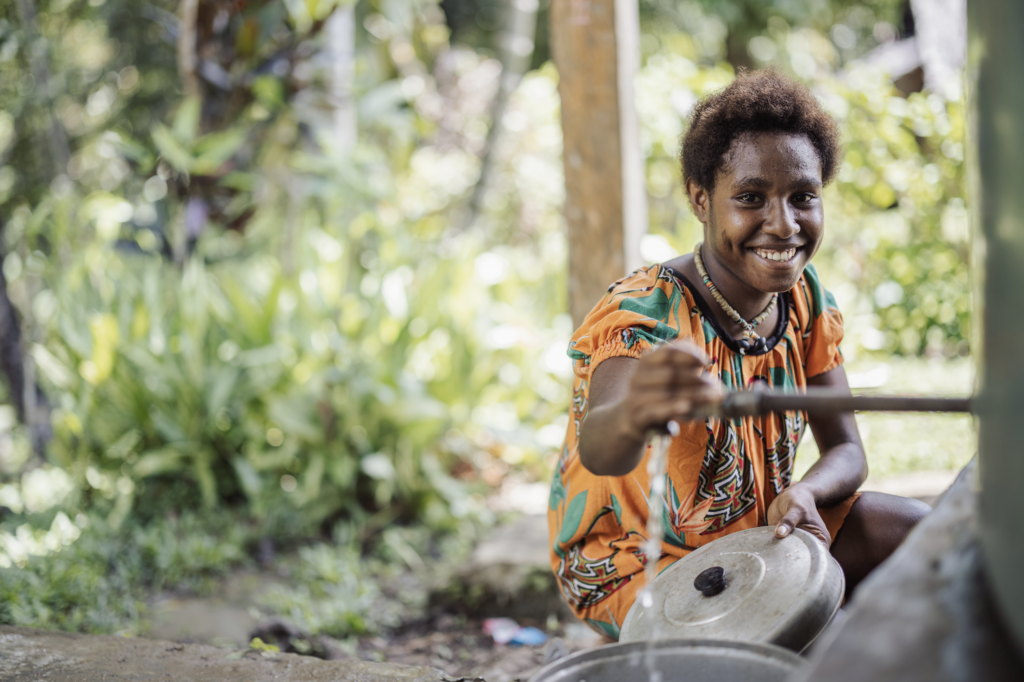
Many reported staying home during menstruation due to inaccessible water, sanitation and hygiene facilities, unaffordable products, stigma and fear of discrimination.
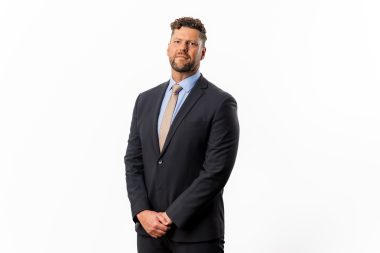
Co-author Chelsea Huggett, Head of Strategy at WaterAid Australia, said the report highlights a critical but long-overlooked issue in the region.
“Menstrual health is a fundamental human right, however many women and girls with disabilities across the Pacific still face a double burden of gender inequality and disability discrimination. This research makes it clear; when we fail to design policies, facilities and services with women with disabilities at the centre, we fail them entirely.
It is time for menstrual health programs, water, sanitation and hygiene systems and health services to be inclusive by default, not an afterthought. Women with disabilities must be at the table, not just as participants, but as leaders shaping solutions that reflect their lived realities.”
Co-author Hannah Tamata from the Pacific Menstrual Health Network highlighted the deep stigma that continues to affect the wellbeing of women with disabilities.
“Menstruation remains surrounded by silence in many Pacific communities, and that silence is even greater for women with disabilities. We heard from deaf women who cannot access basic information, from women with mobility challenges who cannot reach safe water to wash, and from carers who lack the guidance they desperately need. This report gives voice to those experiences and calls on governments and development partners to act. Inclusive menstrual health is not optional, it is essential for dignity, participation and equality.
The report outlines practical steps for governments, service providers and NGOs, including:
- Supporting disability-led research and programming, with women with disabilities in leadership roles.
- Strengthening cross-sector collaboration through the Pacific Menstrual Health Network to embed disability inclusion across WASH, SRHR, education, health and climate-resilience efforts.
- Investing in disability-inclusive WASH facilities, accessible infrastructure and affordable menstrual products.
- Developing accessible information and community education campaigns, including plain language, sign-interpreted content and tailored resources for carers.
- Building health provider capability, including removing communication barriers and strengthening inclusive SRHR services.
Despite some promising national policies in Fiji, Papua New Guinea and Vanuatu, the report finds that disability-inclusive menstrual health remains largely absent from government strategies.
WaterAid Australia and the Pacific Menstrual Health Network are urging governments, donors and development partners to integrate disability-inclusive menstrual health into national frameworks, and to invest in evidence-based solutions that centre the rights and voices of women and girls with disabilities.
-ENDS-
About us:
WaterAid
WaterAid is an international non-profit with one goal: to change the world through water. Along with decent toilets and good hygiene, a reliable supply of clean water is essential for health, dignity and a life full of opportunity. We work alongside communities in 22 countries, setting up entire systems that deliver clean water, decent toilets and good hygiene for millions of people. Since 1981, WaterAid and its Country Programmes have reached 28.9 million people with clean water, 29.2 million people with decent toilets and 28.7 million people with good hygiene.
To find out more visit www.wateraid.org.au follow @wateraidaustralia on Instagram, @WaterAidAus on Twitter, or find WaterAid Australia on Facebook at www.facebook.com/wateraidaustralia
· 696 million people in the world – almost one in ten – don’t have clean water close to home.1
· 2.1 billion people in the world – more than one in four – don’t have safe water.1
· 1.7 billion people in the world – one in five – lack soap and/or water to wash their hands at home, if they have a place at all.1
· 1.5 billion people in the world – less than one in five – don’t have a decent toilet of their own.1
· Almost 400,000 children under five die every year due to diseases caused by unsafe water, sanitation and hygiene. That's more than 1,000 children a day. 2
· Investing in safely managed water, sanitation and hygiene services provides up to 21 times more value than it costs.3
· Worldwide, women and girls spend 200 million hours every day collecting water. 4
[1] WHO/UNICEF (2025). Progress on household drinking water, sanitation and hygiene 2000-2024: special focus on inequalities. Available at: washdata.org/reports/jmp2025-wash-households (accessed 27 Aug 2025).
[2] WHO (2023). Burden of disease attributable to unsafe drinking-water, sanitation and hygiene: 2019 update. Available at: who.int/publications/i/item/9789240075610 (accessed 24 Jul 2023).
[3] WaterAid (2021). Mission-critical: Invest in water, sanitation and hygiene for a healthy and green economic recovery. Available at: washmatters.wateraid.org/publications/mission-critical-invest-water-sanitation-hygiene-healthy-green-recovery (accessed 1 Nov 2023).
[4] UNICEF (2016). Collecting water is often a colossal waste of time for women and girls. Available at: unicef.org/press-releases/unicef-collecting-water-often-colossal-waste-time-women-and-girls (accessed 09 Jan 2024).
Contact details:
For more information, please contact:
Tegan Dunne, WaterAid Australia Public Relations and Communications Manager
Ph: 0415 714 589