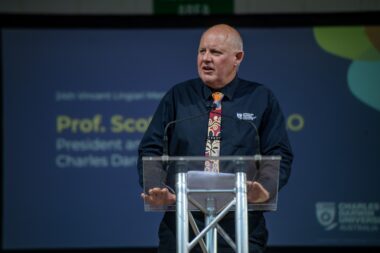
In response to the IPA’s calls for a curriculum overhaul, Professor Sara Tolbert from the School of Curriculum Teaching & Inclusive Education, provides reassurance that Australia’s climate education approach meets global standards and explains how the curriculum was developed by qualified educators to uphold children’s right to knowledge and participation.
Professor Sara Tolbert, School of Curriculum Teaching & Inclusive Education
Contact: +61 9903 4940 or [email protected]
- IPA’s opposition to climate education reflects political motives, not classroom realities
- Climate education in Australia aligns with the Paris Agreement and UNESCO’s Education for Sustainable Development
- Sustainability education is embedded across school and early childhood frameworks
- How can we support teachers and students
Comments attributable to Professor Tolbert:
“The Institute of Public Affairs' (IPA) attack on climate education reveals more about their ideological agenda than about Australian classrooms. The IPA, a think tank that refuses to disclose its current donors and with a documented history of climate science denial, has no credible standing to dictate what children learn about the defining environmental challenges of their generation.
“Australia's approach to climate education aligns with our commitments under the Paris Agreement and UNESCO's Education for Sustainable Development initiatives, which recognise that education is ‘the most powerful element in preparing societies for the global challenges that climate change brings’ (UNESCO, 2017).
“Climate and sustainability education is embedded not only in the school curriculum but also in the Early Years Learning Framework, developed by experienced early childhood educators and pedagogical experts who understand that children have a right to be informed and to participate meaningfully in matters affecting their lives.
“Teachers absolutely deserve better resources and support to teach climate change in age-appropriate, evidence-based ways. And yes, we should be vigilant about which organisations produce curriculum materials, which is precisely why qualified educators and researchers should develop these resources rather than fossil-fuel-aligned lobby groups.
“Research shows that students experience more anxiety when these issues are not taught, as awareness without mechanisms for action exacerbates distress. The IPA weaponizes the concept of ‘eco-anxiety’ for political purposes, while ignoring that industry-produced materials from polluters deflect responsibility from corporations onto individual children.
“The imminent threats to children's wellbeing and academic achievement are chronic underfunding, teacher shortages, and unsustainable workloads – issues the IPA conveniently ignores while demanding we abandon sustainability education precisely when rural and Aboriginal communities face increasing climate impacts.”
For more experts, news, opinion and analysis, visit Monash News.
For any other topics on which you may be seeking expert comment, contact the Monash University Media Unit on +61 3 9903 4840 or [email protected]