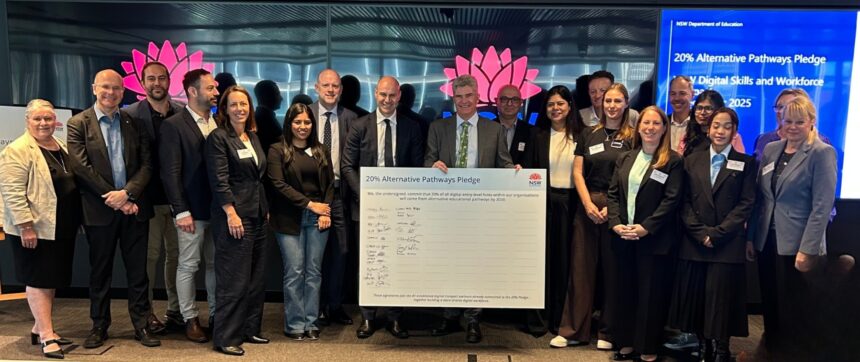
Eleven leading organisations have now met or exceeded the NSW Digital Compact’s 20 percent Alternative Pathways Pledge, demonstrating the success of the initiative in opening new routes into digital careers across the state.
The early achievers - Academy XI, ANZ, Accenture, CyberCX, FDM Group, Humans of Purpose Academy, NFP Ocean, the Premier’s Department, Revio Cyber Security, Salesforce and Workinitiatives - have already reached the target of ensuring at least 20 percent of their entry-level digital hires come through alternative pathways.
NSW Minister for Skills, TAFE and Tertiary Education Steve Whan said the results show the Digital Compact is driving real, measurable change.
“These organisations are proving that alternative pathways work,” Mr Whan said.
“They are opening doors to people who may not have taken a traditional route into tech, and in doing so they are helping NSW build the diverse digital workforce we need for the future.”
One standout achiever is Humans of Purpose Agency, which has far exceeded the pledge. More than 75% of its workforce have joined through alternative education pathways, supported by the Agency’s Academy and specialised digital skills training and mentoring programs.
Their inclusive model has supported more than 400 women, many with lived experience of domestic and family violence, to re-skill and begin digital careers in safe, flexible and meaningful roles.
A/Deputy Secretary of Education and Skills Reform, Jeremy Kurucz, said the progress of pledge partners highlights the strength of industry-led leadership.
“Industry is demonstrating what is possible when employers embrace new ways of identifying and nurturing talent,” Mr Kurucz said.
“These early achievers show that alternative pathways broaden the talent pool and strengthen the digital workforce for the long term.”
Today’s pledge signing at Business NSW adds 18 new organisations to the Compact, bringing the total number of Digital Compact partners to more than 50. Signatories commit to ensuring at least 20 percent of their entry-level digital hires come from alternative pathways by 2030.
The NSW Digital Compact is a cross-sector collaboration bringing together government, industry, peak bodies and education providers to address the projected shortfall of 85,000 digital workers by 2030.
Contact details:
Mike Morrow - [email protected]