Skip to content
Environment, Science

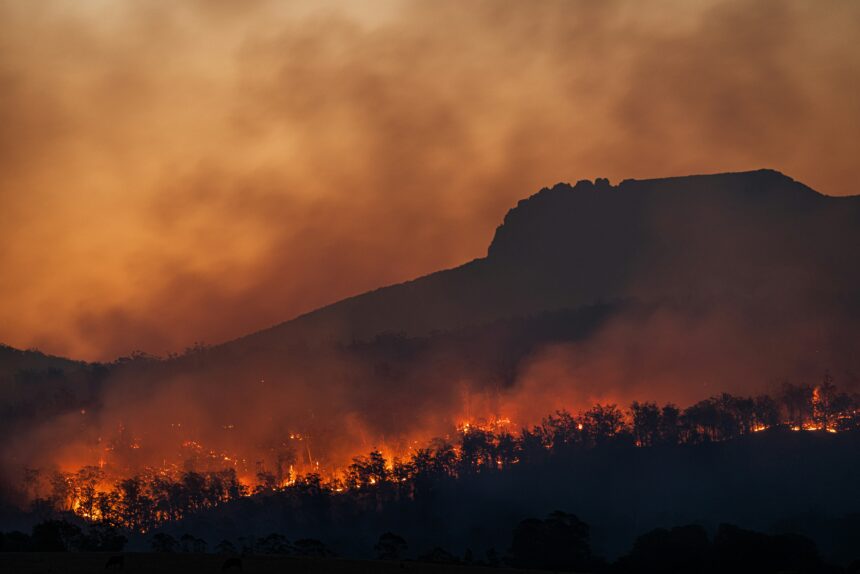
UNSW experts available to comment on the future of bushfires

UNSW Sydney < 1 mins read
Key Facts:

Experts from UNSW warn we must adapt as we enter a new age of bushfires.


Good morning – with today being the first day of a dry and hot Australian summer, we have four experts available to comment on the future of bushfires. They can speak to what this means in terms of the bushfire science, what physical and mental health impacts need to be addressed, and what future urban design should consider to keep communities safer. 

Our multimedia piece goes live today before 8AM:
 
https://www.unsw.edu.au/newsroom/news/2025/12/up-in-flames-how-bushfires-could-reshape-daily-life 
 
Please let me know if you would like to explore a story with one of the experts below:
  • Professor Jason Sharples, bushfire behaviour expert“Unfortunately, the reality is that the best time to put extreme bushfires out is five years before they start."
  • Dr Christine Cowie, environmental epidemiologist“We know the longer someone endures smoke inhalation, the greater the risk of developing severe illness, even for healthy people.” 
  • Professor Kaarin Anstey, psychologist and cognitive ageing expert"There is an urgent need for more longitudinal and experimental studies to understand the full extent of bushfire smoke’s effects on brain health.“
  • Mr Benjamin Driver, architect and senior lecturer in urban development & design: "We do need more housing and a lot of it, but we can accommodate it in existing suburbs rather than building inefficient and distant new ones that create dangerous bush-urban interfaces." 


Contact details:

Melissa Lyne, UNSW news & content coordinator
E: [email protected] 

More from this category

  • Environment
  • 17/01/2026
  • 00:01
Greenpeace Australia Pacific

EMBARGO: Historic Ocean Treaty kicks in as Australia warned: “no time to waste”

EMBARGO: 00:01 AEST Saturday 17 January 2026 BRISBANE, Saturday 17 January 2026 — As one of the most significant nature protection agreements in history, the Global Ocean Treaty, comes into force today, Greenpeace Australia Pacific says there’s no time to waste for Australia to pass the legislation and start protecting the high seas. The Global Ocean Treaty, the most significant piece of environmental legislation since the Paris Agreement, is the foundation that will enable governments to propose and establish world-first high-seas ocean sanctuaries, where millions of species and underwater wonderlands can rest, thrive, and recover. It legally enters into force…

  • Contains:
  • Science
  • 16/01/2026
  • 19:11
AEON Environmental Foundation

Nominations open for The MIDORI Prize for Biodiversity 2026 by AEON Environmental Foundation and the Secretariat of the Convention on Biological Diversity

The MIDORI Prize recognizes outstanding individual contributions to the conservation and sustainable use of biodiversity The unique prize contributes to raising public awareness of…

  • Contains:
  • Science
  • 16/01/2026
  • 13:30
Monash University

New study reveals how temperature and urbanisation can change bee behaviour

Key points Higher temperatures caused European honeybees to slow down their attraction to light, while native Australian bees’ light attraction appeared unaffected. Light simulating natural sunlight elicited a similar response in bees compared with simulated artificial city light. Bees living in urban and natural environments demonstrated similar light attraction responses. Research from Monash University explores how rising temperature and growing urban environments can affect behaviour in native Australian bees and the European honeybee. Bees play a vital role in pollinating crops, gardens and native plants, yet global insect populations are under pressure from climate change and habitat loss. To understand…

Media Outreach made fast, easy, simple.

Feature your press release on Medianet's News Hub every time you distribute with Medianet. Pay per release or save with a subscription.