
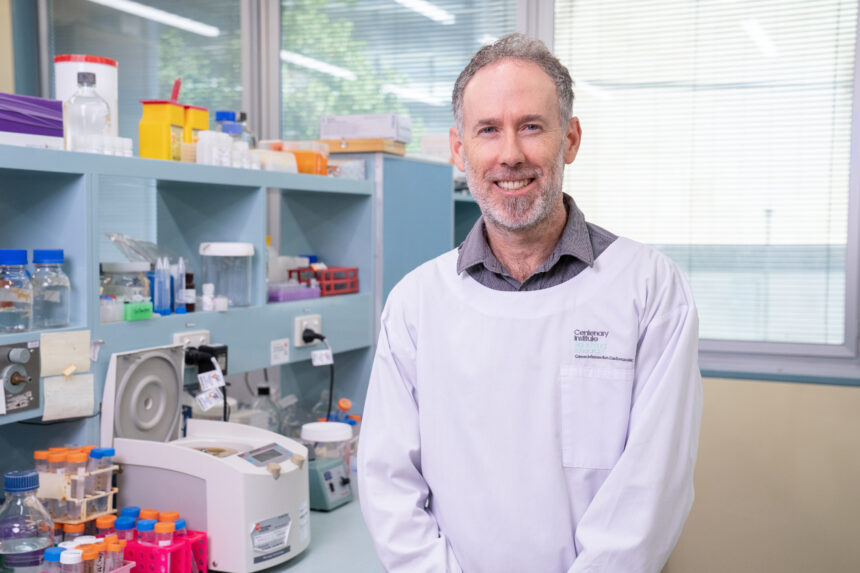
Centenary Institute researchers have achieved success in the latest round of National Health and Medical Research Council (NHMRC) Ideas Grants, securing funding for innovative work in rare genetic diseases and liver disease.
A team led by Dr Chuck Bailey, Head of the Centenary Institute’s Centre for Rare Diseases and Gene Therapy, will receive $1,944,020 for a project aimed at improving the safety and effectiveness of gene therapy. By targeting the root cause of disease, gene therapy has the potential to treat or cure conditions ranging from rare inherited disorders to cancers, creating new possibilities for previously incurable diseases.
The project will focus on enhancing how cells take up a genetic treatment conveyed by a harmless virus called adeno-associated virus (AAV). Following the team’s discovery of a new cell entry pathway for AAV, the aim is to help deliver AAV gene therapy at lower, safer doses. The team will refine this approach using donated human tissues and assess its potential in a pre-clinical model of a debilitating muscle wasting condition called Pompe disease.
Associate Professor Patrick Bertolino, Head of Centenary’s Centre for Infection & Immunity, also successfully secured an Ideas Grant, worth $1,356,004, for research into liver disease, a rapidly growing health burden in Australia driven by rising rates of obesity, metabolic disease and infection.
He will lead a team that will explore how the immune system works with the liver’s portal tracts—specialised ‘immune hubs’ that help coordinate the body’s response to infection and tissue damage. The project will map the rules that control which immune cells can enter these regions and how they communicate in a healthy liver, providing insights that could guide the design of new vaccines for liver-related infections such as hepatitis and malaria. By revealing how portal tracts are altered in chronic liver diseases, the project also aims to identify new opportunities for more precise and targeted treatments for chronic liver disease.
Professor Marc Pellegrini, Executive Director of the Centenary Institute, congratulated the two successful grant recipients.
“This success reflects the strength of Centenary’s research culture. These projects address major unanswered questions in gene therapy and liver disease, areas where new approaches could genuinely reshape patient outcomes,” said Professor Pellegrini.
“This funding provides a valuable opportunity to advance the research and help lay the foundation for the next generation of therapeutic treatments.”
NHMRC Ideas Grants support researchers at all stages in their career undertaking innovative and creative research projects in any area of health and medical research, from discovery to implementation.
[ENDS]
About us:
About the Centenary Institute
The Centenary Institute is a world-leading independent medical research institute, closely affiliated to the University of Sydney and the Royal Prince Alfred Hospital. Our research spans the critical areas of cancer, cardiovascular disease, rare diseases, infectious diseases, healthy ageing and biomedical AI. Our strength lies in uncovering disease mechanisms and applying this knowledge to improve diagnostics and treatments for patients.
For more information about the Centenary Institute, visit centenary.org.au
Contact details:
For all media and interview enquiries, please contact
Tony Crawshaw, Media and Communications Manager, Centenary Institute on 0402 770 403 or email: [email protected]