
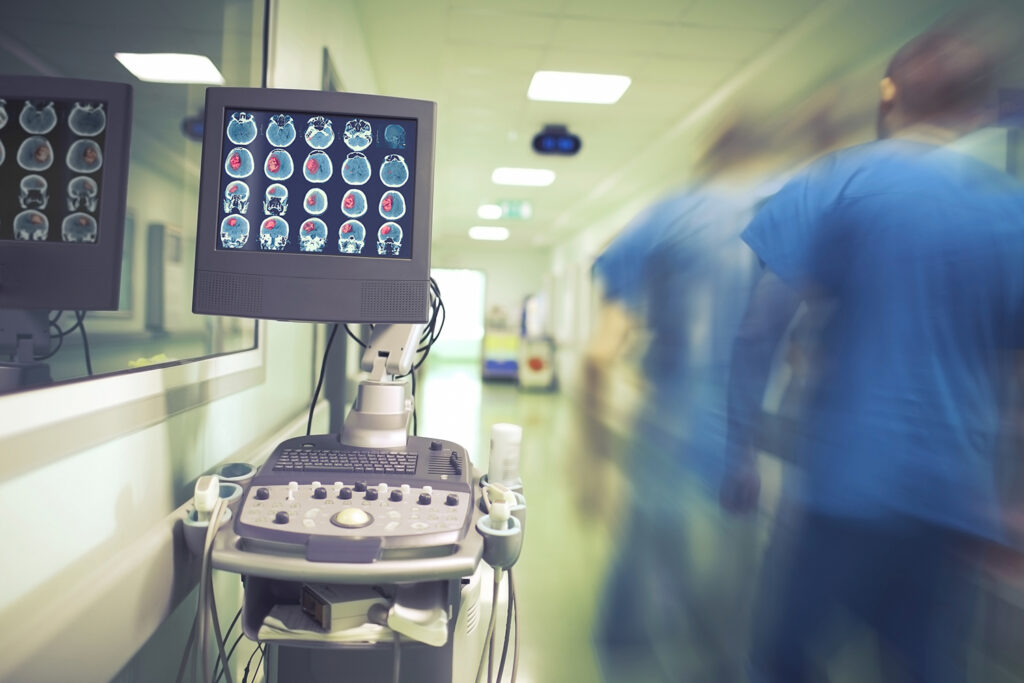
A new international study led by researchers from UNSW Sydney’s Centre for Healthy Brain Ageing (CHeBA) has developed the first practical, five-year dementia risk prediction tool for stroke survivors - using only information that’s routinely collected in hospitals and clinics.
Published on 12 January 2026 in Neurology®, the medical journal of the American Academy of Neurology, the study analysed data from over 2,600 stroke survivors across 12 studies in 10 countries – including Asia, Australia, Africa, Europe and the US – as part of the global Stroke and Cognition Consortium (STROKOG).
The team found that a combination of simple factors - including age, sex, education, stroke severity, diabetes and history of prior stroke - can reliably estimate a person’s risk of developing dementia within five years of a stroke.
Lead author Jess Lo, Research Associate from CHeBA, said the tool fills a crucial gap in stroke care.
“Up to 60 per cent of stroke survivors experience some degree of cognitive impairment within the first year after stroke, and nearly one in three will go on to develop dementia within five years,” said Lo. “Despite this, stroke follow-up is still focused mainly on physical recovery. Cognitive changes can be subtle, delayed and easily missed - but they are equally disabling.”
Unlike previous dementia risk models, which often require expensive brain scans or are limited to short-term prediction, this new model relies only on information that is routinely gathered in clinical care. It has been made available as a simple Excel-based calculator that clinicians can use at the bedside or in follow-up appointments.
“This is a simple, practical tool that could help doctors identify which patients are most at risk, so they can prioritise cognitive monitoring, early intervention and support,” said Lo.
“Early detection is key. If we can identify people at highest risk, we can intervene earlier, adapt care plans and potentially delay progression to dementia.”
The study showed strong predictive performance across different international cohorts - particularly in European and more recent studies - though the researchers note that further validation is needed in diverse populations, including Asian and low-income regions.
Senior author and Co-Director of CHeBA Professor Perminder Sachdev said the tool also has potential to inform health policy and resource planning.
“Screening for cognitive impairment in stroke patients is currently recommended, but it is often not implemented due to limited resources,” said Prof. Sachdev. “This tool enables stroke clinicians to quickly estimate a patient’s five-year risk of developing dementia. Based on this risk, clinicians can prioritise follow-up for those at higher risk and arrange cognitive assessments. This approach could allow earlier intervention and potentially improve quality of life for stroke survivors and their families.”
He emphasised that while the tool is promising and represents an important step forward in improving care for stroke survivors, further validation is required before it can be recommended for routine clinical use. “As with all prediction models, we need to confirm its accuracy across different populations to ensure reliability and support integration into clinical practice.”
Building on this, Professor Sachdev added that dementia after stroke is common. “Previous research suggests that up to a third of stroke survivors develop dementia within five years. Stroke and diabetes are key modifiable risk factors, so managing these remains critical for reducing dementia risk.”
The researchers hope that other large-scale studies will further test and validate the tool, and they welcome collaborations to advance this important work.
About the Study
The study pooled international data from the Stroke and Cognition Consortium (STROKOG), which includes research teams from 10 countries. It was led by CHeBA at UNSW Sydney.
Contact details: