

- NSW faces increased shark activity due to warmer waters and changing environmental conditions, with current aerial surveillance limited in scale and consistency across its 2,000 beaches
- Current shark management includes 305 SMART drumlines, drone patrols at 50 beaches, and 37 shark listening stations, but coverage remains fragmented and seasonal
- Sphere has proposed an autonomous drone solution using HubX and HubT systems, offering consistent daylight aerial surveillance monitored from a central operations centre
- The company holds Broad Area BVLOS approval, allowing beyond-visual-line-of-sight drone operations across large areas without repeated site approvals
- The proposed solution aims to complement existing beach safety measures whilst supporting local manufacturing and jobs in NSW, with systems designed and built in Australia
Sphere, a leading Australian commercial drone and data business, is calling for the NSW Government to accelerate and scale the deployment of autonomous drone surveillance to help reduce shark risk and protect beachgoers across the state.
The call follows a series of serious shark incidents along the NSW coastline, including four reported attacks within a three-day period, with multiple people injured across Sydney, Manly, the Northern Beaches and the NSW Mid North Coast. Sphere says the incidents highlight a growing mismatch between evolving coastal risk and the way aerial surveillance is currently deployed.
Sydney, Australia – 20th January 2026:
With shark activity influenced by warmer water temperatures, heavier rainfall events and longer seasonal presence, risk is no longer confined to isolated locations or narrow time windows. Instead, it is increasingly shaped by identifiable environmental conditions and specific high-use beaches that experience elevated exposure throughout the year.
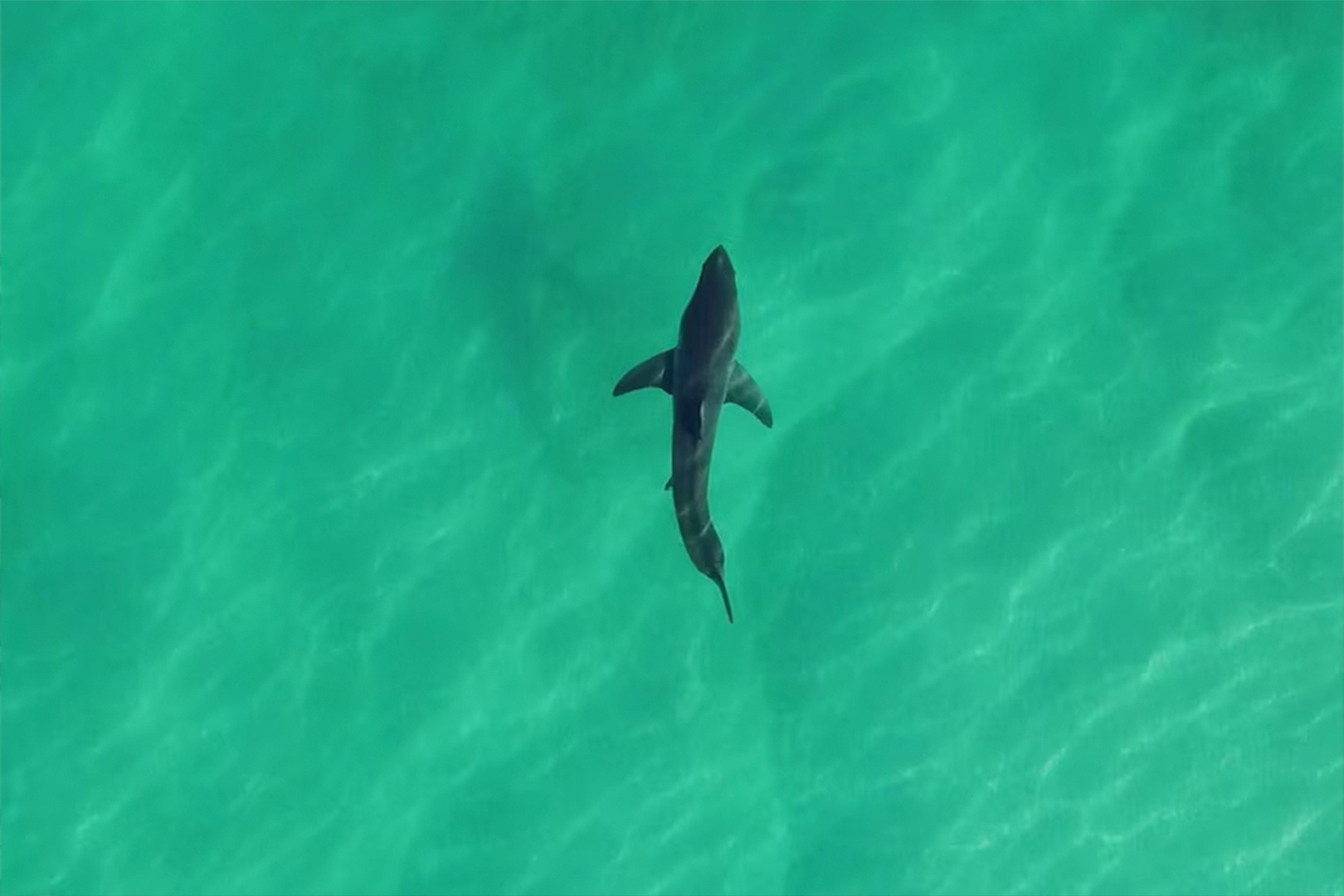
Sharks can be detected using drones and information shared directly to Surf Life Savers. (Image source: ABC News)
While NSW continues to invest in shark mitigation, Sphere says current aerial surveillance models remain limited in scale and persistence, leaving gaps not only outside peak summer periods, but also at beaches known to experience higher risk following rainfall or during periods of increased marine activity.
NSW has more than 2,000 beaches, yet only a small fraction receive regular aerial surveillance. Existing drone operations provide valuable protection, but are typically seasonal, weather-dependent and constrained by daylight, volunteer availability and manual deployment models. In some regions, a small number of drones are responsible for monitoring dozens of beaches, making consistent coverage difficult during peak swimming periods or higher-risk conditions.
Local MPs and government representatives have recently acknowledged that technology has an increasing role to play in addressing these challenges.
Pittwater MP Jacqui Scruby has publicly stated that “the risk can never be eliminated, but it can be better managed with modern technology.”
The NSW Shark Management Program currently includes 305 SMART drumlines, drone patrols at up to 50 beaches, and 37 tagged shark listening stations across coastal local government areas. While no single measure can eliminate risk entirely, technologies such as drones are increasingly recognised as valuable components of multi-layered strategies to reduce shark-human interactions.
Sphere says the next step is not introducing new tools, but evolving how existing technology is deployed.
In October 2025, Sphere submitted a proposal to the NSW Government outlining a scalable, end-to-end solution using its autonomous drone-in-a-box systems, HubX and HubT. The proposal focuses on providing consistent daylight aerial surveillance without increasing operational burden on volunteer surf lifesavers.
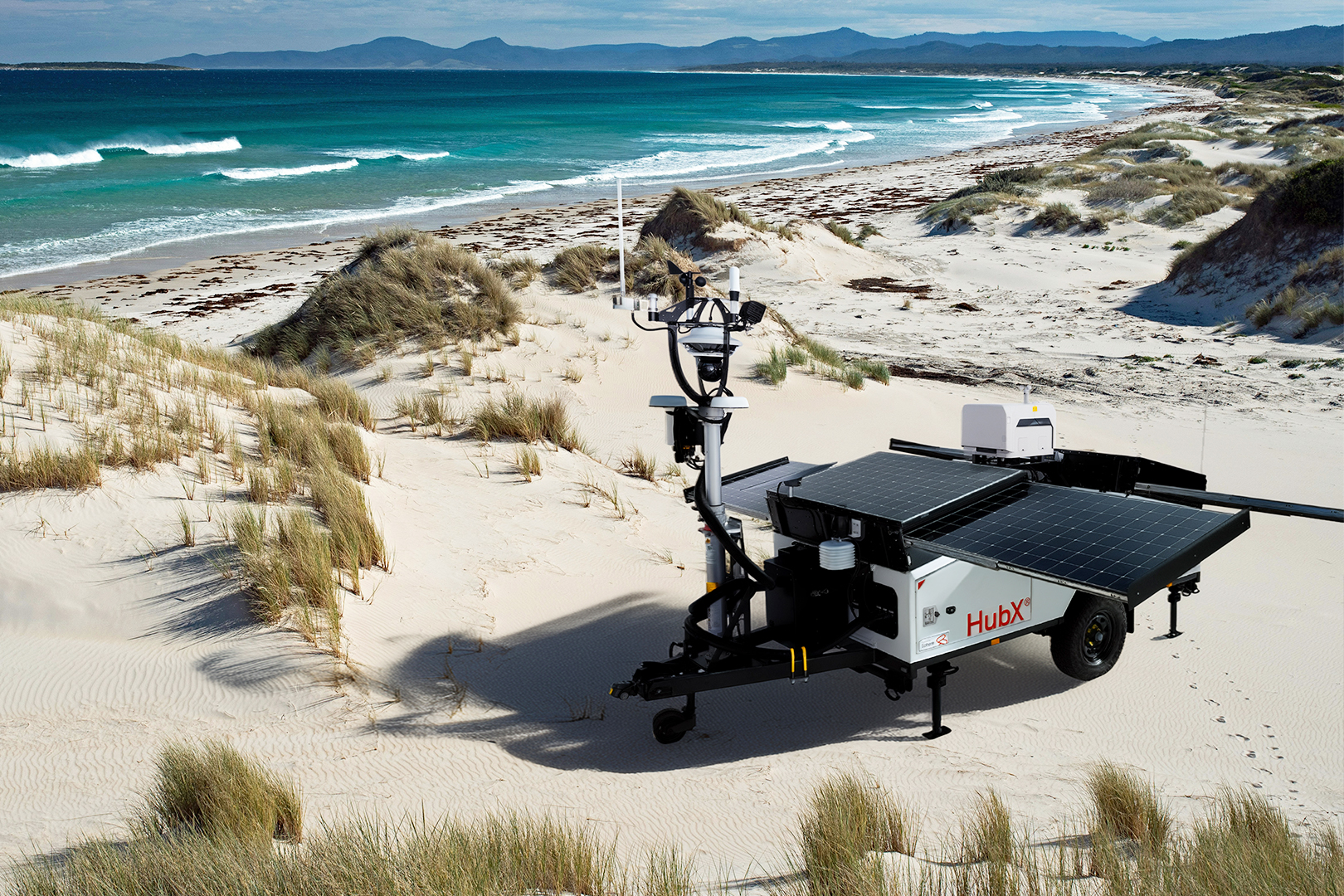
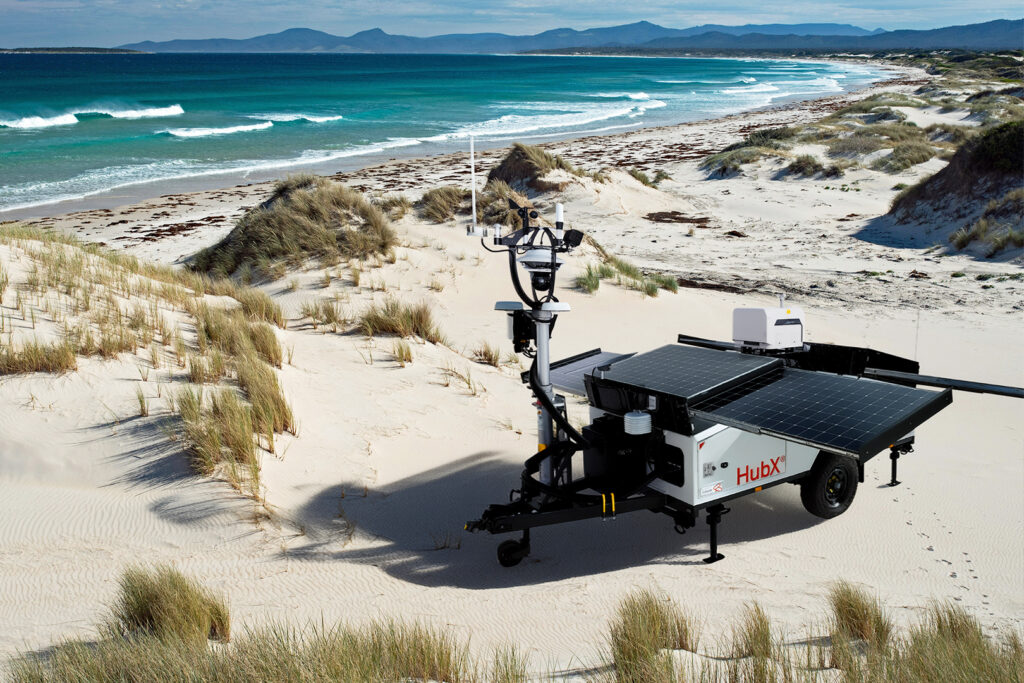
Sphere’s HubX autonomous drone system deployed on a beach, providing persistent aerial surveillance to help detect sharks earlier and improve safety for beachgoers along the NSW coastline. (Image source: Sphere)
“NSW already invests heavily in shark mitigation, but the current approach is fragmented and seasonal,” said Paris Cockinos, CEO of Sphere. “We now have the technology and approvals to move beyond ad-hoc drone flights and deliver consistent, coast-wide aerial surveillance that operates safely, reliably and at scale.”
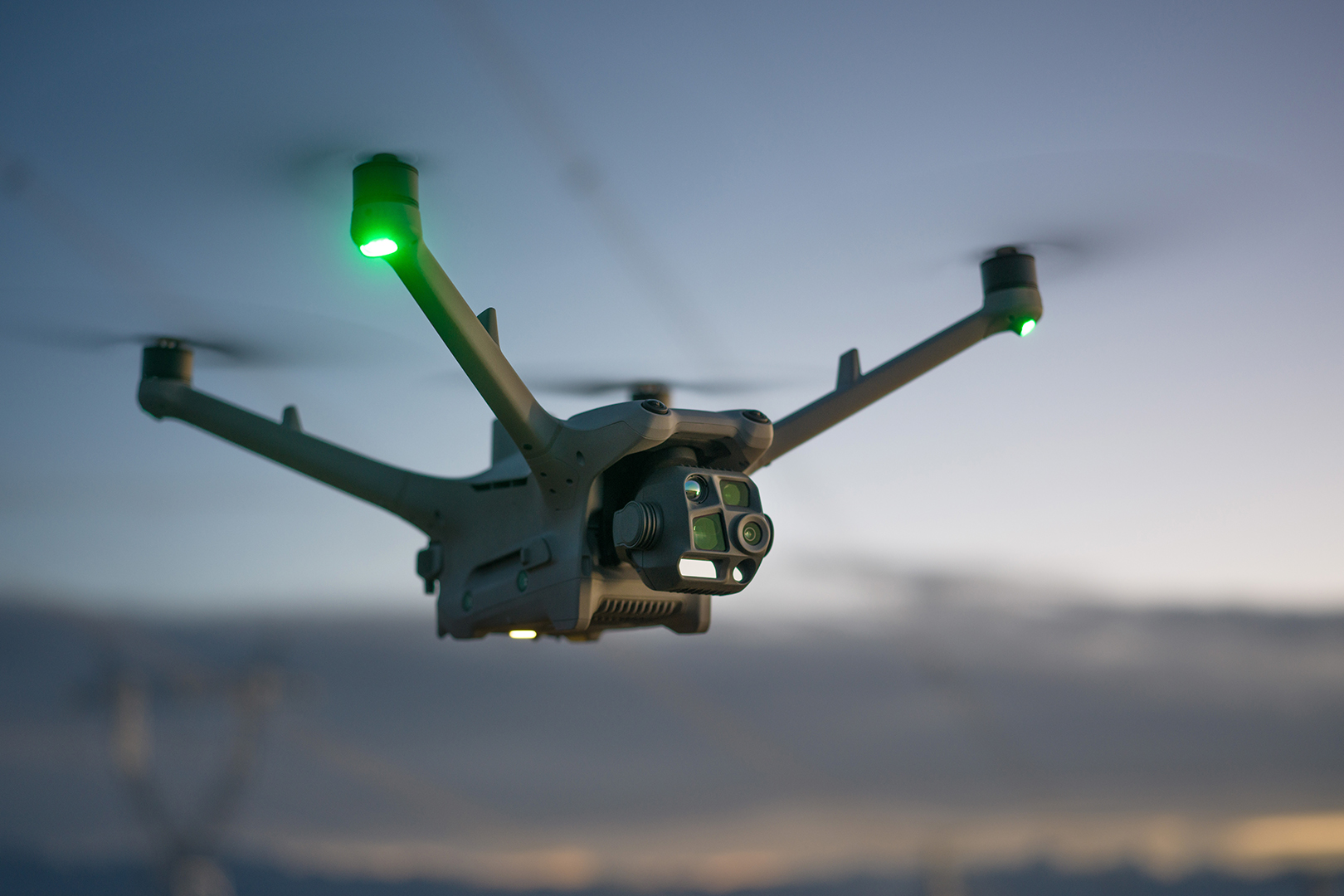
HubX and HubT units are mounted with DJI drone-in-a-box technology. Drones can take off from a unit and surveil a beach with up to 10km radius. (Image source: DJI)
Sphere’s HubX and HubT systems are permanently installed units that launch autonomously, fly predefined patrol routes and stream live video back to a central remote operations centre. From there, trained, CASA-approved pilots can monitor multiple beaches simultaneously, detect sharks earlier and issue faster warnings to on-ground lifeguards and surf lifesavers.
This model shifts aerial surveillance from being manual and beach-by-beach to being persistent, centrally monitored and scalable across regions, particularly during periods of elevated risk.
A critical enabler of this approach is regulatory readiness. Sphere holds approval for Broad Area BVLOS (Beyond Visual Line Of Sight) Self-Assessment operations, allowing drones to be operated safely beyond the pilot’s line of sight across large areas. This significantly reduces deployment timelines and removes the need for repeated site-by-site approvals.
“Regulatory readiness is often the biggest bottleneck,” Cockinos said. “That work is already done. The pathway to safe, compliant BVLOS operations is in place, which means solutions like HubX and HubT can be deployed far faster than many realise.”
Under Sphere’s proposed model, autonomous drone units could be installed at intervals along the NSW coastline, providing overlapping daylight coverage across hundreds of kilometres of coastline, with priority focus on key high-use and higher-risk beaches. Patrols would be scheduled during peak swimming periods, with the ability to scale coverage rapidly during school holidays or following major rainfall events.

Sphere’s Remote Drone Pilots perform flights around Australia remotely from Sphere’s NSW-based Remote Operations Centre.
Live video feeds would be monitored from Sphere’s NSW-based remote operations centre, enabling faster alerts, more targeted beach closures and better-informed decision-making, while complementing existing patrols rather than replacing them.
Sphere emphasised that it is not seeking to replace Surf Life Saving NSW or existing government programs, but to support them by providing persistent aerial coverage that reduces reliance on manual deployments and frees volunteers to focus on what they do best, keeping people safe on the sand and in the water.
Sphere designs, engineers and manufactures its HubX and HubT systems in Australia, supporting local jobs and building sovereign capability in autonomous aviation and remote operations. Manufacturing and operations are based in NSW, including Sphere’s remote operations centre in Seven Hills, allowing systems to be deployed, supported and scaled locally.
The company has a proven track record delivering autonomous drone operations in high-risk, regulated environments, including emergency response and critical infrastructure.
“We’re not talking about trials or concepts,” Cockinos said. “These systems are operational today. They’re already trusted in complex environments where safety and reliability matter. Beaches should be no different.”
Sphere says improving beach safety at scale will require continued collaboration between government, surf lifesaving organisations and capable Australian industry partners like Sphere.
“We believe beach safety should remain a public good,” Cockinos said. “Sphere is ready to work alongside government and surf lifesaving to deliver a modern, scalable solution that helps reduce risk while maintaining the highest aviation safety standards.”
About us:
Sphere is a leading Australian full-stack technology and services provider with offices across Australia. Sphere empowers businesses, enterprises and governments to effectively respond to challenges, risks and opportunities with innovative drone solutions.
Since 2014, Sphere has supported more than 13,000 businesses, enterprises and government departments with hardware, software, services, operational and compliance support. Customers include Rio Tinto, Fortescue, BHP, Ausgrid, Sydney Water, Water Corporation, South32, Fyfe, Surf Life Saving NSW, the University of Sydney, James Cook University, and more.
Contact details:
Sphere | Data & Drones
Will Walsh
General Manager, Marketing & Customer Success
[email protected] | +61 434 768 900
