
Gathering timely data is the first step to rebuilding a community’s resilience after natural disasters, and a new workshop series in March will put power in the hands of the people to build evidence-backed and tailor-made solutions.
The workshops – hosted by Charles Darwin University's (CDU) Northern Hub and University of Canberra for the Early Insights for More Resilient Communities project – will bring together researchers and community members to co-design a data dashboard unique to the needs of the Northern Territory.
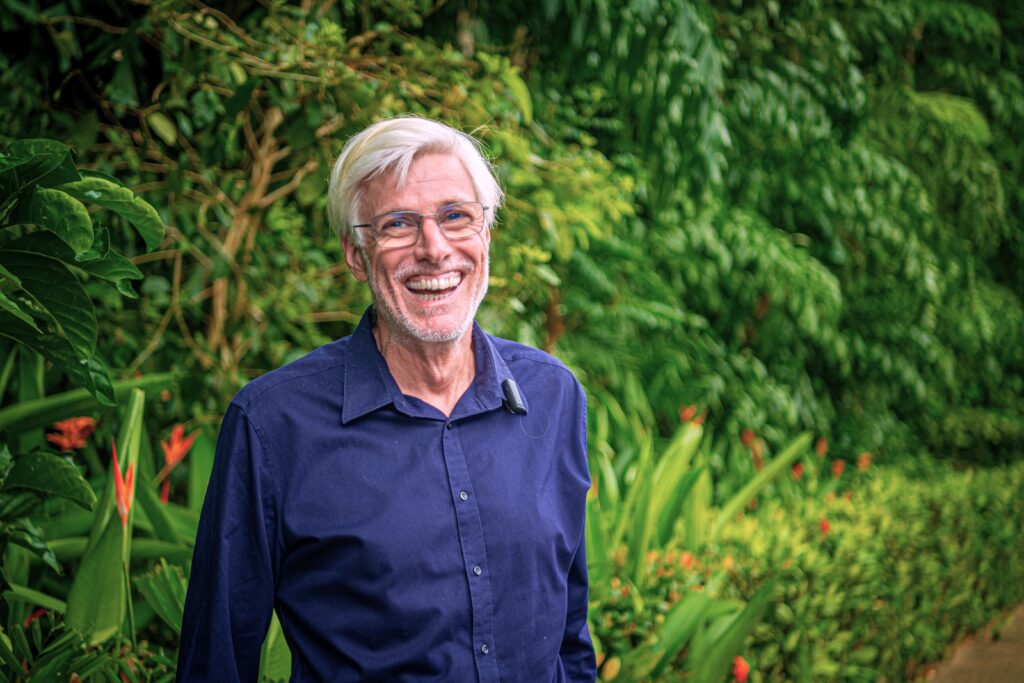
Northern Hub Knowledge Broker David Gallacher pointed to the recent flood evacuations from Daly River as an example of where such datasets may be useful.
“When people return to Daly River, will they have the finances and social connections to bounce back?” Mr Gallacher said.
“The floods bring the media attention, but often the real struggle starts after the floods have receded and people start to rebuild what they’ve lost.
“Having a data dashboard designed to collect early insights from the Daly River community would show sometime in the next year if the community as a whole is coping.”
Flood-related evacuations are not uncommon in the Northern Territory, with communities such as Pigeon Hole, Daguragu, Kalkarindji, Yarralin, Palumpa, Borroloola, and Timber Creek affected as recently as 2023 and 2024.
Dr Gallacher said if left unattended, a community without resilience could experience additional problems such as higher rates of business failure or increased suicide rates.
National datasets such as the ABS can already be used to see which communities show signs of disadvantage, but these often rely on data that is several years old – meaning it does not provide an accurate snapshot of recent trends.
Working with communities to design tailor-made dashboards means researchers and residents can collect data that paints a clearer picture, which in turn can be used to build an evidence-based application for government resources and support.
“The dashboard would show if there’s a sudden drop in school attendance, capacity to pay bills, participation in community events, or whatever metric the project comes up with,” Dr Gallacher said.
“It’s easy to say that a community hasn’t recovered from an event, but without data it’s all just anecdotal and not very convincing.
“This dashboard will provide annually updated data that shows when a community has fallen behind and means that when a community group says they need federal support, they’ve got data to back their claim.”
Workshops can be attended in person:
Darwin: 2 March | 2pm to 5pm | CDU Waterfront Campus
Katherine: 3 March | 12:30pm to 3:30pm | CDU Rural Campus
Tennant Creek: 5 March | 9:30am to 12:30pm | Our Community Shed
Alice Springs: 6 March | 9am to 12pm | CDU Alice Springs
Volunteers, business owners, service providers, local residents, and representatives working in the agricultural industry are encouraged to attend.
Workshops can also be attended online upon request.
Contact details:
Sierra Haigh she/her
Communications Officer
Marketing, Media & Communications
Larrakia Country
E: [email protected]
W: cdu.edu.au

Charles Darwin University acknowledges all First Nations people across the lands on which we live and work, and we pay our respects to Elders both past and present.
CRICOS Provider No. 00300K | RTO Provider No. 0373 | TEQSA Provider ID PRV12069