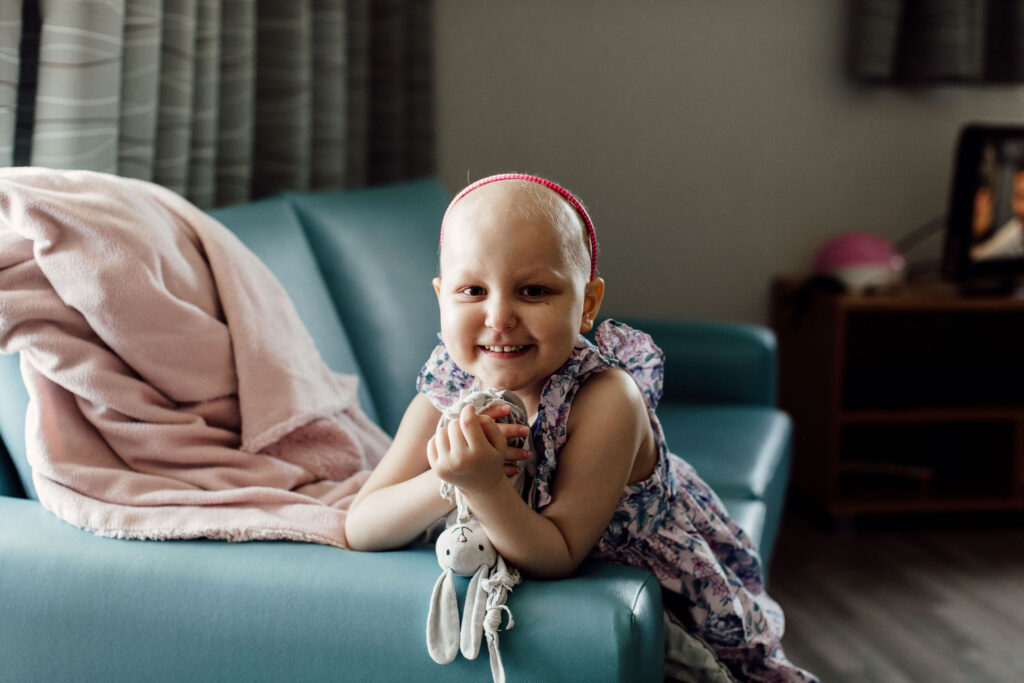

Blood cancer is the most commonly diagnosed childhood cancer in Australia[i] – and its growing impact is robbing far too many young Australians of the normal childhood they deserve.
Leukaemia and lymphoma together account for almost half of all cancers diagnosed in those under the age of 19[ii], making blood cancer the single greatest cancer threat to children and teenagers in this country.
From babies and toddlers to primary school children and teens, more than 500 young Australians are diagnosed with blood cancer each year[iii] with figures projected to rise to over 700 by the end of the next decade.
On International Childhood Cancer Day (15 February), the Leukaemia Foundation is shining a spotlight on the devastating impact blood cancer has on Australian children and their families, and calling for greater awareness, support and action.
“Today, another Australian family will be told the unthinkable – that their child has blood cancer,” said Leukaemia Foundation CEO Chris Tanti.
“Their life changes in an instant and will likely never be the same again.
“Families are forced to navigate complex and frightening treatments, often leaving their homes, jobs, schools and support networks behind to access specialist care in major treating hospitals.”
For some children, treatment can mean spending up to two years away from home, separated from their siblings, friends, familiar routines and all they’ve ever known.
In fact, two in five children diagnosed with blood cancer are from regional and rural Australia, meaning disruption to their daily life is even greater.
“Childhood should be about play, learning and growing – not hospital wards, chemotherapy and invasive procedures,” Mr Tanti said.
“But for children with blood cancer, their world quickly becomes one of appointments, tests and treatments no child should ever have to endure.”
The burden of blood cancer is expected to grow. Incidence and mortality are rising across all age groups in Australia, and children are not immune to this trend.
“In the past two decades, blood cancer diagnoses in Australian children have increased by around 20 per cent[iv],” Mr Tanti said.
“While survival rates have improved, the reality remains heartbreaking – every two weeks, an Australian child or teenager loses their life to blood cancer, making it the second leading cause of childhood cancer deaths in this country[v].”
The Leukaemia Foundation is determined to change that trajectory and central to that mission is ongoing investment in research, alongside comprehensive support services for families during and beyond treatment.
“For the past 50 years, the Leukaemia Foundation has stood beside Australians facing blood cancer, including thousands of children and their families,” Mr Tanti said.
“Our role is to help ease the enormous burden they carry so families can focus on what matters most – their child’s treatment, recovery and wellbeing.”
Blood cancer treatment in children typically lasts two to three years[vi], one of the longest treatment journeys of any cancer type. Even after treatment ends, many children live with long-term or lifelong health impacts caused by the disease and its therapies.
To ensure it can continue meeting the growing need for support, the Leukaemia Foundation is urging Australians to get behind the World’s Greatest Shave, its largest annual fundraising campaign.
“The World’s Greatest Shave is critical to everything we do,” Mr Tanti said.
“It funds our accommodation services so families have a home away from home, helps cover transport to treatment, and ensures families have access to information, education and emotional support when they need it most.
“It also allows us to invest in vital blood cancer research that will lead to better treatments, better outcomes and, ultimately, fewer children losing their life to the disease in the future.”
The Leukaemia Foundation has set an ambitious target to raise $12 million through this year’s World’s Greatest Shave and is calling on Australians of all ages to shave, cut or colour their hair to show solidarity with those affected.
“A child’s blood cancer diagnosis doesn’t just affect the child – it impacts parents, siblings, grandparents, classmates, teachers and entire communities,” Mr Tanti said.
“By taking part in the World’s Greatest Shave, Australians can help ensure children and Australians of all ages facing blood cancer are supported every step of the way, and still experience moments of joy, connection and normality during the hardest chapter of their lives.”
Australians can register to take part in World’s Greatest Shave at worldsgreatestshave.com or call 1800 500 088.
– ENDS –
- Chris Tanti, CEO, Leukaemia Foundation: to speak to the points raised in the media release and provide further insights on the issue of blood cancer in children and teenagers in Australia, and how the general community can help by supporting this year's World's Greatest Shave.
For all media and interview enquiries, please contact the Leukaemia Foundation media team at [email protected] or call 0448 840 846.
About us:
About the Leukaemia Foundation: The Leukaemia Foundation stands with Australia to help cure and conquer blood cancer – with care. Together we are attacking every blood cancer, from every direction, in every way we can. We stand beside every Australian to be their voice and their someone-to-turn to, fighting to get them access to the best care. We also accelerate research that is delivering rapid advancements in blood cancer diagnosis and treatments. Plus, we provide services and support that empower people living with any blood cancer to live well after diagnosis. You can learn more about the Leukaemia Foundation and blood cancer at leukaemia.org.au
Contact details:
Contact the Leukaemia Foundation media team at [email protected] or call 0448 840 846.