
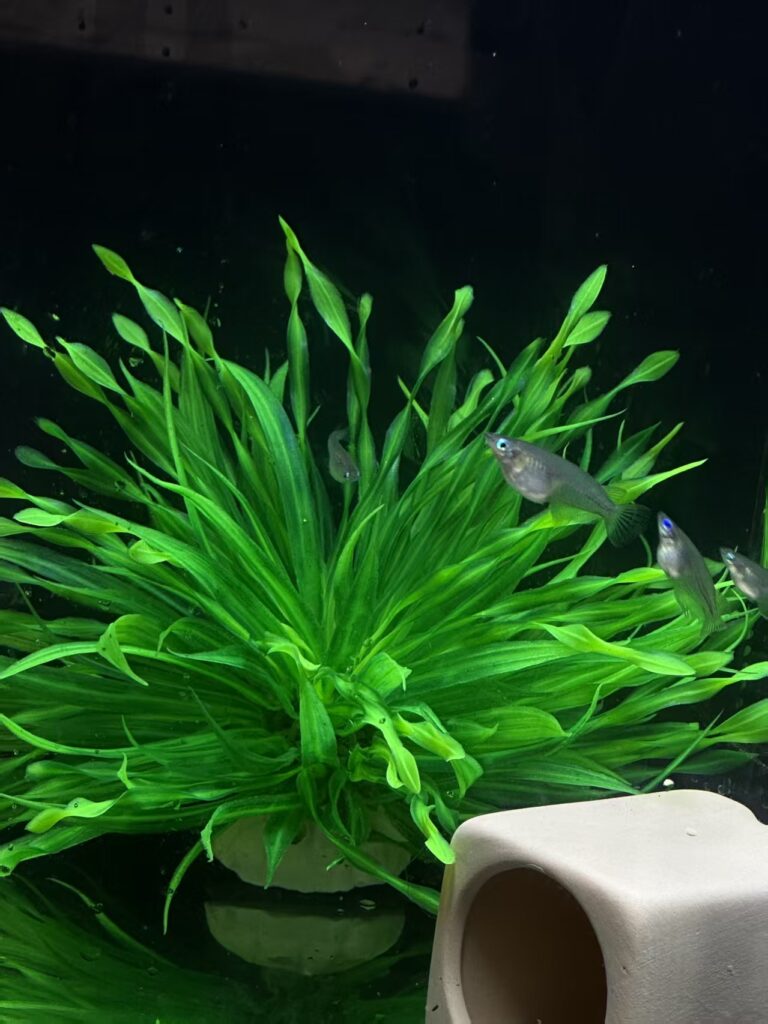

Nanoplastic exposure can impair the cognitive abilities of fish and could lead to significant impacts on marine species’ ability to survive, according to a new international study.
The study by Shantou University and the Chinese Academy of Fisheries Sciences in Guangdong, China, and Charles Darwin University’s (CDU) Research Institute for Northern Argiculture (RINA), explored impact of nanoplastics on the cognition and adaptability of the marine medaka (Oryzias melastigma).
Plastic makes up about 80 to 85 per cent of marine litter, according to environmental research, with the most commonly used plastics breaking down into smaller pieces under ultraviolet light and low temperatures.
Academics compared the behaviour of marine medaka exposed to spherical polystyrene nanoplastics, to non-exposed marine medaka, when placed in a maze.
The results showed while the overall maze navigation time was unaffected, the exposed medaka made significantly more errors and tended to make decisions faster.
Co-author and RINA Professor of Tropical Aquaculture Sunil Kadri said a shift to impulsive decision-making increased the likeliness in species making maladaptive choices during foraging or when encountering predators.
“The important things for any animal are reproduction, shelter and feed. For a fish which has changed its behaviour, it may have trouble capturing food and most importantly, have trouble avoiding predators,” Professor Kadri said.
“It may also be affected when mating and finding a mate, let alone spawning. There are huge potential effects on those three basic requirements for survival.”
Professor Kadri said while the exposure and maze simulation was not an exact replica of the current environmental conditions, the results highlighted the urgent need to take more action against plastic marine pollution.
“Policymakers need to be looking at this. We need to address not only policy around plastics, but policy around ecological conservation and fisheries conservation,” he said.
“This could mean the breakdown of marine ecosystems, and we rely on them heavily.”
The study opens a new field of research on the toxic effects of plastics on marine fish, which co-author Dr Zonghang Zhang, from Shantou University’s College of Science said was at present a poorly understood threat in marine ecosystems which needed further exploration.
“Size does not diminish risk — in fact, it may amplify it. Precisely because of their small size, nanoplastics are more bioavailable and can infiltrate organs and cellular systems in ways larger particles cannot,” Dr Zhang said.
“Our research shows that even in the absence of obvious physical harm or mortality, nanoplastics can disrupt essential behaviors and cognition, potentially making fish more vulnerable in their natural habitats.
“Nanoplastics are already widespread — found in oceans, freshwater systems, and even soi l— and can move up the food chain, accumulating in living organisms. Given their pervasive presence and potential to accumulate, we cannot afford to ignore them simply because they are ‘invisible’.”
CDU's involvement in this study is a result of RINA's research collaboration with Shantou University through the project, Advancing Tropical Agriculture Collaboration between Australia and China through Academic Exchanges and Collaborative Initiatives: Towards sustainable tropical primary production with traceable products.
This study, ‘Nanoplastic exposure damages neural plasticity, cognitive abilities, and ecological adaptability of marine medaka Oryzias melastigma’, was published in the journal Marine Pollution Bulletin.
Contact details:
Raphaella Saroukos she/her
Research Communications Officer
Marketing, Media & Communications
Larrakia Country
T: +61 8 8946 6721
M: 0427 895 533
E: [email protected]
W: cdu.edu.au

Charles Darwin University acknowledges all First Nations people across the lands on which we live and work, and we pay our respects to Elders both past and present.
CRICOS Provider No. 00300K (NT/VIC) I 03286A (NSW) | RTO Provider No. 0373 | TEQSA Provider ID PRV12069