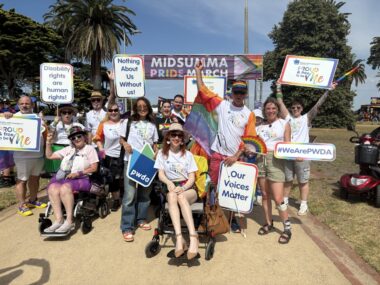
New research from Diversity Council Australia (DCA) shows that LGBTIQ+ people still face disproportionately high levels of exclusion at work, with nearly half reporting they experienced discrimination and/or harassment in the past year.
Early release data from DCA’s 2025-2026 Inclusion@Work Index has revealed 46% of LGBTIQ+ workers reported experiencing discrimination and/or harassment at work in the past year, compared with 26% of non-LGBTIQ+ workers. This means LGBTIQ+ workers were 1.5 times more likely to experience these behaviours.
The findings show that discrimination and harassment against LGBTIQ+ workers has increased since the last Inclusion@Work Index was released in 2024, when 39% of LGBTIQ+ workers reported experiencing this type of exclusion.
Released to coincide with Victoria’s Midsumma festival (18 January – 8 February) and Sydney Gay and Lesbian Mardi Gras (13 February – 01 March), the findings provide timely insights into the experiences of LGBTIQ+ workers across Australia.
“As organisations celebrate LGBTIQ+ communities, this data highlights that workplaces cannot be complacent,” said Catherine Hunter, CEO of Diversity Council Australia.
“Our findings point to a persistent challenge within Australian workplaces. Organisations need practical, evidence-based approaches that address the systemic issues contributing to LGBTIQ+ exclusion.
“Workplaces that invest in inclusive cultures, visible and supportive leadership and clear policies are better positioned to reduce discrimination and create environments where all employees feel safe and respected.”
Everyday exclusion makes a difference
The data also shows that LGBTIQ+ workers experience everyday exclusion at significantly higher rates:
- 39% of LGBTIQ+ workers reported being left out of work social gatherings, compared with 29% of non-LGBTIQ+ workers
- 49% reported people had made incorrect assumptions about their abilities based on their identity, compared with 33% non-LGBTIQ+ workers
- 41% said they had been ignored or treated as if they didn't exist, compared with 30% of non-LGBTIQ+ workers.
These behaviours are often dismissed as less serious in comparison to more overt forms of discrimination or harassment, but DCA’s research shows they have real consequences for both employees and organisations.
For example, workers who were frequently excluded from social gatherings were more likely to report work negatively impacted their mental health, lower job satisfaction, reduced engagement, and a higher likelihood of leaving their job. This type of exclusion was also shown to undermine collaboration, innovation and customer service.
“Everyday exclusion matters. It undermines wellbeing, drives people out of organisations, and weakens team performance, all of which can negatively impact productivity.” said Catherine.
“Organisations that take a deliberate, evidence-based approach to inclusion are better placed to reduce exclusion and support LGBTIQ+ employees so they can feel safe to be themselves at work.”
The full 2025–2026 Inclusion@Work Index will be released on 26 February 2026, providing the latest insights on the state of inclusion in the Australian workforce.
[ENDS]
Notes:
Diversity Council Australia’s Inclusion@Work Index findings come from a nationally representative sample of 3,000 workers across Australia. DCA developed the first Inclusion@Work Index survey in 2017 to map the state of inclusion in the Australian workforce. Since then, we have repeated the survey biennially to track workplace inclusion over time. The upcoming 2025-2026 Inclusion at Work Index report will be the fifth iteration. Explore previous iterations at our Inclusion@Work Index hub.
A note on language
We are intentional with our use of language and use the acronym LGBTIQ+ where it applies to people who are lesbian, gay, bisexual, trans/gender diverse or queer, or have innate variations of sex characteristics (also known as intersex). The “+” recognises that LGBTIQ doesn’t describe a range of other terms that people identify with. We have used the term LGBTIQ+ in this media release to accurately represent the data, but we recognise that this is not always the terminology preferred by individual communities. In particular, we recognise that many intersex people don’t see themselves represented within the acronym, which refers mainly to sexuality and gender identity.
In this instance, the small number of intersex people in the sample meant that the workplace experiences of inclusion and exclusion for intersex workers could not be meaningfully analysed when disaggregated from LGBTQ+ workers. As a result, we decided to maintain the aggregate group (LGBTIQ+), rather than exclude findings for workers who are intersex.
About DCA
Diversity Council Australia is the leading peak body for diversity and inclusion. As an independent not-for-profit and charitable organisation, we provide expert guidance to workplaces, policymakers and the broader community through research, tools, events, advocacy and education. Together, with our network of over 1,300 member organisations, we shape more equitable workplaces for a stronger economy and fairer society.
Media Contact
Ali Coulton
[email protected]