
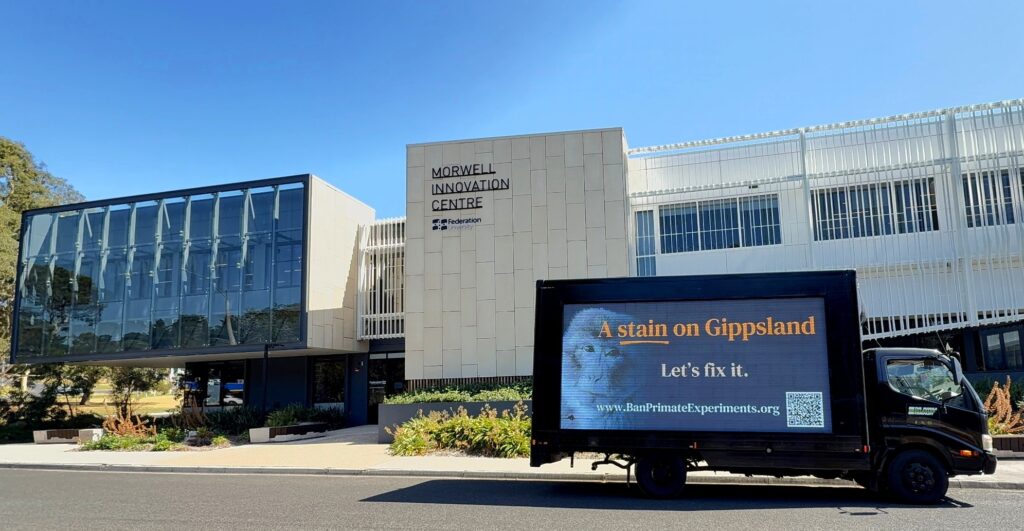

AFSA is calling for public support for Australian Parliament e-petition EN8985 to extend stronger ethical protections to all non-human primates used in research, not just great apes
AFSA has briefed all Federal MPs and Senators and submitted the same briefing to the NHMRC as part of the current review of the Australian Code for the Care and Use of Animals for Scientific Purposes.
AFSA’s recommendations include extending protections to all non-human primates, stopping approval of new primate research projects, and ending NHMRC funding for new primate research from 2028, while prioritising non-animal methods
See Ending Primate Experiments - Animal-Free Science Advocacy
Animal-Free Science Advocacy (AFSA) is calling on the public to support Australian Parliament e-petition EN8985, titled “Allow Primates in Research the Same Protections as Great Apes.” The petition is listed on the Australian Parliament e-petitions website and seeks to extend stronger ethical protections to all non-human primates used in research.
A mobile billboard has highlighted the plight of primates and the urgent opportunity for reform in Melbourne and Gippsland, home to primate research and breeding institutions.
AFSA has now provided a formal briefing to every Federal Member of Parliament and Senator, outlining the scientific, ethical and policy case for extending the special protections currently afforded to great apes to all non-human primates under Australia’s research framework.
The briefing has also been submitted to the National Health and Medical Research Council (NHMRC) as part of its current review of the Australian Code for the Care and Use of Animals for Scientific Purposes.
Named contributors in support of equal protections for all primates include leading experts in science, ethics and animal welfare.
Professor Andrew Knight, a world-leading animal welfare expert, states that limiting protections to great apes is “ethically inconsistent,” noting that the morally relevant characteristics used to justify great ape protections are “not unique to great apes.”
Geneticist Dr Jarrod Bailey further states that monkeys are “cognitively and emotionally advanced, and highly sentient,” and supports amending the NHMRC primate guidelines, describing extended protections as “a positive step according to animal ethics, good science, and human ethics.”
AFSA argues that many non-human primates, including macaques, baboons and marmosets, possess complex cognitive, emotional and social capacities, making their exclusion from heightened protections scientifically and ethically indefensible.
Crucially, these animals are subjected to highly invasive experiments, including surgical procedures, restraint, behavioural manipulation, and long-term confinement in laboratory environments — practices that cause significant psychological distress and suffering.
“Primate research is an outdated, unpopular and increasingly unscientific practice,” said Robyn Kirby Primate Campaign Consultant with Animal-Free Science. “The continued use of highly sentient primates in invasive research cannot be justified when modern, human-relevant and non-animal methods are rapidly advancing.”
Restricting special protections to great apes while permitting invasive experimentation on other primates is increasingly viewed as inconsistent with contemporary science, ethics and community expectations.
AFSA recommends that the NHMRC:
-amend the Code to extend special ethical protections to all non-human primates;
-prohibit approval of new non-human primate research projects while allowing approved projects to conclude and animals to be retired appropriately; and
-cease NHMRC funding for new non-human primate research from 2028 onwards, while prioritising non-animal methods.
These reforms would bring Australia in line with evolving international standards and reflect both scientific progress and strong public concern about the treatment of primates in laboratories.
AFSA is calling on members of the public to review and sign the petition, which closes on 4 March.
About us:
Animal-Free Science Advocacy is a not-for-profit organisation advocating for the replacement of animals in research and teaching in Australia with non-animal methods.
Contact details:
Robyn Kirby
Primate Campaign Consultant AFSA
0466 234 526