
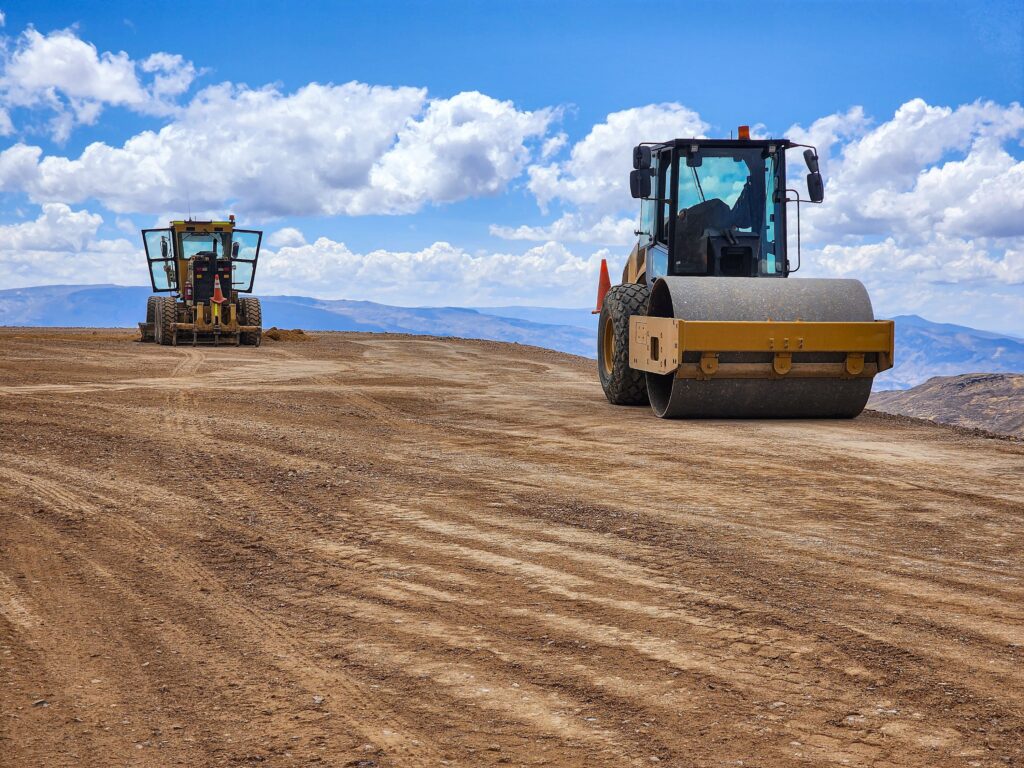
A new Australian-developed compaction aid is helping landfill and earthworks operators achieve stronger, more reliable compaction by improving how fine particles behave during moisture conditioning and rolling. The result is faster compaction, more consistent density and reduced dependence on added water.
COMPAK-T, developed by fine-particle specialists RST Solutions, is a liquid compaction aid added to compaction water to enhance soil response during rolling and sealing. It is designed to address common operational challenges such as variable soils, moisture sensitivity and inconsistent field density results.
RST Solutions Operations and Technical Director, David Handel, said COMPAK-T was developed to solve real-world compaction and moisture-control issues encountered across landfill, haul road and civil earthworks sites.
“Landfill and civil operators are under constant pressure to achieve consistent compaction while managing variable materials, limited water availability and tight construction timeframes. COMPAK-T helps soils compact more efficiently, often reducing the need for excess water, repeated roller passes or imported select material, while also improving sealing performance in fine‑fraction soils.
“Reduced permeability in compacted layers supports better seepage and infiltration control, which contributes to groundwater protection, long‑term stability and regulatory outcomes. When you also lower water use, fuel burn and machine hours, the operational and environmental gains are significant,” Mr Handel said.
When mixed into compaction water, COMPAK-T improves fine‑particle distribution and particle-to-particle interaction, enabling tighter packing during rolling. This typically produces denser layers with fewer interconnected voids and more uniform compaction results across a broad range of soil types, particularly materials containing silts and clays.
For landfill applications, this supports stronger capping layers, more consistent cell construction and more effective use of available on‑site soils, reducing reliance on imported clay and engineered fill where suitable materials exist.
COMPAK-T is used across landfill capping, dam embankments, working platforms and road base preparation where improved compaction efficiency and moisture control are required without increasing plant hours.
At a particle level, COMPAK-T enhances fine fraction behaviours and moisture distribution, assisting particle rearrangement and densification during compaction. This supports higher achieved field density and a more uniform layer structure with fewer soft zones.
Field and laboratory permeability testing has shown that treated fine‑fraction soils can achieve substantial reductions in hydraulic conductivity when properly mixed and compacted. The level of reduction depends on soil type, grading, moisture control and compaction energy.
These outcomes give operators greater flexibility to use suitable on‑site materials to build low‑permeability layers, rather than automatically relying on imported clay.
COMPAK-T integrates into normal site workflows with no equipment changes required. It is added to water carts at typical treatment rates of approximately 0.2 to 0.3 litres per cubic metre of soil treated. The product is classified as non‑hazardous for normal use and is suitable for landfill and public works environments when applied as directed.
By improving compaction efficiency and reducing demand for water and imported materials, COMPAK-T supports lower operating costs and reduced environmental footprint across earthworks projects.
With more than 30 years of expertise and innovation in fine particle and moisture management, RST Solutions continues to develop practical performance technologies for the mining, civil, and government sectors.
About us:
For more information about RST Solutions, visit www.rstsolutions.com.au
