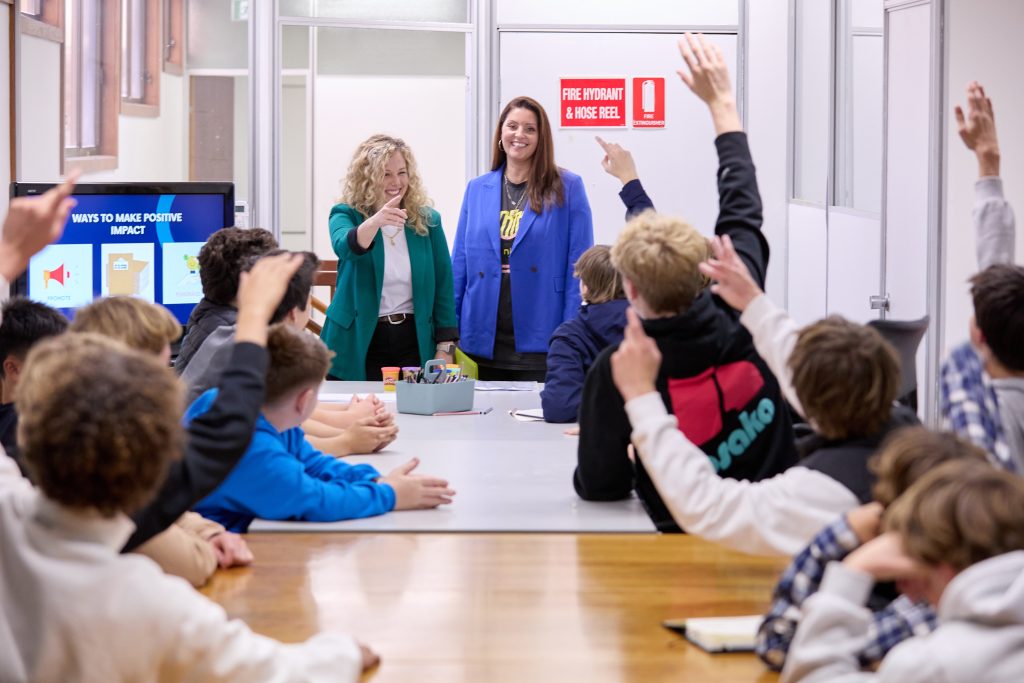
As workplaces settle into the new year and look for ways to strengthen culture, capability and connection, experts say corporate volunteering is entering a new phase. Organisations are being encouraged to plan their impact with the same clarity they apply to commercial strategy, shifting towards models that offer deeper learning for employees and meaningful support for community partners.
Recent insights indicate around 77 per cent of companies have seen employee participation in workplace volunteering rise [1]. Employees who volunteer through work are around 50 per cent more likely to stay with their employer, and nearly nine in ten Gen Z and millennial workers see purpose as vital to job satisfaction [2]. In Australia, around 80 per cent of organisations now offer formal volunteering programs [3], with modelling suggesting every dollar invested can generate up to five dollars in community value [4].
Despite this momentum, specialists say many organisations still fall into the “impact gap” – when volunteering is well intentioned but not aligned with real need, or when employees are not given enough context to understand the issue they are supporting. Melbourne-based Social Education Group (TSEG), a leader in community-informed corporate volunteering, says closing the gap requires more thoughtful design.
“Volunteering has enormous potential when it is planned with clarity,” says Rachael Banks, Co-Founder of TSEG. “Poorly designed activities can unintentionally create more work for charities. When companies plan their impact the way they plan their profit, the experience becomes more valuable for everyone.”
TSEG’s model appears to be striking a chord. Across 2025 programs with Lendlease, RACV, Link Wealth and Judo Bank, participants rated their increased understanding of the social issue at 9.5 out of 10 or higher, with similar results for meaningful contribution and connection to company values. Many described the sessions as more purposeful than traditional team-building, shifting the focus from completing a task to understanding why it matters.
Laurie Hibbs, GM Enterprise Change at Judo Bank, recently took part in an in-house workshop with TSEG focused on the causes and realities of homelessness.
"I’ve participated in many volunteering programs, but this one really stayed with me because it provided real context. The workshop unpacked the pathways into homelessness, including unexpected data about who is most at risk, and you could feel the room engage differently. In financial services we often encounter these issues at a systemic level, so hearing the lived realities behind them mattered. It was confronting but delivered in a way that encouraged reflection rather than helplessness, shifting the experience from completing a task to understanding why it matters and the role we can play."
The hidden burden of poorly designed volunteering
TSEG says many organisations underestimate the preparation required for volunteering to be genuinely useful. Without adequate planning, the burden of organising, supervising and contextualising activities often falls on community organisations that are already stretched.
“Effective volunteering does not happen by accident,” says Kellie Wishart, Co-Founder of TSEG. “Preparation, coordination and clear framing ensure the activity strengthens rather than strains a partner organisation. More companies are recognising that thoughtful design is part of their responsibility, not something community organisations should be expected to absorb.”
Kade Berman from FoodFilled says strong partnerships make volunteering more impactful.
“Working with TSEG has been a collaborative process, from sharing feedback on how corporate volunteering can better support community organisations to partnering on education programs that help students understand food insecurity and the wider food justice system. When people have that context, their engagement becomes much more meaningful.”
Addressing the impact gap
Wishart says the impact gap often appears when volunteering is treated as an event rather than a partnership. TSEG identifies three drivers of meaningful impact: clarity, context and community voice.
“I believe a distinguishing feature of our approach is the time spent preparing participants before they volunteer. Each session begins with a facilitated discussion that explores the social issue, the lived experience of people affected and the role of the community organisation hosting the activity. This framing helps employees understand what they are walking into and why it matters.”
Banks says the strongest outcomes emerge when volunteering is community led and grounded in solidarity rather than charity.
“Community-led volunteering is about standing with organisations, not doing something for them. When employees understand the issue and see the expertise and dignity of the people they are working alongside, the experience builds empathy, capability and connection. It is not about volume but depth. Designed with intention, volunteering strengthens culture, supports community partners and gives employees a clearer sense of purpose.”
END
Distributed by Lanham Media on behalf of The Social Education Group
Media Contacts:
- Fleur Townley | Email: [email protected] | Phone: 0405 278 758
- Greg Townley | Email: [email protected] | Phone: 0414 195 908
Media Assets available here
About The Social Education Group
The Social Education Group (TSEG) is a Melbourne-based specialist in designing and delivering community-informed corporate volunteering programs. Its services include Pack and Give Back (in-office volunteering), tailored offsite volunteering sessions and facilitated learning modules that build employee understanding of social issues. TSEG partners with grassroots community organisations to ensure activities are aligned with genuine need and structured to deliver mutual benefit for charities, employees and organisations.
References
[1] Association of Corporate Citizenship Professionals (ACCP), CSR Insights Survey
[2] Pro Bono Institute, summary of Benevity Talent Retention Study and Deloitte workforce research
https://benevity.com/blog/employee-volunteerism-fuels-a-stronger-workforce?utm_source=chatgpt.com
[3] Goodera, Corporate Volunteering in Australia trends report
https://www.goodera.com/ebook/corporate-volunteering-in-australia-2025?utm_source=chatgpt.com
[4] VolunteeringACT, State of Volunteering Economic Modelling Report