
- GBP K.K. has expanded its solar power plant repowering capabilities beyond inverter replacement to include installation of balance-of-system components.
- Ageing power conditioning system (PCS) infrastructure is becoming a major challenge for utility-scale solar plants over 10 years old.
- The company now offers integrated support for peripheral works, including combiner boxes, collection boxes, and DC/AC cable routing under a single delivery structure.
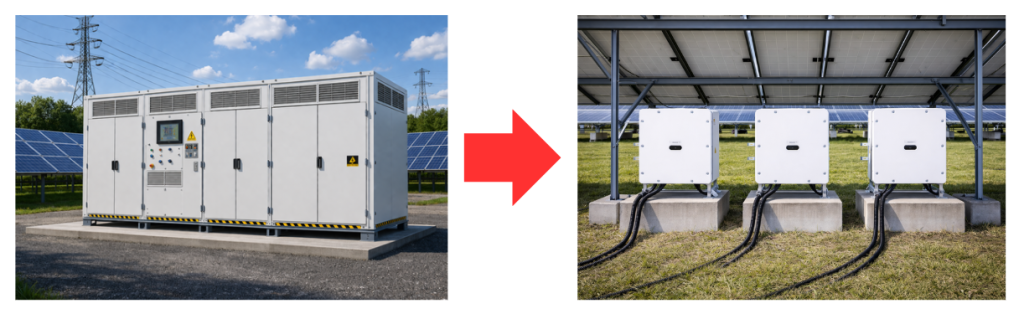
- GBP has successfully implemented this integrated approach in a 1.7 MW solar project, upgrading from three centralised PCS units to 24 distributed units.
- The expanded framework aims to reduce project complexity, shorten timelines, and minimise generation losses during modernisation works.
GBP K.K., a provider of integrated renewable energy solutions, has strengthened its delivery capability for solar power plant PCS repowering projects, expanding support beyond inverter replacement to include the procurement and installation of associated balance-of-system components.
The expanded framework enables GBP to support a broader scope of repowering works, including combiner boxes, collection boxes, and DC/AC cable routing and rewiring. By integrating these project elements under a single delivery structure, the company aims to help solar asset owners and project stakeholders reduce execution complexity, shorten project timelines, and minimize generation losses during plant modernization.
Aging PCS Infrastructure Is Becoming a Key Issue for Utility-Scale Solar Assets
As utility-scale solar plants installed during the early growth phase of the renewable energy market move beyond a decade of operation, aging power conditioning system (PCS) infrastructure is emerging as a growing operational challenge.
Many older solar facilities were developed using central inverter architectures, which can create elevated maintenance demands and operational risk over time. In these systems, the failure of a single PCS unit can significantly affect plant output, increasing both performance risk and revenue exposure.
As a result, repowering from centralized PCS configurations to distributed architectures is increasingly being considered as a practical strategy to improve resilience, maintainability, and long-term plant performance.
Repowering Challenges Often Extend Beyond the PCS Itself
While PCS replacement is often viewed as the core of a repowering project, in practice, surrounding infrastructure modifications are frequently one of the most complex aspects of implementation.
A PCS transition typically requires:
- additional or replacement combiner boxes and collection boxes
- DC and AC cable rerouting or rewiring
- related field-level electrical and installation works to align with the new system architecture
These scopes are often divided among multiple vendors, component suppliers, and contractors. This fragmented execution model can result in longer coordination cycles, delayed implementation, and increased downtime during project delivery.
GBP Expands Integrated Support for Peripheral Repowering Works
To address these challenges, GBP has strengthened its ability to provide one-stop support for PCS repowering-related peripheral works, helping project owners reduce interface risks and streamline execution.
Under the expanded framework, GBP can support:
- single-window coordination from component procurement through installation completion
- supply and installation of combiner boxes and collection boxes
- DC/AC cable routing, rewiring, and associated electrical works
- more efficient coordination across repowering scopes that are often handled separately
This approach is intended to reduce administrative burden for asset owners and support more efficient execution of repowering projects.
Applied in a 1.7 MW Solar Repowering Project
GBP has already applied this integrated delivery model in a 1.7 MW solar power plant repowering project, where the site was upgraded from three centralized PCS units to 24 distributed PCS units.
In addition to supporting the PCS transition itself, GBP handled the broader balance-of-system scope, including associated box installation and cable routing works. The project demonstrated how integrated delivery can help reduce implementation complexity while limiting downtime during modernization.
Further project details are available on the company’s website.
Positioning for Broader Solar Asset Modernization Demand
As solar fleets across Japan, Europe, Australia, and North America continue to mature, demand for repowering is expected to extend beyond inverter replacement alone. Asset owners are increasingly evaluating the condition and future viability of panels, electrical boxes, cabling infrastructure, and other core plant components as part of long-term lifecycle management.
GBP expects this shift to create growing demand for integrated modernization and repowering support, particularly for projects seeking to improve reliability, reduce operational risk, and extend the service life of existing renewable energy assets.
By strengthening its project delivery framework for PCS repowering and related plant infrastructure works, GBP aims to support the next phase of utility-scale solar asset optimization in both domestic and international markets.
About us:
Based in Japan, GBP K.K. offers end-to-end renewable energy solutions — from solar system design and construction to O&M and cutting-edge AI/IoT integration. Feel free to reach out to us for anything renewable energy related!