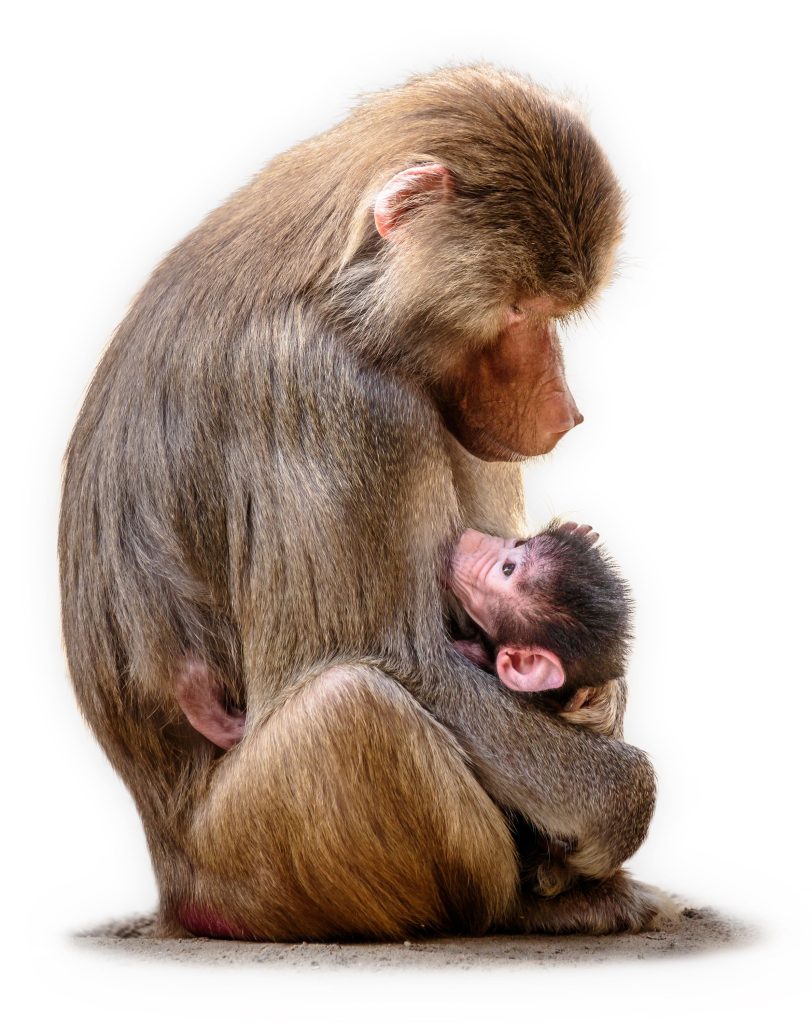
- FOI documents cited by AFSA record more than 60 primate deaths in Australian research breeding facilities between 2020 and 2025.
- The records include baboons, macaques and marmosets, with some animals found dead only when staff arrived the next morning.
- AFSA says Australia has no national sanctuary program for primates used in experiments, so animals typically remain in breeding colonies or laboratories for life.
Shocking new documents obtained through Freedom of Information by Animal-Free Science Advocacy (AFSA) have revealed more than 60 disturbing deaths among research primates in Australian breeding facilities, including infants suffering catastrophic injuries, monkeys dying overnight unnoticed, and animals subjected to invasive experiments before their deaths.
The records (from the years 2020 to 2025) detail incidents involving baboons, macaques and marmosets held in breeding and research colonies linked to major institutions. Among the most disturbing cases is a mother baboon documented as carrying her dead infant “in two parts,” indicating the baby had suffered catastrophic injuries before or shortly after death.
Animal advocates say the documents expose the suffering behind Australia’s largely hidden primate research industry and raise serious questions about animal welfare oversight.
Disturbing incidents revealed
Documents from the baboon breeding facility at Wallacia, managed by Sydney Local Health District, reveal a series of alarming deaths and injuries.
In one case, a fetus died during a pregnancy experiment investigating preeclampsia. It was revealed that many baboons had undergone induced ischemia to block blood flow through their arteries and a number of documents revealed that lymphoma (cancer) was present in many of the baboons.
In another incident an infant baboon suffered a traumatic brain injury after being pulled through gaps in a perch structure by its mother. The incident was so severe that the facility later modified the enclosure design.
Other records describe animals deteriorating from illness in captivity, losing weight, suffering diarrhoea and barely eating before death. One baboon was found dead in the morning with intestinal intussusception — a painful condition where the intestine folds into itself. Many of the baboons were aged 13 and over; one was aged 24 years. Some reports noted the primates were being killed for “management reasons” such as being unsuitable for breeding or research.
Deaths in Gippsland primate facility
Further deaths were recorded at the primate breeding facility at Monash University, Gippsland involving macaques and marmosets.
Two monkeys — a macaque and a marmoset — were presumed killed during serious altercations within their enclosures.
Non-human primates are particularly susceptible to psychological harm arising from confinement, social deprivation, and invasive experimental procedures. Documented outcomes include chronic stress, abnormal repetitive behaviours, and long-term trauma analogous to post-traumatic stress responses observed in humans. Even procedures classified as minimally invasive, such as routine blood sampling and physical examinations, can induce significant stress, anxiety and changes in behaviour in non-human primates, particularly due to their complex social and cognitive needs — impacts that can endure beyond the procedural event itself.
A 17-year-old female macaque, born inside the facility and used for breeding throughout her life, was found lying unresponsive on the floor of her enclosure after being used to produce eight offspring in her lifetime.
In another incident, a 33-day-old infant macaque was found dead while being carried by an unrelated female monkey.
In several cases, the animals were only discovered dead after staff arrived at the facility in the morning.
“Some deaths are simply horrific”
Robyn Kirby, Primate Campaign Consultant with Animal-Free Science Advocacy, said the documents reveal a disturbing pattern of suffering.
“Some of the deaths are simply horrific,” Ms Kirby said.
“A mother carrying her dead baby in two pieces, newborns suffering traumatic brain injuries, animals dying overnight without monitoring — this raises serious questions about what is happening inside these facilities.”
“These primates are highly intelligent, social animals living in cages millions of times smaller than their natural habitat.”
Ms Kirby also questioned why deaths were occurring overnight without staff present.
“Why is there no 24-hour monitoring? These animals are dying overnight, unnoticed, until someone walks in the next morning,” she said.
Calls for transparency and reform
Animal advocates say the documents demonstrate a need for far greater transparency and oversight of primate research facilities in Australia.
Australia has no national sanctuary program to retire primates after they have been used in experiments, meaning all primates spend their entire lives inside breeding colonies or laboratories.
“Highly sentient animals are dying in disturbing ways inside facilities that operate largely out of public sight.”
An Australian Parliament e-petition titled “Allow Primates in Research the Same Protections as Great Apes” was tabled in Parliament on the 23 March. The petition calls for stronger ethical protections for all non-human primates used in research by extending the special protections currently afforded to Great Apes to all other primates under Australia’s research framework. In just 30 days, the petition attracted 2,839 signatures, highlighting strong public concern about the treatment of primates in scientific research.
Great apes are not used in medical research in Australia because they are recognised as humans’ closest relatives, possessing highly developed cognition, complex social lives and advanced emotional capacities, making invasive experimentation ethically unacceptable. However, these protections do not extend to other primates such as macaques, baboons and marmosets, despite clear scientific evidence that they also have sophisticated cognition, social structures and the capacity to suffer.
“By changing Australia’s research framework, and protecting all primates from research, Australia has the opportunity to lead the world and set a powerful example,” Robyn Kirby said.
About us:
Animal-Free Science Advocacy is a national non-profit organisation advocating for the replacement of animals in research and teaching.
Contact details:
Robyn Kirby Primate Campaign Consultant
0466 234 526